LIVE
OCD← Home
Fathers and Sons cover
1862
Fathers and Sons
Ivan Turgenev · When Old Meets New
Chapter 6
Ch. 5
Reading
Ch. 6
Ch. 7
Loading audio...
0:000:00

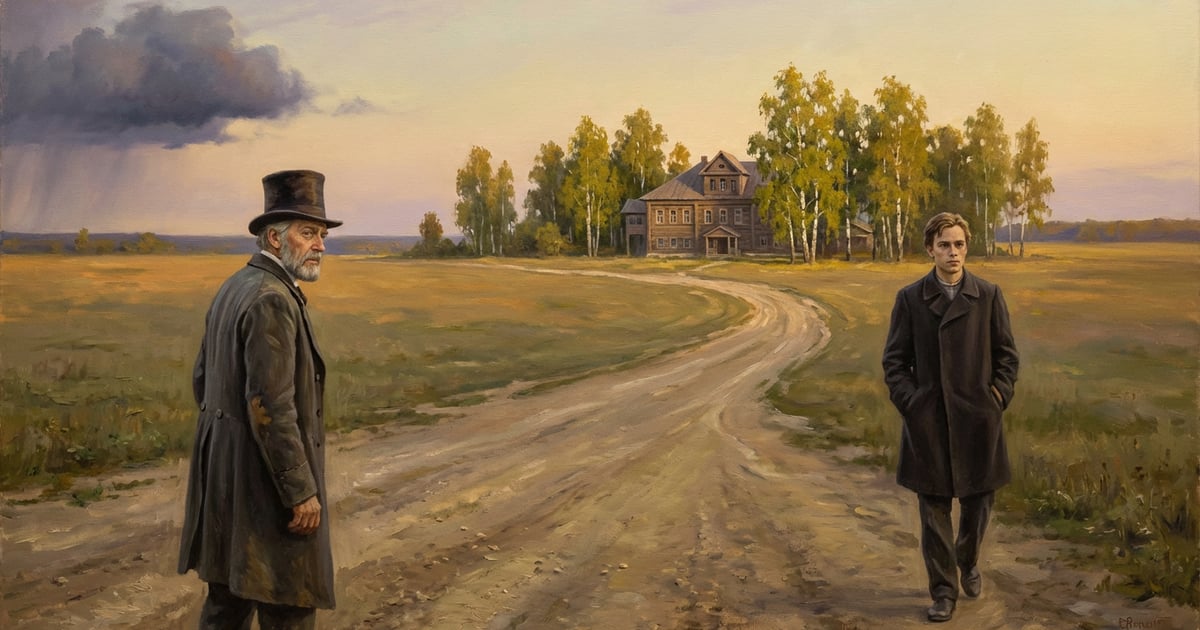
Bazarov sits down to tea as if the marsh were still on his boots, and the brothers watch him without speaking. Arkady looks from his father to his uncle and back. Bazarov has walked to a marsh by an aspen coppice and flushed five woodcock, but he is no sportsman. He prefers physics, the natural sciences, to anything else. Paul Petrovitch, already irritated that a doctor's son will not be diffident, asks about the Germans with a politeness that is working hard. Bazarov yawns and says the German savants have energy, and that the Russian ones, with permission, do not. If he is told a fact, he agrees with it. That is all.

Paul says he cannot abide the Germans of Germany proper. They once had Schiller and Goethe, whom his brother loves, and now they are chemists and materialists. A good chemist, Bazarov answers, is worth a score of poets. He believes in nothing at all. A science may exist as a trade exists. Science in the mass does not. Paul keeps granting postulates. Bazarov asks whether this is an examination in tenets. Paul goes pale. Nikolai Petrovitch steps in, delighted, he says, by the natural sciences, and mentions Liebig's work on soils, as if the guest might help the farm. Bazarov will be at his service, but Liebig can wait. The alphabet comes first. They have not reached the letter A.

Nikolai sends his brother to see the steward. Paul rises without looking at anyone. It is terrible, he says, to have lived five years in the country, remote from superior intellects, and to discover that one's knowledge is rubbish. The younger generation know more. He turns slowly and leaves, and Nikolai follows. Behind the door Arkady says the tone was too sharp, that his uncle is offended. Bazarov will not fawn on rustic aristocrats. He has found a water beetle, dytiscus marginatus, and wants to show it. Arkady says the uncle is not the man Bazarov thinks. He deserves pity rather than ridicule. Always one ought to be fair. Bazarov does not see the connection. Then listen, Arkady says.

Amplified Discussion
The Weapons We Make of Our Intelligence

Turgenev understood something crucial about human nature: intelligence can become the cruelest weapon we wield against each other. Bazarov doesn't engage with Paul's ideas - he annihilates them. This isn't about being right; it's about establishing dominance through intellectual superiority. We see this pattern everywhere today. The nurse who shuts down patient questions with medical jargon instead of explaining. The mechanic who makes customers feel stupid for asking about repairs. The college graduate who returns home and makes family members feel small for their 'simple' concerns. Like Bazarov, these people often feel like outsiders trying to establish their place through intellectual dominance. But here's what Bazarov misses, and what costs him throughout the novel: respect isn't earned by making others feel inferior. Real influence comes from using your knowledge to lift others up, not tear them down. Paul may represent outdated aristocratic values, but his dignity and genuine care for others ultimately prove more powerful than Bazarov's brilliant nihilism. The question isn't whether we're smart enough to demolish other people's beliefs - it's whether we're wise enough to build something better in their place.

Explore this chapter with AI to uncover deeper meaning and practical takeaways.

AI Discussion
Why it matters

Name the Examination

When a conversation starts keeping score, can you tell the moment it stops being a talk? Bazarov yawns through Paul's questions about Germans, poets, and science, then asks whether this is an examination in tenets, and Paul goes pale. This week, when a talk turns into a test you did not agree to sit, write the question that was really the exam, and the one sentence you used, or wish you had used, to name it.

Lessons

PracticeThis week, when a talk turns into a test, write the question that was the exam and the sentence that names it as one.

Psych reading

Intellectual Bulldozing

Using intelligence as a weapon to demolish others' ideas and establish dominance rather than engaging in genuine discourse.

In the mind

This chapter reveals the pattern of intellectual bulldozing, when someone uses their intelligence as a weapon to demolish rather than engage. Bazarov doesn't debate; he destroys. He dismisses art, authorities, and traditions not through reasoned argument but through blanket rejection. This isn't about being right, it's about establishing dominance through intellectual superiority.

The mechanism is straightforward: when someone feels threatened or insecure, they can weaponize their knowledge to create distance and control. Bazarov arrives in an aristocratic household where he doesn't belong socially. Rather than navigate this awkwardly, he flips the script, he makes everyone else feel stupid and outdated. His nihilism becomes armor. By rejecting everything, he can't be rejected. By dismissing their values, he protects himself from their judgment.

This pattern dominates modern workplaces and relationships. The IT guy who makes everyone feel stupid for asking basic tech questions. The nurse who shuts down patient concerns with medical jargon instead of explaining. The know-it-all coworker who responds to every suggestion with 'Actually, that won't work because...' followed by a lecture. The family member who uses their education to make others feel small at holiday dinners. These people aren't sharing knowledge, they're using it as a shield and a sword.

When you recognize intellectual bulldozing, don't take the bait. The bulldozer wants you to feel stupid or get defensive. Instead, ask genuine questions: 'Help me understand your perspective' or 'What would you suggest instead?' This forces them to move from destruction to construction. If they can't or won't engage constructively, you know you're dealing with insecurity masquerading as intelligence. Protect your energy and find people who use their knowledge to build bridges, not burn them.

When you can spot intellectual bulldozing, refuse to be bulldozed, and choose constructive engagement over destructive superiority. When you can name the pattern, predict where it leads, and choose a response that fits the situation, you have done the real work this chapter asks for.

Find the right chapter

Each mood maps to a life skill. Each skill connects to the patterns in classic literature.

😔How do you feel😊

Personalize your match

Optional—life stage, what you need today, and what you're navigating help us pick chapters that fit—not generic lists. You may also freeform using the feeling search below.

Sign in to save your profile

Choices stay on this device until you sign in.

Browse the Full Library
4,582Chapters
118+Books
86Authors