
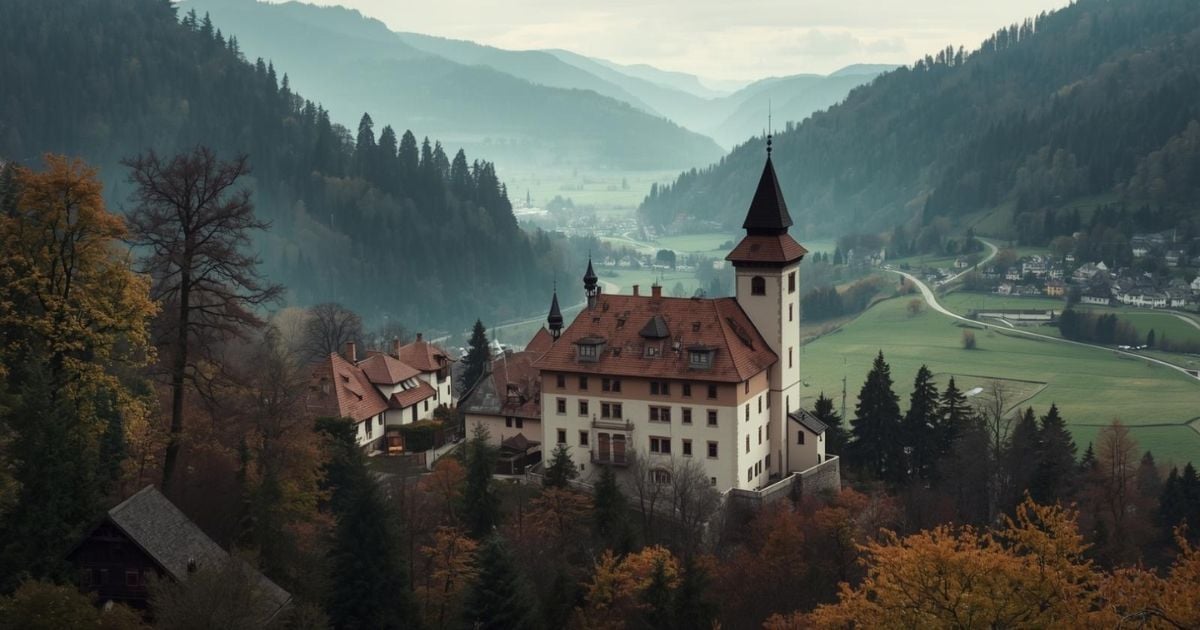
Jonathan arrives so tired that the castle courtyard might have been a dream. Arches open into darkness, the driver's grip felt like a vice, and he has not yet been able to see the place by daylight. The great door shuts, and Count Dracula appears: tall, courteous, and wrong in small ways Jonathan's professional eye keeps noting. The Count's hand is cold as ice and strong as a man's can be; his lips are unusually red; he never eats with his guest. Hospitality is lavish in words and absent at the table.
Dracula wants London property handled correctly and questions Jonathan closely about English law, shipping, and customs. He speaks of his race as an old one, proud of warrior blood, and insists Transylvania is not England. He welcomes Jonathan freely and of his own will, yet every room seems arranged to keep the guest oriented toward the Count's voice. Mirrors, when Jonathan finds one later, will not show the host at all. Daylight is something the Count claims to sleep through; night is when business and history lectures begin.
Jonathan's journal shifts from travelogue to surveillance report. He records meals he alone eats, the Count's sudden appearances on silent feet, and the way locked doors and absent servants make a great house feel like a single occupied cell with ornate wallpaper. Dracula speaks of centuries as personal memory and of his crumbling chapel as a comfort because it is old. Jonathan still writes to Mina in shorthand, still tells himself he is an agent of Hawkins's firm, still tries to behave as if this were a normal client visit with unusual local colour.
The chapter closes with Jonathan crediting the Count's intelligence and power while admitting strangeness he cannot fit into any English office category. He has entered freely, as the inscription over the door promised. He is already watched, already fed information on the Count's schedule, and still without a human witness except the man who needs his compliance. Whitby and Exeter feel very far away, and the only voice that answers in the night belongs to the client.
Stoker understood something crucial about human psychology: we're most vulnerable to predators who position themselves as benefactors. Count Dracula doesn't kidnap Harker, he invites him, feeds him, houses him, and expresses genuine interest in his knowledge. The trap works because it exploits our social conditioning around gratitude and reciprocity. When someone helps us, especially in a moment of need, we feel obligated to accept their terms and overlook red flags. This dynamic hasn't changed in over a century. Today's predators still use the same playbook: create dependency through apparent generosity, then gradually reveal the true cost. The abusive partner who 'rescues' you from financial trouble, then uses that debt to justify controlling your choices. The boss who offers mentorship but demands complete availability. The family member who helps during a crisis, then treats your life as their property. The mechanism works because questioning a benefactor feels ungrateful, even when our instincts scream warnings. Stoker shows us that real generosity increases the recipient's freedom and options. Predatory help does the opposite, it creates obligation, isolation, and dependency. The most dangerous people often approach wearing the mask of helpfulness, and our gratitude becomes the chain that binds us.
Explore this chapter with AI to uncover deeper meaning and practical takeaways.
AI Discussion