
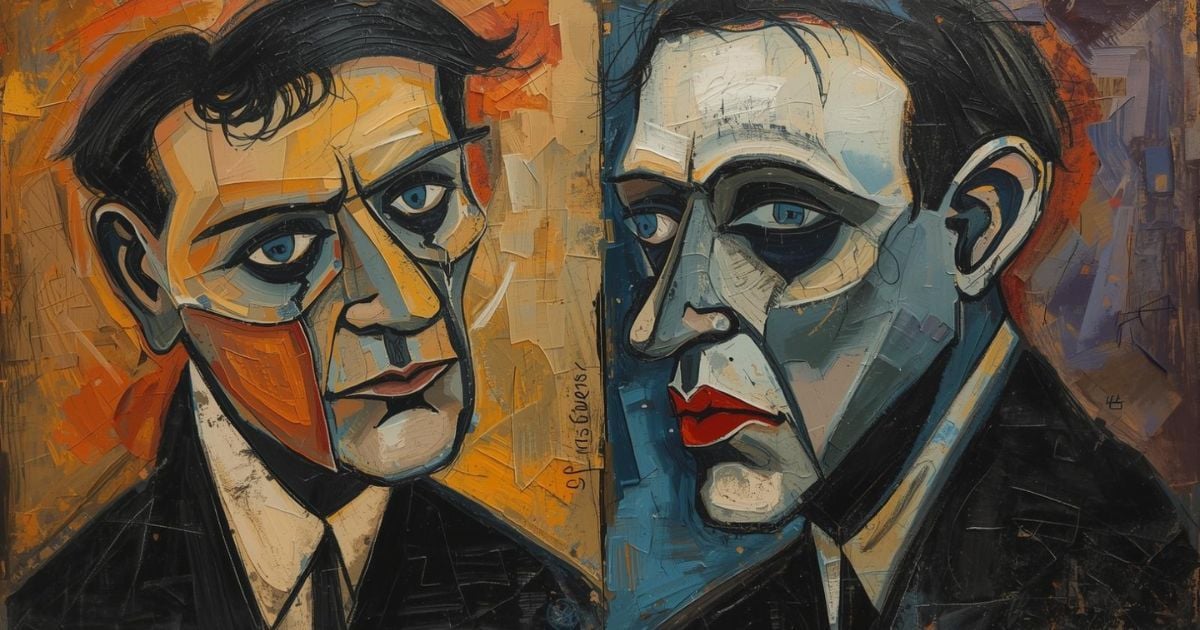
Jekyll sits across the fire, a large smooth-faced man of fifty, with every mark of kindness, and he looks at Utterson with real warmth. The guests are gone. This is the hour hosts keep the dry lawyer for, to sit in his silence after the noise. Utterson does not take the silence. You know that will of yours? Jekyll laughs it off. My poor Utterson, you are unfortunate in such a client. He tries Lanyon instead, the hide-bound pedant, the scientific heresies. Utterson will not take the new subject. He has been learning something of young Hyde.
The handsome face goes pale to the lips. A blackness comes about the eyes. I do not care to hear more. This is a matter I thought we had agreed to drop. What I heard was abominable, Utterson says. It can make no change, Jekyll says. You do not understand my position. It is a very strange one. It cannot be mended by talking. Utterson offers his trust. Make a clean breast and I can get you out of it. Jekyll thanks him, says he would trust him before any man alive, even before himself. It is not as bad as you fancy. The moment I choose, I can be rid of Mr Hyde. I give you my hand upon that. This is a private matter. Let it sleep.
Utterson looks in the fire, then stands. I have no doubt you are perfectly right. Jekyll is not finished. He has a very great interest in poor Hyde. Hyde has already told him they met. If I am taken away, get his rights for him. I cannot pretend I shall ever like him, Utterson says. Jekyll does not ask for that. He lays a hand on the lawyer's arm. Only justice. Only help him for my sake, when I am no longer here. Utterson heaves a sigh he cannot hold. Well, he says. I promise.
Jekyll's desperate protection of Hyde reveals something universal: we often become the fiercest defenders of our most destructive patterns. In 1886, this looked like a respectable doctor making excuses for his dark alter ego. Today, it's the overworked parent defending their explosive anger, the struggling student protecting their procrastination habits, or the financially stressed worker justifying their impulse spending. The psychology remains identical, admitting the behavior is harmful means confronting how much damage we've already done. Jekyll can't condemn Hyde without condemning himself, so he splits the difference: 'Poor Hyde' becomes both threat and victim, something to control and something to protect. This defensive stance creates a prison of contradictions. We claim we can stop anytime while begging others to understand why we can't stop now. We insist it's not that bad while asking people to help us manage the fallout. We say we're in control while our behavior controls us. Breaking this cycle requires facing an uncomfortable truth: the thing we're defending isn't separate from us, it is us. Until we stop splitting ourselves into 'good me' and 'bad me,' we'll keep making excuses for behavior that hurts everyone, including ourselves.
Explore this chapter with AI to uncover deeper meaning and practical takeaways.
AI Discussion