
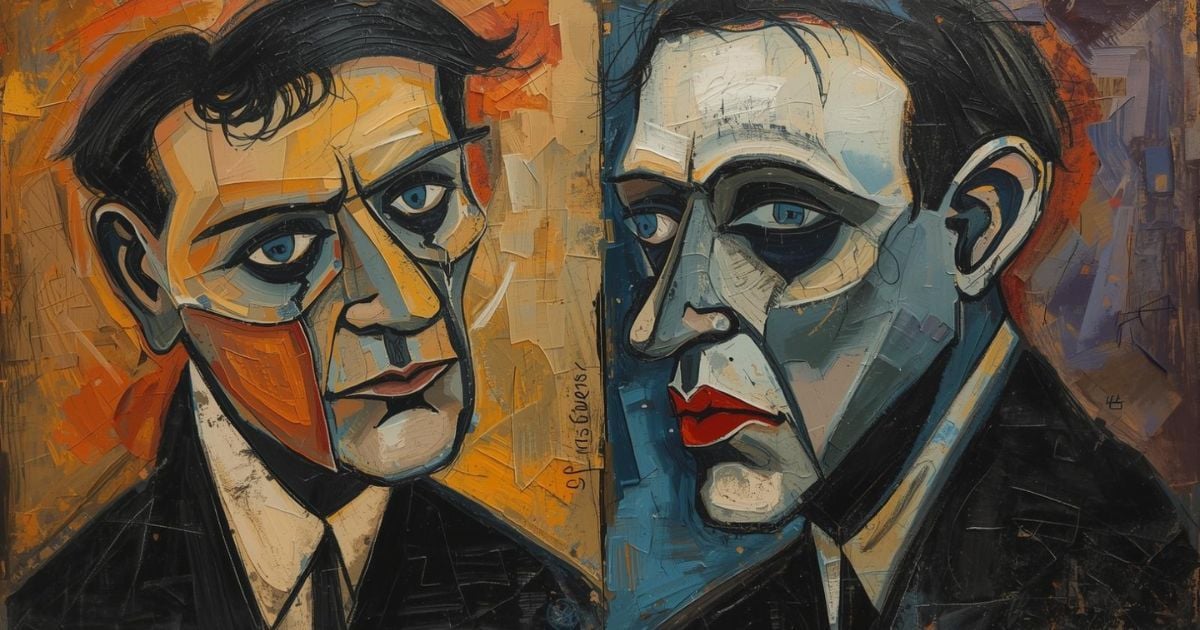
Utterson thinks one look at Hyde's face will make the bad story roll away. That is why he skips his Sunday book, takes a candle into the business room, and opens the safe. He reads Dr Jekyll's will again. If Jekyll dies, everything goes to his friend and benefactor Edward Hyde. If Jekyll only vanishes for three months, Hyde steps into his shoes just the same. The paper used to offend Utterson because the name was empty. Now the name has a man attached to it, a man who walked over a child. He puts the will back. I thought it was madness, he says. Now I begin to fear it is disgrace.
He goes to Dr Lanyon, who has known Jekyll as long as he has. Lanyon is hearty and red-faced, and he has seen devilish little of Jekyll for ten years. They fell out over science Lanyon calls unscientific balderdash. Utterson is glad. A quarrel about science is not disgrace. Then he asks if Lanyon ever met a young man of Jekyll's named Hyde. Lanyon has never heard of him. Utterson carries that nothing home to a dark bed. All night the figure has no face, or a face that melts. It tramples the child again. It stands by Jekyll's bed and makes the sleeper rise. If he could once set eyes on Hyde, Utterson thinks, the mystery would lighten and perhaps roll altogether away. If he be Mr Hyde, he tells himself, I shall be Mr Seek. He begins to haunt the door with no knocker, morning, noon, and under the fogged moon.
On a dry frost night the light footstep comes. A small, plainly dressed man draws a key like a man coming home. Utterson touches his shoulder. Hyde shrinks with a hiss, then cools. Jekyll is from home. Will you let me see your face? Hyde turns and they stare. Now I shall know you again, Utterson says. Hyde gives a Soho address, and Utterson wonders if this man, too, has been thinking of the will. Hyde asks how he was known. By description. Common friends. Jekyll, for instance. Hyde flashes angry. He never told you. Then he unlocks the door and is gone. Utterson has the face now. Pale, dwarfish, a feeling of deformity he still cannot point to. All the marks together do not explain the disgust. There is something more, if I could find a name for it. He reads Satan's signature on the face of Jekyll's new friend. Round the corner the same pile of buildings becomes a handsome house. Poole lets him into the pleasantest room in London. Jekyll is out. Hyde has a key to the old dissecting room. The staff have orders to obey him. He never dines on this side. He comes and goes by the laboratory. Walking home, Utterson tells himself Jekyll was wild when young, and that old sin has come back years late. Then he sees the will again, clear as glass. If Hyde knows the paper exists, he may grow impatient to inherit. Utterson will put his shoulders to the wheel, if Jekyll will only let him.
Stevenson wrote about a lawyer who justified stalking behavior as friendship, and the pattern remains devastatingly current. We see it in parents who read their adult children's texts 'because I worry,' coworkers who report colleagues to management 'for everyone's safety,' and friends who interrogate mutual acquaintances 'because I care.' The mechanism is always the same: genuine concern provides cover for the need to know, to control, to feel important in someone else's drama. What makes this pattern so dangerous is how virtuous it feels. We're not being nosy, we're being protective. We're not violating privacy, we're preventing disaster. The person being investigated often doesn't realize what's happening until trust is already broken. In working-class communities, this pattern can be particularly destructive because privacy is often a luxury we can't afford, and boundaries get trampled in the name of family loyalty or workplace solidarity. The challenge isn't eliminating concern for others, it's learning to express that concern without becoming a detective in someone else's life. Real support asks permission. Real friendship respects the right to make mistakes. When we feel the urge to investigate rather than communicate directly, we're usually trying to manage our own anxiety rather than help someone else.
Explore this chapter with AI to uncover deeper meaning and practical takeaways.
AI Discussion