
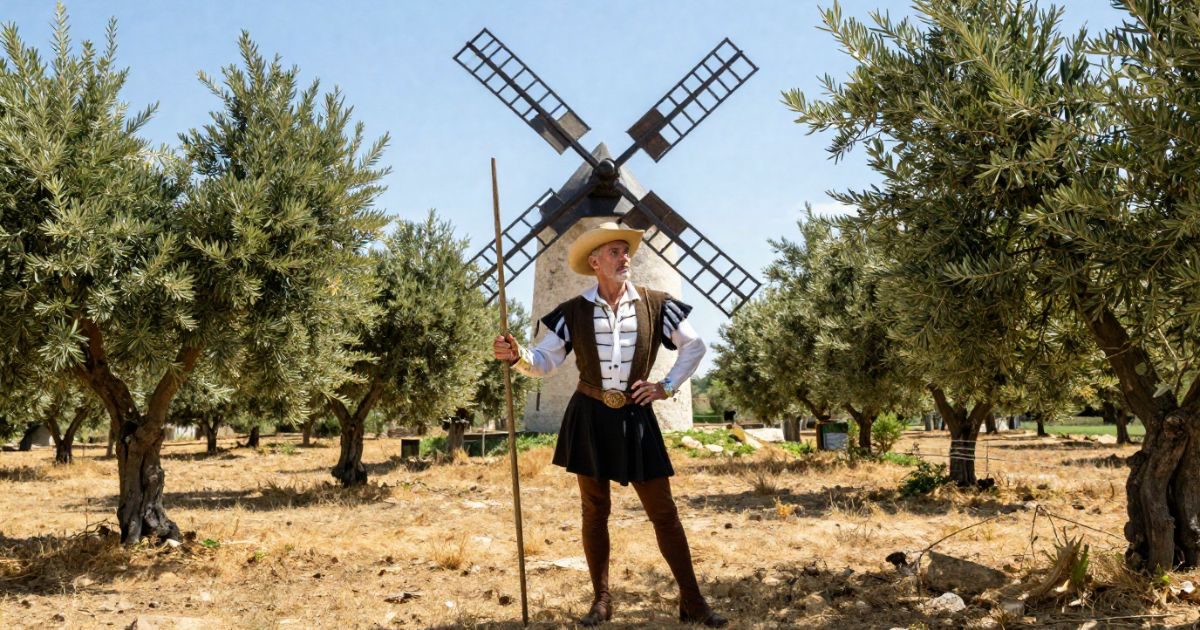
The first part of the history left Don Quixote and the Biscayan with swords raised, ready to split one another like a pomegranate, and then the tale stood cut short. The second narrator cannot believe so good a knight lacked a sage to record him, so he searches until chance helps. In the Alcana of Toledo a boy sells old pamphlets to a silk mercer. One is in Arabic. A Spanish-speaking Morisco reads a margin note that makes him laugh: Dulcinea del Toboso had the best hand of any woman in La Mancha for salting pigs.
The title follows: History of Don Quixote of La Mancha, written by Cid Hamete Benengeli, an Arab historian. The narrator buys every scrap for half a real, takes the translator into the cathedral cloister, and pays two arrobas of raisins and two bushels of wheat for a faithful version finished in little more than a month and a half. The first pamphlet even draws the duel: buckler against cushion, hired mule, Sancho Zancas with a big belly and long shanks. He warns that an Arab author may lie or omit, yet a historian's duty is to be exact, truthful, and free from passion.
The translation resumes the fight. The Biscayan's first blow would have ended the knight had the sword not turned; it still strips the left armour, a great part of the helmet, and half an ear. Quixote answers with both hands, smites through the cushion, and the mule flings its master to the ground. He sets the sword-point at the fallen man's eyes and bids him surrender. The terrified ladies in the coach beg for their squire's life. Quixote grants it only if the knight will go to El Toboso and present himself before Dulcinea, that she deal with him as she pleases. They promise without asking who she is.
The chapter opens where Part One left off: Quixote and the Biscayan frozen mid-swing, then the narrator confesses the history broke off and tormented him until he found the rest. He could not believe so great a knight lacked a sage to record him, and he searched until chance led him to Arabic pamphlets in Toledo's silk market. A Morisco translator reads the title: History of Don Quixote by Cid Hamete Benengeli. A margin note makes him laugh: Dulcinea, peerless lady, had the best hand in La Mancha for salting pigs. The narrator buys every scrap, hires faithful translation, and warns that an Arab author may lie or omit, though history's duty is truth without passion. Cervantes makes the cost visible: not only what the characters suffer, but what bystanders must decide once the story can no longer stay private. The chapter asks whether comfort, silence, or intervention is the truer form of care when someone is living inside a plot of their own.
Explore this chapter with AI to uncover deeper meaning and practical takeaways.
AI Discussion