
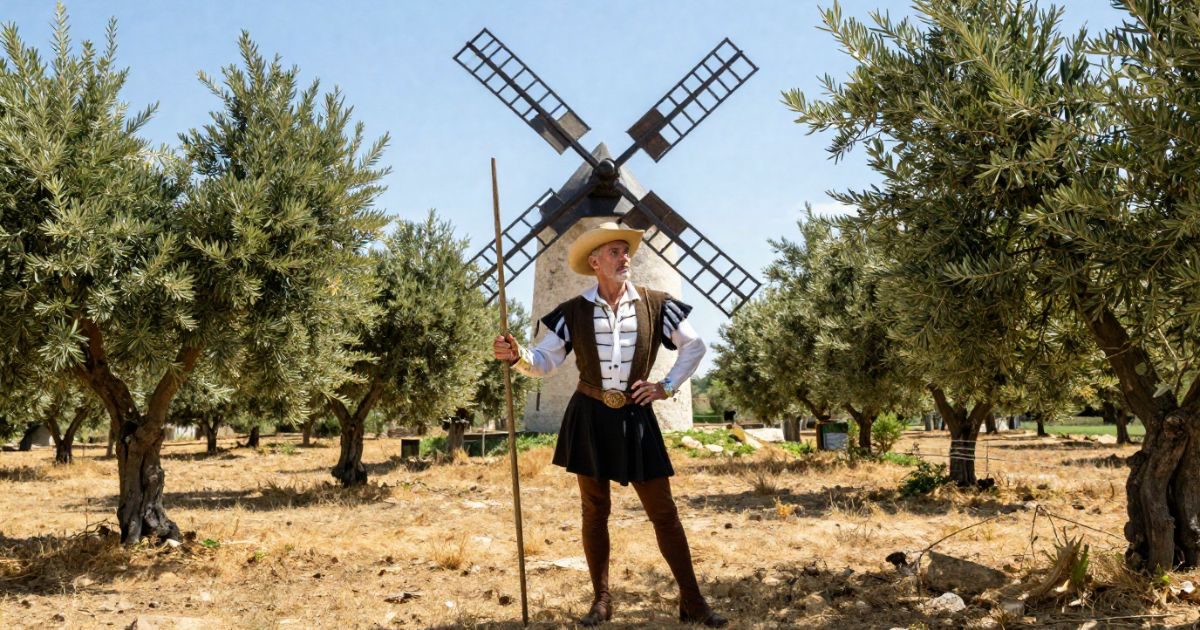
While their masters trade love stories in the grove, Sancho and the Knight of the Grove's squire withdraw and compare the hard life of serving knights-errant: bread earned in sweat and cold, fasts broken only by wind, and rewards that may never come.
Sancho wants an island; the other squire expects a canonry from his church-line master. They swap proverbs about going home to hunt and fish, boast of Dapple and well-stocked saddlebags, and nearly quarrel when the Grove squire calls Sancho's daughter a strumpet in the bullring style of praise. Sancho then admits the truth: he stays because a purse of a hundred ducats found in the Sierra Morena and the devil's bag of doubloons always dancing before his eyes make him endure a master he knows is more madman than knight.
The Grove squire produces wine and a rabbit pasty half a yard wide; Sancho drinks, praises the wine as whoreson and catholic, and tells the legend of his father's family tasting iron and cordovan in a cask. They agree that with loaves in hand one should not hunt for cakes, though Sancho will stay until Saragossa. Sleep ties their tongues; they doze clutching the empty bota while the narrator turns back to the knights.
While their masters trade love stories in the grove, Sancho and the Knight of the Grove's squire withdraw and compare the hard life of serving knights-errant: bread earned in sweat and cold, fasts broken only by wind, and rewards that may never come. Sancho wants an island; the other squire expects a canonry from his church-line master. They swap proverbs about going home to hunt and fish, boast of Dapple and well-stocked saddlebags, and nearly quarrel when the Grove squire calls Sancho's daughter a strumpet in the bullring style of praise. Sancho then admits the truth: he stays because a purse of a hundred ducats found in the Sierra Morena and the devil's bag of doubloons always dancing before his eyes make him endure a master he knows is more madman than knight. Cervantes makes the cost visible: not only what the characters suffer, but what bystanders must decide once the story can no longer stay private. The chapter asks whether comfort, silence, or intervention is the truer form of care when someone is living inside a plot of their own.
Explore this chapter with AI to uncover deeper meaning and practical takeaways.
AI Discussion