
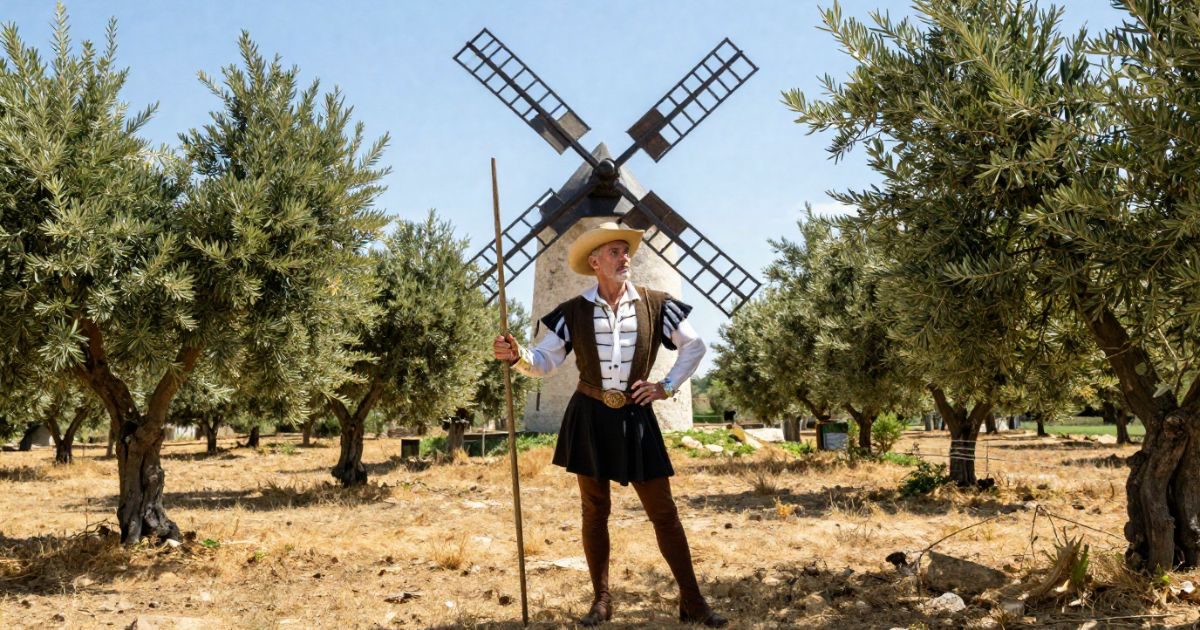
Pleased by Eugenio's polished goatherd tale, Don Quixote offers to storm the convent and free Leandra from the abbess, swearing by his knightly profession to aid the weak. The goatherd, looking at the lean figure before him, calls him empty-headed. Quixote hurls a loaf that flattens the man's nose. They brawl across the dinner table, smashing plates, until the canon, curate, and barber are laughing and the officers caper like men urging on fighting dogs. Sancho is pinned by a servant while his master trades blows with the barber on top of him.
A doleful trumpet stops the fight. Drought has driven a village procession of white-robed penitents down the hill to pray for rain at a hermitage, carrying a draped image of the Virgin. Quixote takes them for kidnappers, mounts Rocinante despite the curate's chase, and charges the image as a captive lady, deaf to Sancho's cries that this is Catholic faith, not an adventure. He draws his sword. A penitent fends him off with a forked stick, knocks him down, and flees thinking he has killed the madman.
The Brotherhood nearly clashes with Quixote's party until a curate in the procession recognises their curate. Sancho flings himself on the body and wails a comic funeral oration, naming his master flower of chivalry and giver of islands, until Don Quixote revives, invokes Dulcinea, asks to be lifted into the enchanted cart, and agrees that they should wait for the malign stars to pass before another sally. The procession reforms. The goatherd and the officers peel away. Six days later the curate's ox-cart enters La Mancha on a Sunday while the plaza watches their lean knight on a truss of hay. The niece and housekeeper beat their breasts and curse the chivalry books. Teresa Panza asks first after Dapple, then whether Sancho brought gowns or shoes, and settles for promises of a future county and being called "your ladyship." Sancho tells her there is nothing more delightful than squirehood, even if ninety-nine adventures in a hundred end in blankets or blows. The curate warns the women to guard Quixote lest he bolt again, and they undress him into his old bed, still fearing he will slip away the moment he is stronger.
Cide Hamete closes Part One by confessing he cannot verify the lost third sally except by tradition and a leaden box of Gothic manuscripts found in a ruined hermitage. He prints comic poems from the Academicians of Argamasilla on Quixote, Dulcinea, Rocinante, and Sancho. Then Cervantes adds his dedication to the Count of Lemos, answering the false "Second Part" already abroad, joking that the Emperor of China offered him a college with no travel money, and a preface that refuses to trade insults, claims the honour of his lost hand at Lepanto, and tells the Seville and Cordova madmen-and-dogs fables about how hard it is to write a book. He promises Don Quixote continued, dead, and buried, so no impostor can take him further.
Pleased by Eugenio's polished goatherd tale, Don Quixote offers to storm the convent and free Leandra from the abbess, swearing by his knightly profession to aid the weak. The goatherd calls him mad; Quixote hurls a loaf, they brawl across the dinner table until the canon, curate, and barber are laughing and the officers caper like men urging on fighting dogs, Sancho pinned by a servant while his master trades blows with the barber on top of him. A doleful trumpet stops the fight: drought has driven a village procession of white-robed penitents down the hill to pray for rain at a hermitage. Quixote takes the procession for kidnappers, mounts Rocinante despite the curate's chase, and charges the draped image of the Virgin as a captive lady despite Sancho's cries that it is Catholic faith, not an adventure. He draws his sword; a penitent fends him off with a forked stick and knocks him down, then flees thinking he has killed the madman. The Brotherhood nearly clashes with Quixote's party until a curate in the procession recognises their curate; Sancho wails over his fallen master in a comic funeral oration until Don Quixote revives, invokes Dulcinea, asks to be lifted into the enchanted cart, and agrees with Sancho that they should wait for the malign stars to pass before another sally. Cervantes makes the cost visible: not only what the characters suffer, but what bystanders must decide once the story can no longer stay private. The chapter asks whether comfort, silence, or intervention is the truer form of care when someone is living inside a plot of their own.
Explore this chapter with AI to uncover deeper meaning and practical takeaways.
AI Discussion