
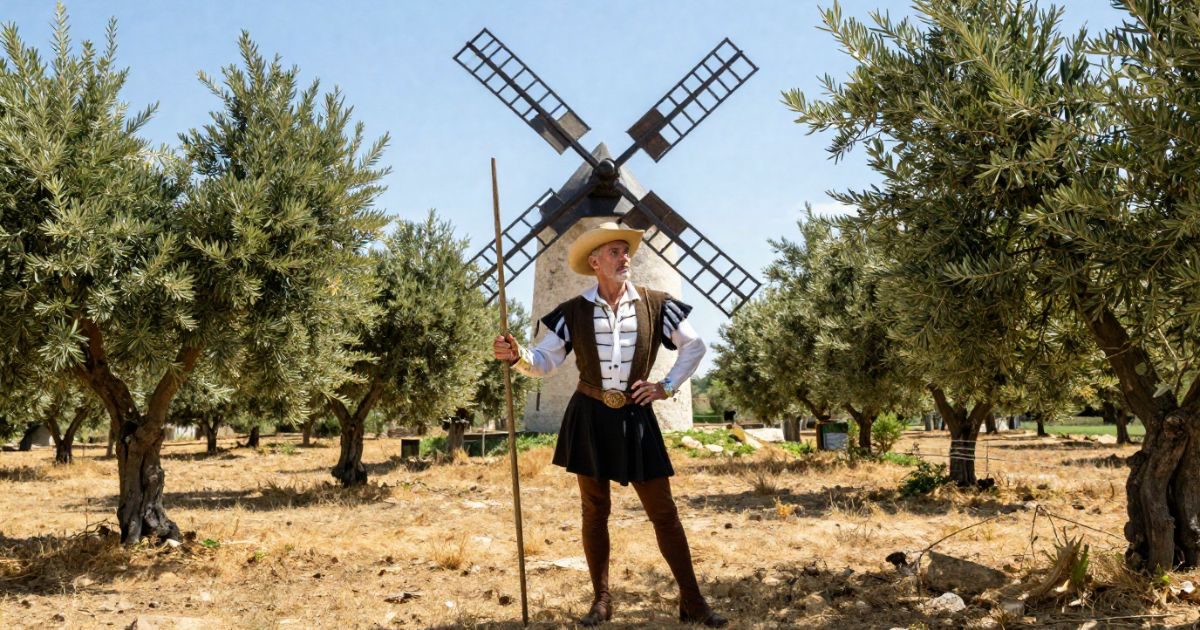
Maritornes cuts Don Quixote down from the halter, and he gallops off challenging anyone who says he was justly enchanted. Four servants arrive hunting Doña Clara's lover, the disguised Don Luis, and find him asleep by a muleteer. When they try to drag him home to his grieving father, he refuses: he will not leave until life, honour, and heart are settled, even if they take him dead.
Cardenio, Don Fernando, and the Judge intervene. The Judge recognises Don Luis as a neighbour's son and hears him aside; meanwhile two guests try to flee without paying, beat the landlord at the gate, and Maritornes begs Quixote for help. He tells her to wait while he kneels to Princess Micomicona for permission, then almost fails again because drawing sword on "persons of squirely condition" is not lawful; the guests pay and the fight ends without his sword.
Don Luis confesses to the Judge that he followed Clara in muleteer's dress and asks to marry her today if no impediment stands. While servants wait, the barber whose basin and pack-saddle Quixote and Sancho took arrives, fights Sancho over the trappings, and Quixote declares the basin is Mambrino's helmet won in fair war. Sancho fetches it; the chapter ends with both sides still disputing what the loot really is.
Maritornes cuts Don Quixote down from the halter, and he gallops off challenging anyone who says he was justly enchanted. Four servants arrive hunting Doña Clara's lover, the disguised Don Luis, and find him asleep by a muleteer. When they try to drag him home to his grieving father, he refuses: he will not leave until life, honour, and heart are settled, even if they take him dead. Cardenio, Don Fernando, and the Judge intervene. The Judge recognises Don Luis as a neighbour's son and hears him aside; meanwhile two guests try to flee without paying, beat the landlord at the gate, and Maritornes begs Quixote for help. He tells her to wait while he kneels to Princess Micomicona for permission, then almost fails again because drawing sword on "persons of squirely condition" is not lawful; the guests pay and the fight ends without his sword. Cervantes makes the cost visible: not only what the characters suffer, but what bystanders must decide once the story can no longer stay private. The chapter asks whether comfort, silence, or intervention is the truer form of care when someone is living inside a plot of their own.
Explore this chapter with AI to uncover deeper meaning and practical takeaways.
AI Discussion