
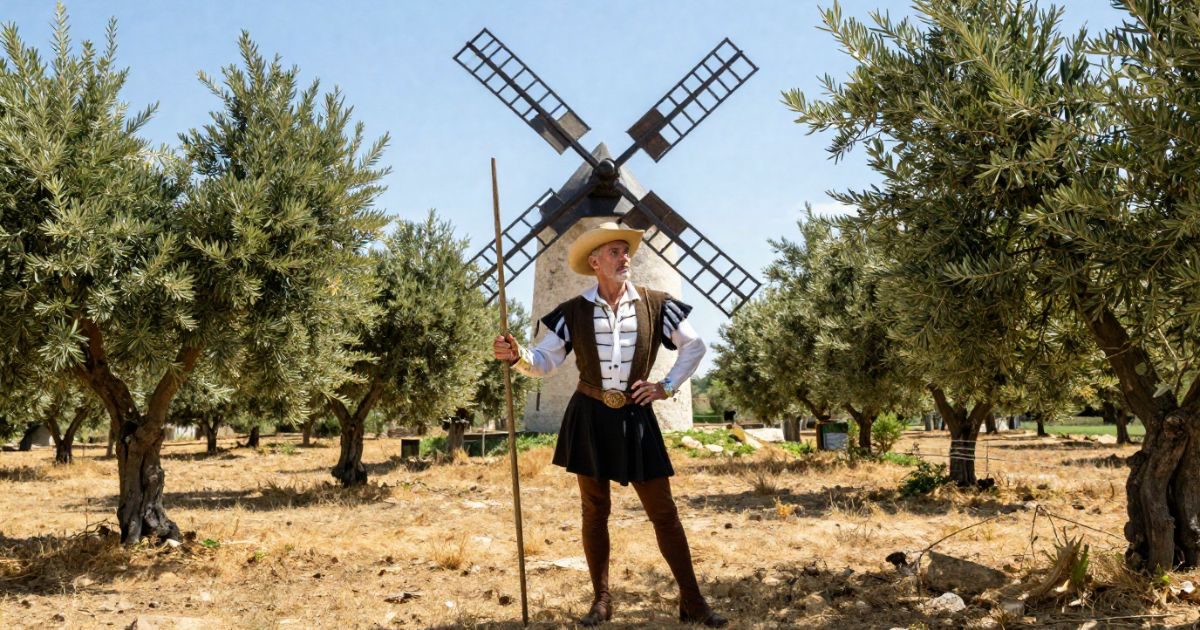
After the burial Don Quixote and Sancho follow Marcela into the wood, wander more than two hours without finding her, and halt at noon by a stream in a glade of tender grass. They turn Rocinante and the ass loose. Sancho does not hobble the horse, sure that even the mares of Cordova could not lead so staid a beast into impropriety. Chance and the devil ordain otherwise. A drove of Galician ponies belonging to Yanguesan carriers is feeding in the same valley. Rocinante scents them, abandons his usual gait, and is received with heels and teeth until the girths break. The carriers run up with stakes and bring him sorely battered to the ground.
Quixote, panting up, tells Sancho these are not knights but base folk of low birth, so the squire may lawfully help avenge the insult. Sancho asks what vengeance two men, or perhaps one and a half, can take against more than twenty. Quixote says he counts for a hundred, draws his sword, and slashes a leather jerkin open to the shoulder. The Yanguesans drive them into the middle and, at the second blow, put both on the ground, Quixote at Rocinante's feet. Then the carriers load their team and leave.
Sancho is first to come to, and in a weak voice asks for a couple of sups of that potion of the fiery Blas. Quixote has none, takes the blame for putting hand to sword against undubbed men, and says the God of battles has permitted the chastisement. Henceforth Sancho is to draw on rabble while the knight fights only knights. Sancho answers that he is a man of peace, meek and quiet, with a wife and children to support, and that he will draw sword against neither clown nor knight. He is more fit for plasters than arguments. They raise themselves with thirty ohs, put Quixote on the ass like a sack of manure, and lead Rocinante by a rein. A short league on, an inn comes in sight, which to Sancho's annoyance and to Quixote's delight must needs be a castle. The dispute lasts until they reach the door, and Sancho enters with all his team.
After the funeral Don Quixote searches the wood for Marcela in vain, then he and Sancho rest by a stream. Sancho does not hobble Rocinante. The horse pursues the Yanguesan carriers' mares, is beaten with stakes, and Don Quixote tells Sancho they may take vengeance because these men are not knights. Sancho counts twenty against one and a half. Quixote says he counts for a hundred and charges anyway. Both are beaten to the ground. Quixote blames God for punishing him for fighting undubbed men, then orders Sancho to handle commoners next time while he fights knights. Cervantes makes the cost visible: not only what the characters suffer, but what bystanders must decide once the story can no longer stay private. The chapter asks whether comfort, silence, or intervention is the truer form of care when someone is living inside a plot of their own.
Explore this chapter with AI to uncover deeper meaning and practical takeaways.
AI Discussion