
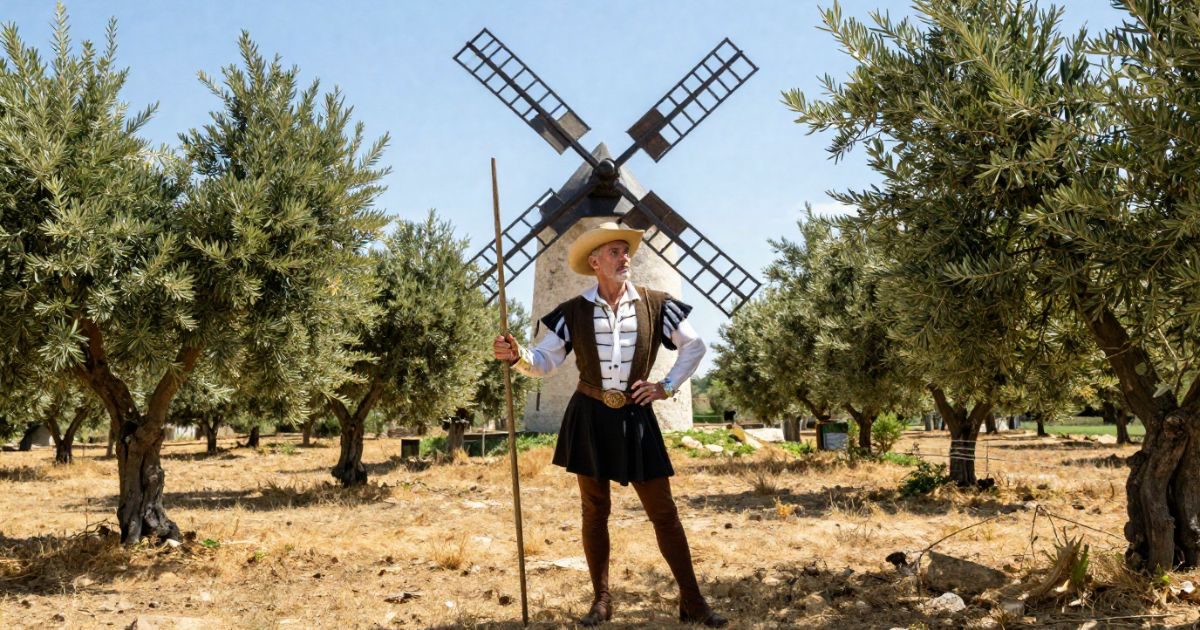
Don Quixote and Sancho spend the day at a village inn waiting for night so Sancho can finish his scourging penance in the open country. A traveller arrives whose servant announces Don Álvaro Tarfe, a name Quixote remembers from the spurious Second Part. Tarfe believes he once befriended a Don Quixote who went to Saragossa jousts and finds this pair nothing like the printed originals; Sancho furiously insists they are the only real knight and squire while all others are dreams and mockeries.
Quixote proves his identity by swearing he never entered Saragossa and asking Tarfe to declare before the alcalde and notary that neither he nor Sancho is the Don Quixote and Sancho Panza in Avellaneda's fake history. The legal declaration delights them both as if paper could settle what their lives already show. After dinner they part ways; Quixote recounts his defeat and Dulcinea's cure while Sancho whips beech trees again until the duped knight counts three thousand and twenty-nine lashes. Sancho completes the task, Quixote greets every woman on the road hoping Merlin's promise holds, and at last they descry their village. Sancho falls on his knees praising home, whipping, and borrowed money; Quixote cuts off the fooleries and steers them toward pastoral plans as they enter the town.
Don Quixote and Sancho spend the day at a village inn waiting for night so Sancho can finish his scourging penance in the open country. A traveller arrives whose servant announces Don Álvaro Tarfe, a name Quixote remembers from the spurious Second Part. Tarfe believes he once befriended a Don Quixote who went to Saragossa jousts and finds this pair nothing like the printed originals; Sancho furiously insists they are the only real knight and squire while all others are dreams and mockeries. Quixote proves his identity by swearing he never entered Saragossa and asking Tarfe to declare before the alcalde and notary that neither he nor Sancho is the Don Quixote and Sancho Panza in Avellaneda's fake history. The legal declaration delights them both as if paper could settle what their lives already show. After dinner they part ways; Quixote recounts his defeat and Dulcinea's cure while Sancho whips beech trees again until the duped knight counts three thousand and twenty-nine lashes. Sancho completes the task, Quixote greets every woman on the road hoping Merlin's promise holds, and at last they descry their village. Sancho falls on his knees praising home, whipping, and borrowed money; Quixote cuts off the fooleries and steers them toward pastoral plans as they enter the town. Cervantes makes the cost visible: not only what the characters suffer, but what bystanders must decide once the story can no longer stay private. The chapter asks whether comfort, silence, or intervention is the truer form of care when someone is living inside a plot of their own.
Explore this chapter with AI to uncover deeper meaning and practical takeaways.
AI Discussion