
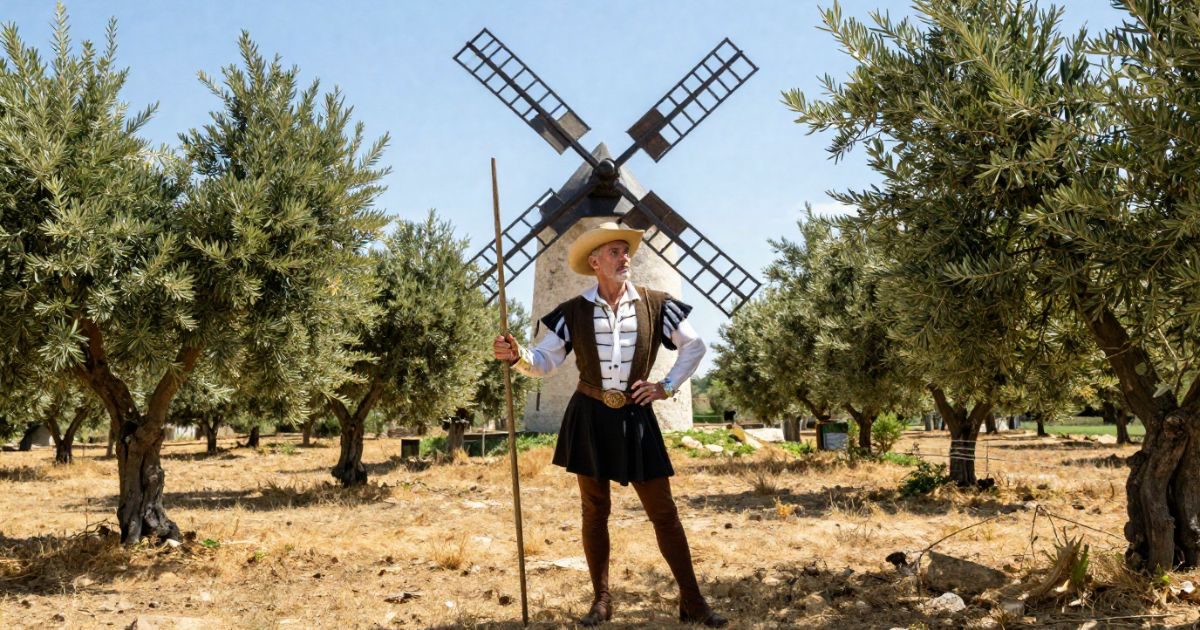
The vanquished Don Quixote is downcast over defeat yet pleased by the virtue Sancho showed when Altisidora revived, while Sancho grieves her unpaid smocks and complains he is the most unlucky doctor in the world, cured others at the cost of smacks and pinproddings while nobody pays him a farthing. Quixote says Altisidora behaved badly and offers to pay for lashes to disenchant Dulcinea since Sancho's virtue is gratis data, and Sancho promptly negotiates three thousand three hundred lashes at a quarter real apiece, stopping eight hundred and twenty-five reals from his master's money before whipping himself tonight in the open air.
At night Sancho strips to the waist and lays on with Dapple's halter while Quixote counts rosary lashes, but after six or eight he cries off on the score of a blind bargain and raises the price; the rogue then strikes beech trees while groaning until he cries Here dies Samson, and Quixote seizes the halter lest he kill himself for Dulcinea. They sleep, reach a village hostelry where painted serge shows the Rape of Helen and Dido, and Quixote says Troy and Carthage would have been saved had he lived then, compares the painter to Orbaneja and the new Don Quixote history to whatever it may turn out, and asks whether Sancho wants another turn indoors or out. Sancho answers with proverbs until Quixote cries For God's sake, Sancho, no more proverbs and asks him to speak straight-forwardly, and Sancho says he will mend if he can.
The vanquished Don Quixote is downcast over defeat yet pleased by the virtue Sancho showed when Altisidora revived, while Sancho grieves her unpaid smocks and complains he is the most unlucky doctor in the world, cured others at the cost of smacks and pinproddings while nobody pays him a farthing. Quixote says Altisidora behaved badly and offers to pay for lashes to disenchant Dulcinea since Sancho's virtue is gratis data, and Sancho promptly negotiates three thousand three hundred lashes at a quarter real apiece, stopping eight hundred and twenty-five reals from his master's money before whipping himself tonight in the open air. At night Sancho strips to the waist and lays on with Dapple's halter while Quixote counts rosary lashes, but after six or eight he cries off on the score of a blind bargain and raises the price; the rogue then strikes beech trees while groaning until he cries Here dies Samson, and Quixote seizes the halter lest he kill himself for Dulcinea. They sleep, reach a village hostelry where painted serge shows the Rape of Helen and Dido, and Quixote says Troy and Carthage would have been saved had he lived then, compares the painter to Orbaneja and the new Don Quixote history to whatever it may turn out, and asks whether Sancho wants another turn indoors or out. Sancho answers with proverbs until Quixote cries For God's sake, Sancho, no more proverbs and asks him to speak straight-forwardly, and Sancho says he will mend if he can. Cervantes makes the cost visible: not only what the characters suffer, but what bystanders must decide once the story can no longer stay private. The chapter asks whether comfort, silence, or intervention is the truer form of care when someone is living inside a plot of their own.
Explore this chapter with AI to uncover deeper meaning and practical takeaways.
AI Discussion