
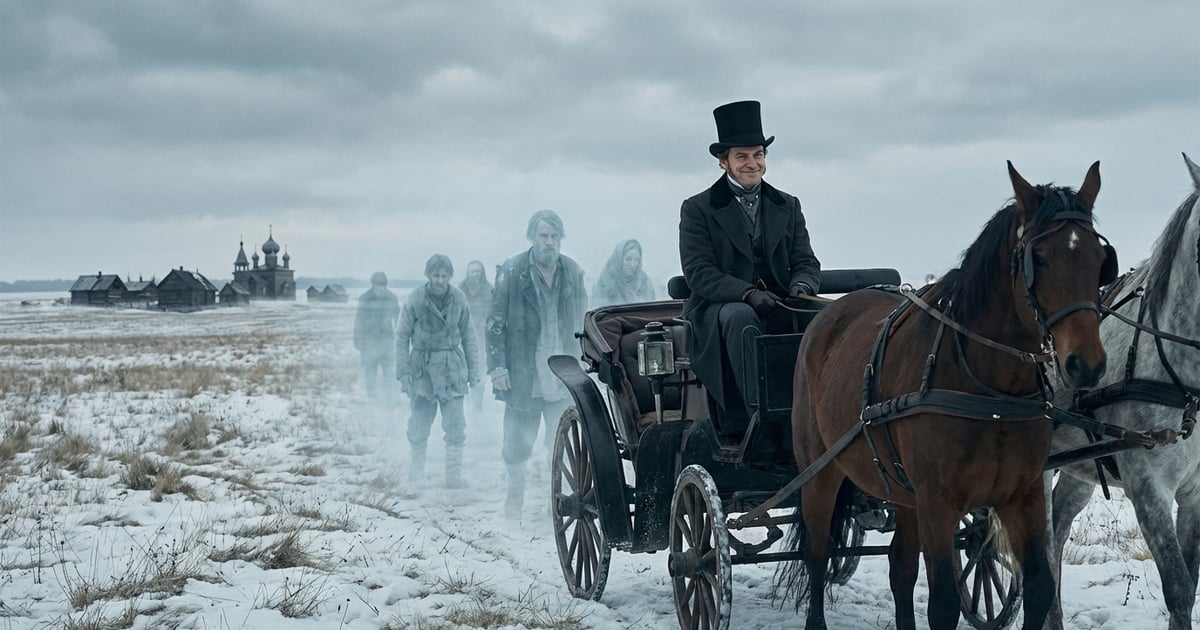
Chichikov is still laughing at a peasant's outburst when the britchka hits wooden pavements that bounce like piano keys. The village looks emptied from the inside: roofs holed, beams dark, rain entering in bucketfuls because the timber has been stripped for fuel. At the manor gate a figure in flour-stained clothes looks like a beggar waiting at a church door. Chichikov asks for the master and is told he is blind not to see that I am the master. This is Plushkin. He owns a thousand souls and storehouses stuffed with grain, cloth, and fish. His parlor is a museum of refuse kept as treasure: a clock without a pendulum, a dried lemon shrunken to a hazelnut, flies drowned in a tumbler, a chandelier bagged in dusty holland.
Chichikov had prepared a speech about benevolence. One look around the room and he switches to economy and genius for method. Plushkin mutters that the devil may fly away with such sentiments, yet Russian hospitality still forces a seat. Gogol then shows the man who used to be a careful manager and a father, until grief and isolation turned thrift into rot. When Chichikov offers to pay the taxes still charged on dead serfs, Plushkin reports eighty deaths since the last revision and a hundred and twenty souls still taxed. Sympathy does not put anything into one's pocket, he snaps. He accepts the help once it is framed as deeds, not charity.
The house runs on suspicion. Plushkin watches Proshka like a thief, orders Mavra to scrape the bad sugar rather than waste it, and cancels tea once the samovar is ready, to save the cost. They haggle runaways at twenty-five kopecks, then thirty-two. Paperwork consumes the cupboard. Plushkin hunts a list among cups and cobwebs, offers liquor from a bug-filled decanter Chichikov refuses, and dictates a letter to the President, his old schoolfellow, because he cannot leave thieves alone at home. Mavra is accused of stealing writing paper until the sheet appears under his nose. He seals the letter with a tallow candle to save wax. Chichikov leaves with a list of a hundred and twenty dead names plus seventy-eight fugitives, and at the inn he orders sucking pig and sleeps. Behind him Plushkin still plans to bequeath a damaged silver watch rather than give it now.
Plushkin represents the ultimate endpoint of scarcity thinking, a man so afraid of losing his wealth that he's lost everything that makes wealth worthwhile. His story hits different in 2024 because we're living through our own version of his dilemma. Rent is insane, wages are stagnant, and everyone's trying to stretch every dollar. But Gogol shows us where that thinking leads when it goes too far: Plushkin has over a thousand serfs and warehouses full of goods, yet lives worse than his poorest peasant. His fear of spending has made his fortune meaningless. We see this pattern everywhere today. The person who won't buy decent work shoes and ends up with foot problems that cost more to treat. The family that eats ramen every night to save for emergencies while their kids grow up thinking poverty is normal. The worker who won't invest in training or tools, then wonders why they're stuck in the same dead-end job. Gogol isn't advocating for reckless spending, he's showing us that money is a tool, not a trophy. When we hoard it so tightly that we can't use it for its actual purpose, making life better, we've turned wealth into poverty. The question isn't whether you should save money. It's whether your saving habits are serving your actual life or just feeding your fears.
Explore this chapter with AI to uncover deeper meaning and practical takeaways.
AI Discussion