
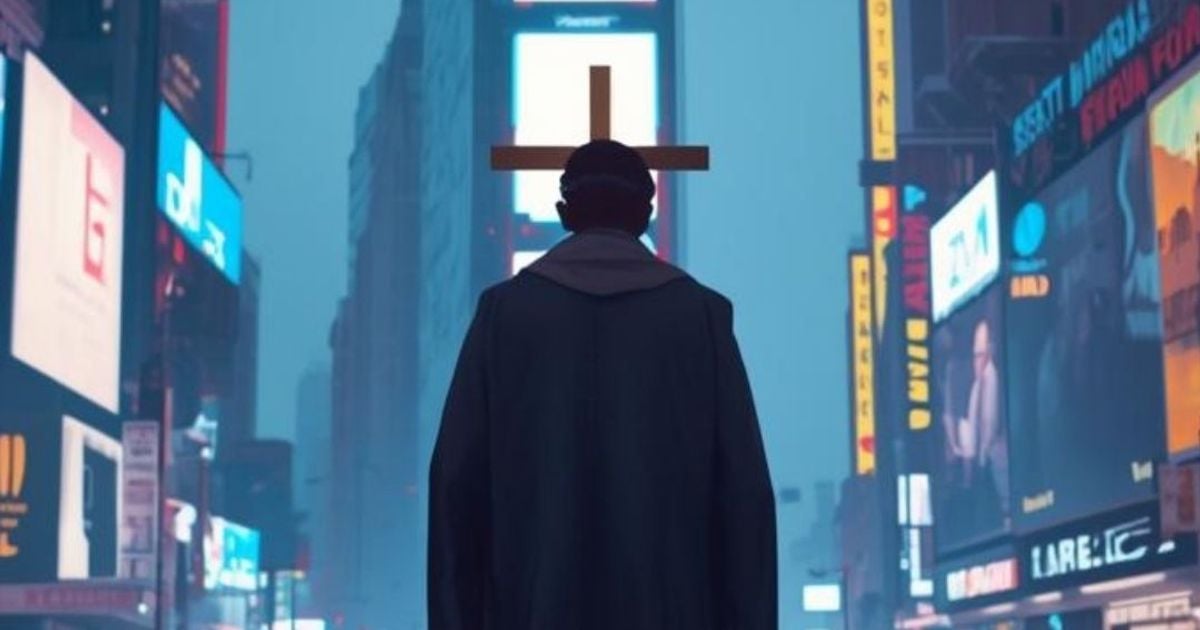
The soul says that in an obscure night, which is contemplation, and fevered with love's anxiety, it went forth to union with the Beloved. The night is this dark contemplation. Longing is what carries the soul out, not a map it can read in advance.
That dark contemplation causes two kinds of darkness or purgation in spiritual persons, according to the two parts of the soul, the sensual and the spiritual. One night purges the sensual part, already treated. The other purges the spiritual part, which is now the subject. The first strips the senses and accommodates them to the spirit. The second strips the spirit and disposes it for union with God by means of love.
This dark contemplation is also grievous and painful to the spirit. Divine wisdom is not only dark to the soul it enlightens and purges. It also causes grief, affliction, and anguish. Saint John is warning that the stripping has moved inward. Sense was accommodated. Now spirit itself is being emptied, and the same wisdom that gives light also hurts. Night, grief, and torment belong to this contemplation together, not as a later accident. The spirit is being stripped for love, and stripping hurts.
John wrote about spiritual transformation in 16th-century Spain, but his insights about resistance to change feel startlingly modern. He observed that we cling to familiar suffering rather than face unknown possibility. This resistance isn't weakness—it's human nature. Our brains are wired to treat the familiar as safe, even when it's limiting us. The CNA who stays in a toxic workplace because at least she knows what to expect. The factory worker who won't retrain for new skills because his current job feels like his identity. The single mom who won't leave an unhealthy relationship because being alone feels more terrifying than being mistreated. Saint Juan understood that transformation requires us to release our death grip on what we know, even when what we know is slowly killing us. He called this 'the dark night' because it feels like dying—and in a sense, it is. The person we were has to die for the person we're becoming to be born. Modern psychology confirms his observation: we often resist positive change as much as negative change because change itself triggers our survival instincts. The question becomes: what familiar limitation are you clinging to because the unknown feels too risky? What would you attempt if you trusted that breakdown often precedes breakthrough?
Explore this chapter with AI to uncover deeper meaning and practical takeaways.
AI Discussion