
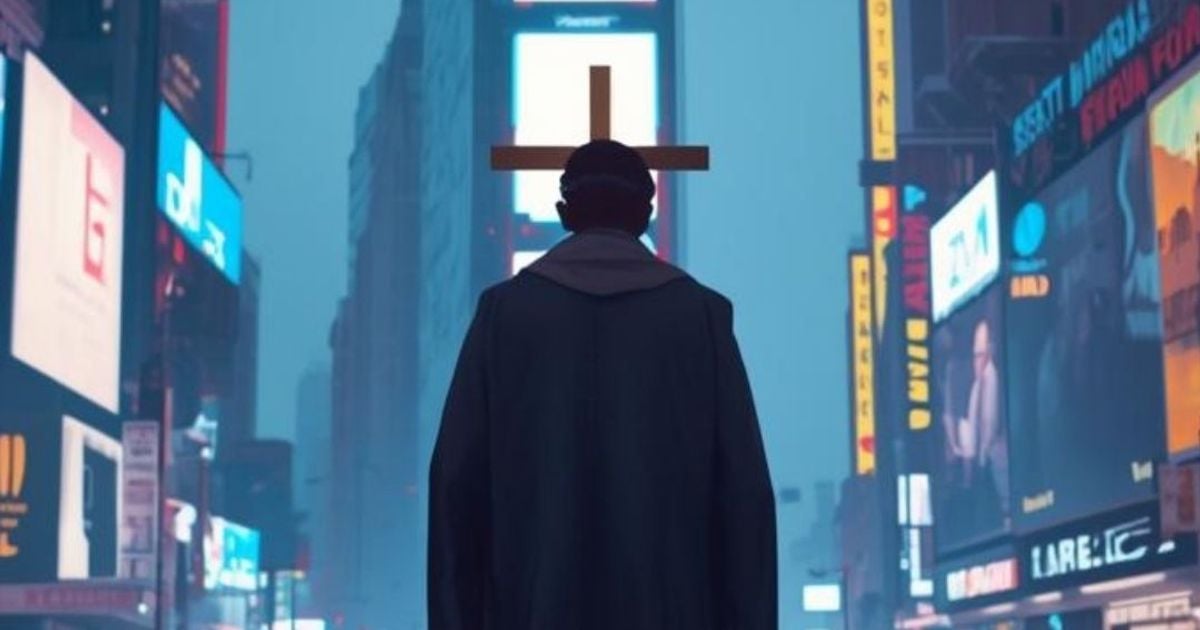
Before treating the dark night of the spirit, one thing has to be noted, so it is clear when this night begins and when that of sense ends. In a certain way they are both one night divided into two parts. The first part, that of sense, is common and comes to many. The second part, that of spirit, comes to the very few. Most people who know dryness have not yet met this second night.
The night and purgation of sense is bitter and terrible to sense. It hurts the part that wanted sweetness, images, and consolation. That pain is real. It is still the lesser night. Sense being stripped is not yet spirit being stripped.
The second part, that of the spirit, bears no comparison with the first. It is horrible and awful to the spirit. Saint John is not trying to frighten for sport. He is naming a threshold. The night you have already suffered in the senses is not the measure of what spirit's night will feel like. Few enter it. Those who do should not expect a longer version of the first. Sense's night is common. Spirit's night is rare, and it is worse. Do not measure the second night by the first.
John's insight about two distinct phases of transformation explains why so many people get stuck halfway through major life changes. We see this pattern everywhere in working-class communities. Someone gets their GED and expects college to feel easier, but higher education demands a completely different relationship with authority and self-advocacy. A factory worker gets promoted to supervisor and thinks management will be like their old job with better pay, but leadership requires dismantling their entire identity as 'one of the crew.' A woman leaves an abusive relationship and handles the logistics fine—new apartment, restraining order, changed locks—but then faces the deeper work of rebuilding her sense of worth and trust. The first phase feels manageable because you're still fundamentally the same person, just with different circumstances. The second phase is terrifying because it requires becoming someone you've never been before. Saint Juan lived in 16th-century Spain, but he understood something timeless about human psychology: we resist deeper change not because we're weak, but because it literally feels like dying. The person you were has to disappear for the person you're becoming to emerge. Most self-help culture ignores this reality, promising smooth progress and gradual improvement. But real transformation is more like controlled demolition followed by reconstruction. When you understand this pattern, you can prepare for the intensity instead of interpreting it as failure.
Explore this chapter with AI to uncover deeper meaning and practical takeaways.
AI Discussion