
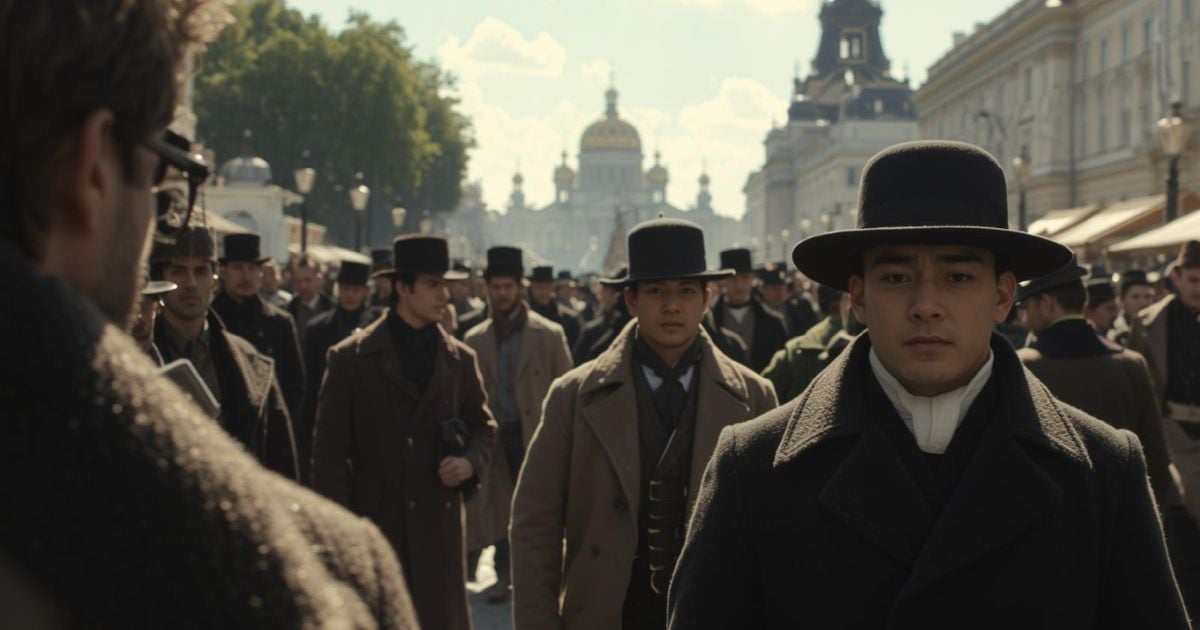
Zossimov examines Raskolnikov in the sickroom while Razumihin fusses over fresh linen and a house-warming party that night. The doctor is slow, fashionable, and tedious. Raskolnikov snaps that he is perfectly well and turns to the wall, counting petals on a clumsy white flower in the dirty yellow paper. Razumihin names the guests: his uncle, the investigator Porfiry Petrovitch, students, and Zametov from the police office. Zossimov wonders what a convalescent could want with a clerk who takes bribes, but Razumihin defends Zametov as a nice boy worth drawing in, not repelling.
Nastasya blurts that Lizaveta was murdered too. Raskolnikov whispers her name and feels his arms and legs as lifeless as though they had been cut off. Razumihin launches into the painter Nikolay, accused after Dushkin the dram-shop keeper brought in gold earrings Nikolay pawned for a rouble. Nikolay had gone white, run, later tried to hang himself from anxiety, and still said he found the box in the flat while painting. Officials have simply taken him for the murderer. They have not a shadow of doubt. They had arrested Dmitri too, turned the Kolomensky men inside out, and caught Nikolay in a tavern after he took the silver cross off. He still says he knows nothing of the murder and was frightened. Zossimov calls the earrings a fact. Razumihin says a doctor ought to see the man.
Razumihin is on fire. What offends him is not lying, which can lead to truth, but that they lie and worship their own lying. He reconstructs the evening: Koch and Pestryakov at the locked door, the real murderer upstairs, earrings dropped behind the door when Nikolay and Dmitri ran out. Raskolnikov cries, Behind the door? Lying behind the door? and sits up in blank terror before sinking back.
Zossimov thinks it a dream. Razumihin presses on about warm bodies and childish scuffling incompatible with axe murder, and says everything fits too well, too melodramatic. The chapter ends as a stranger enters, unknown to everyone present. Razumihin is still mid-argument, fist on the table, certain that psychology will free the painter. Zossimov has already called the reconstruction too clever. Raskolnikov has gone still on the sofa, waiting to see who has come through the door.
Part II Chapter IV is a masterclass in guilt by proximity. Raskolnikov does not confess; he listens. Razumihin does the work prosecutors dream of: timing, warm bodies, childish scuffling, ear-rings found the same hour, a killer who hid upstairs and dropped the box behind the door. Every beat is correct except the name. Nastasya's Lizaveta line shows how the domestic world collides with the crime. Zossimov wants soup and mushrooms, not murder. Porfiry and Zametov are coming to dinner. The comedy of Razumihin defending a bribe-taking clerk while solving the case in front of the murderer is almost unbearable. When Raskolnikov cries behind the door, the room offers him a dream. He cannot take it. Literature here teaches that the most dangerous investigator is the friend who loves you and tells the truth by accident. The stranger at the door shifts the plot to Luzhin, but the chapter's wound is already open: the map exists, and only Raskolnikov knows it is his.
Explore this chapter with AI to uncover deeper meaning and practical takeaways.
AI Discussion