
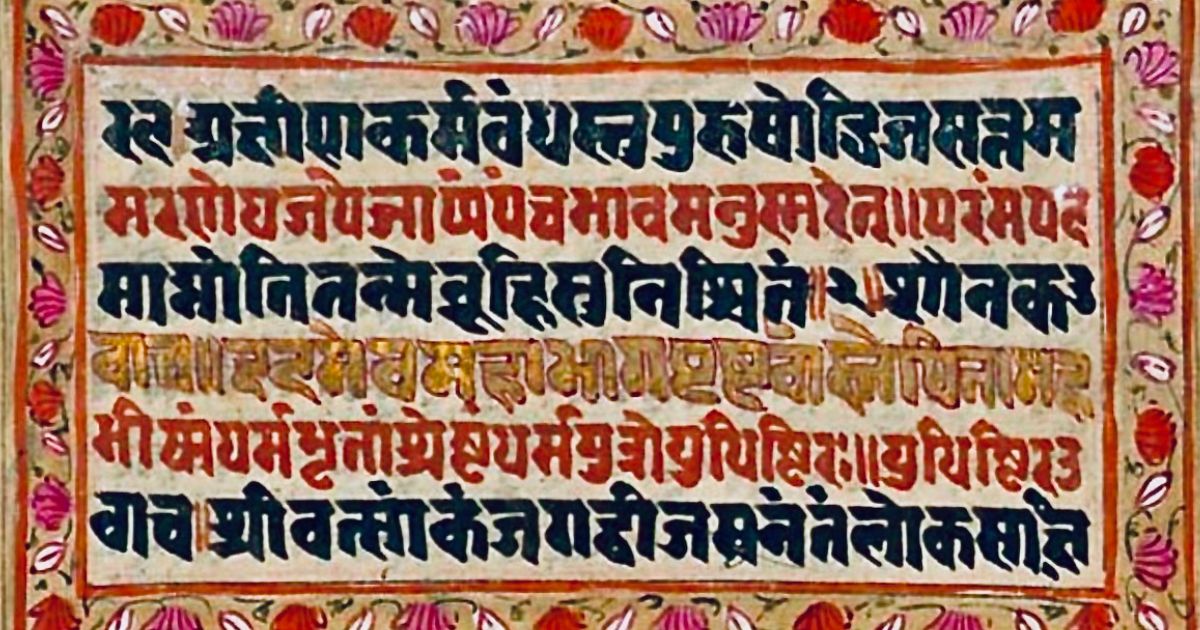
Krishna has just used strange words, and Arjuna is not satisfied with mysterious talk. He wants plain answers. Who is Brahma? What is the soul of souls? What is karma? What are the lord of lives, the lord of the gods, and the lord of sacrifice, and how can Krishna be that lord of sacrifice in a human body? And how does a good man find God at the hour of death?
Krishna answers step by step. He is Brahma. His being is the soul of souls. What goes out from Him and gives life is karma. He is lord of all living things and all gods. He is the lord of sacrifice, speaking here with Arjuna. Whoever thinks of Him alone at death comes to Him. Whoever thinks of something else goes where that thought leads, because the soul becomes like what it loves.
Keep Me in your heart always, Krishna says, and fight. Fix your heart and mind on Me with unwavering faith and you will reach Me. The yogi who shuts the gates of the senses, locks desire in his heart, holds the breath steady at the parting thought, and dies murmuring OM goes the highest way and is not born again into a life of pain. Even Brahma's world rolls back from death to life, and Krishna describes Brahma's day and night, when all beings fade away and rise again without their will. Above that lies another life, unmanifest and unchanging, and those who reach it do not return. This wisdom is richer than holy fruit, greater than gifts, better than prayer or fasting.
Krishna tells Arjuna that whatever fills your mind at death becomes your destination. This isn't mystical—it's describing how mental habits compound over decades to determine life outcomes. Consider how this plays out in factory towns and wage-earning communities. The factory worker who spends thirty years focused on how the company screws him over develops a mindset that sees only exploitation and unfairness. When layoffs come, he's psychologically unprepared for reinvention because his mental muscles are trained for grievance, not opportunity. Contrast this with the worker who, facing the same conditions, focuses on skills gained, relationships built, and problems solved. When change comes, she has practised seeing possibilities. The ancient text reveals a modern truth: your daily mental diet determines your life's trajectory. This isn't about positive thinking or denying real problems. It's about recognising that attention is a limited resource with compound interest. What you practice thinking about, you get better at thinking about. The question becomes: in a world that profits from your outrage and despair, what are you training your mind to see? Your last thought isn't random—it's the culmination of a lifetime of mental habits.
Explore this chapter with AI to uncover deeper meaning and practical takeaways.
AI Discussion