
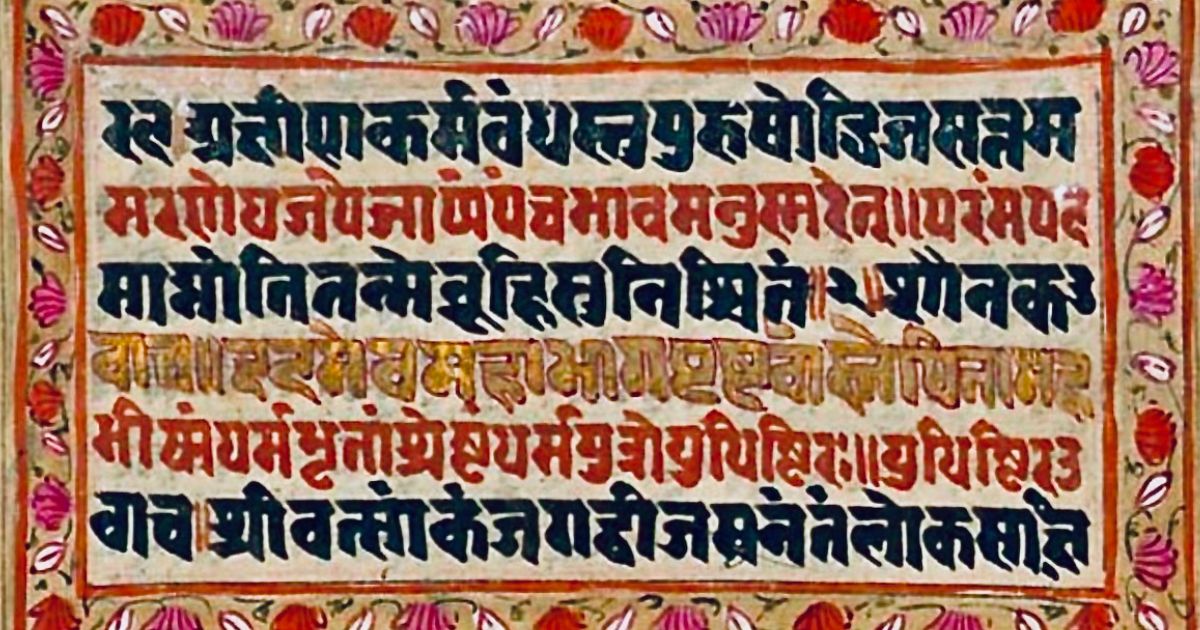
Krishna begins by repeating that real renunciation is not walking away from your work. Whoever does the right work without chasing gain is both a renouncer and a yogi, and the man who lights no fire and lifts no hand is neither. Let each person raise the self by the soul and not trample it down, because the soul can be the self's friend or its enemy.
The self-governed person takes pleasure and pain, heat and cold, glory and shame in the same way. Clod, rock, and gold look alike to him, and he treats friends, strangers, lovers, and enemies with equal grace. Krishna then describes the practice: sit alone in a still place on a cloth, a deerskin, and kusa-grass, hold the body and head steady, restrain the heart and senses, and rest the mind on Him. But there is a warning against too much fasting or feasting, too much sleep or too many vigils. The mind of such a yogi is like a lamp sheltered from the wind.
Arjuna objects that the heart is as wild as the wind, and no one could hold it. Krishna agrees it is hard, but says habit and steady self-command can tame it. Arjuna asks about the person who has faith and still fails, drifting like a cloud torn apart by lightning. Krishna says he is not lost. He is reborn, often in a good home, and picks up where he stopped. Such a yogi ranks above ascetics, scholars, and men of great deeds, and the truest of them, Krishna says, is the one who worships Him with his whole soul.
The Gita was written during a time of massive social upheaval, when old certainties were crumbling and people were searching for new ways to live meaningfully. Sound familiar? People on tight wages face similar disruption—jobs disappearing, institutions failing, old paths to security no longer guaranteed. In times like these, extremes feel safer than moderation. Going all-in feels like control. Working 70 hours feels more secure than working 40 and trusting you'll be okay. Crash dieting feels more powerful than slow, steady changes. Being completely selfless or completely selfish feels clearer than the messy middle ground of healthy boundaries. But Krishna understood something we're still learning: extremes are actually the least secure path because they're unsustainable. The person who works 70 hours burns out and loses their job. The crash dieter gains back more weight. The people-pleaser eventually explodes and damages relationships. Real security comes from finding rhythms you can maintain through good times and bad. The steady flame doesn't get blown out because it's not fighting the wind—it's learned to burn consistently regardless of conditions. In our current moment of constant crisis and change, this ancient wisdom becomes revolutionary: the most radical thing you can do is refuse the drama of extremes and choose the boring, powerful path of sustainable balance.
Explore this chapter with AI to uncover deeper meaning and practical takeaways.
AI Discussion