
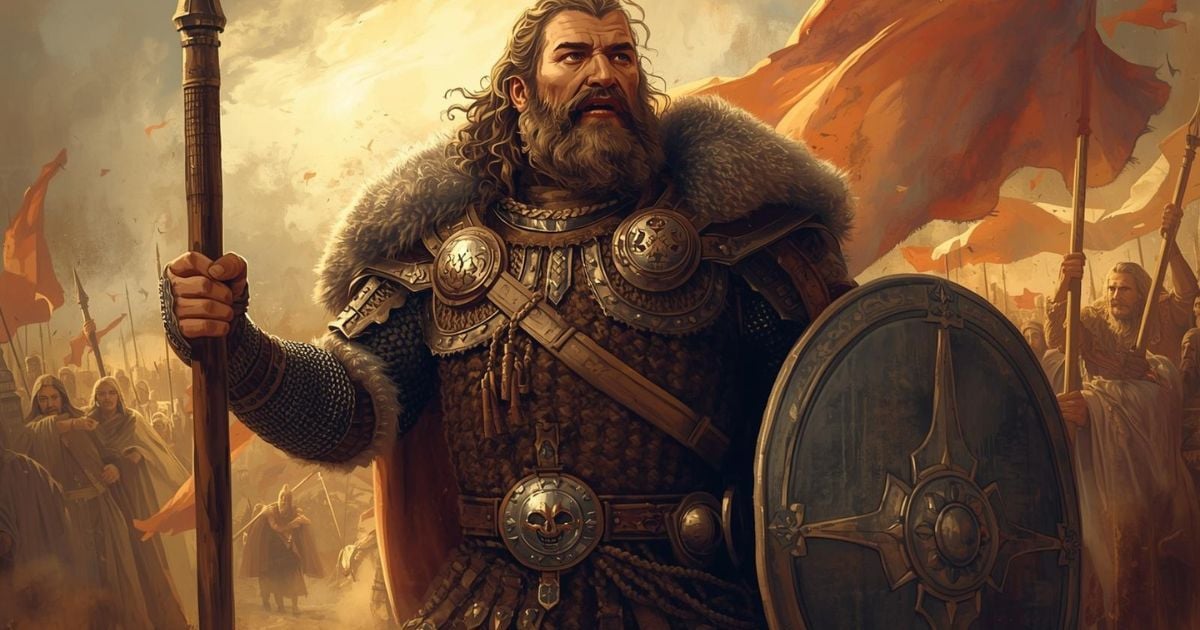
The messenger continues his grim prophecy, recounting an old battle between the Geats and Swedes to explain why Beowulf's death spells disaster. He tells how Higelac once defeated the Swedish king Ongentheow in brutal combat, with two Geat brothers, Wulf and Eofor, delivering the killing blows. Higelac rewarded them generously, giving Eofor land, treasure, and even his own daughter in marriage.
But the messenger warns that this old victory now becomes their curse. With Beowulf dead, the Swedes will see their chance for revenge against the weakened Geats. The messenger paints a bleak picture of their future: no more joy, no more feasts, only the sound of war-spears and ravens feeding on corpses.
The warriors then journey to see Beowulf's body, finding both their dead king and the massive dragon he slew. The dragon measures fifty feet long, surrounded by ancient treasures that had been magically protected for a thousand years, gold and weapons now corroded with age. The messenger emphasizes that only God could grant access to such treasure, suggesting Beowulf was divinely chosen for this final battle.
This chapter reveals how leadership creates both protection and vulnerability. Beowulf's strength kept old enemies at bay, but his death removes that shield. The detailed account of past violence shows how conflicts echo through generations, and how today's victories can become tomorrow's targets for revenge.
The messenger's prophecy reveals a brutal truth: every victory you win creates someone who wants revenge. When the Geats defeated the Swedes, they didn't just win a battle, they created a generational grudge. The Swedes remembered every humiliation, waiting for weakness to strike back. This isn't ancient history; it's workplace reality. The nurse who reports unsafe practices makes enemies of colleagues cutting corners. The factory worker who wins a grievance creates resentment among supervisors. The server who gets the good shifts earns jealousy from coworkers. We're taught to celebrate wins, but rarely warned about the backlash. The messenger understood what modern workers often miss: strength is temporary, but enemies remember forever. Smart victory requires thinking beyond the immediate win to long-term consequences. Sometimes crushing an opponent completely creates a lifelong enemy. Sometimes winning gracefully preserves relationships. The key is recognizing that every success changes the game board, usually by painting a target on your back. When you understand this pattern, you can prepare for the inevitable counterattack instead of being blindsided by it.
Explore this chapter with AI to uncover deeper meaning and practical takeaways.
AI Discussion