
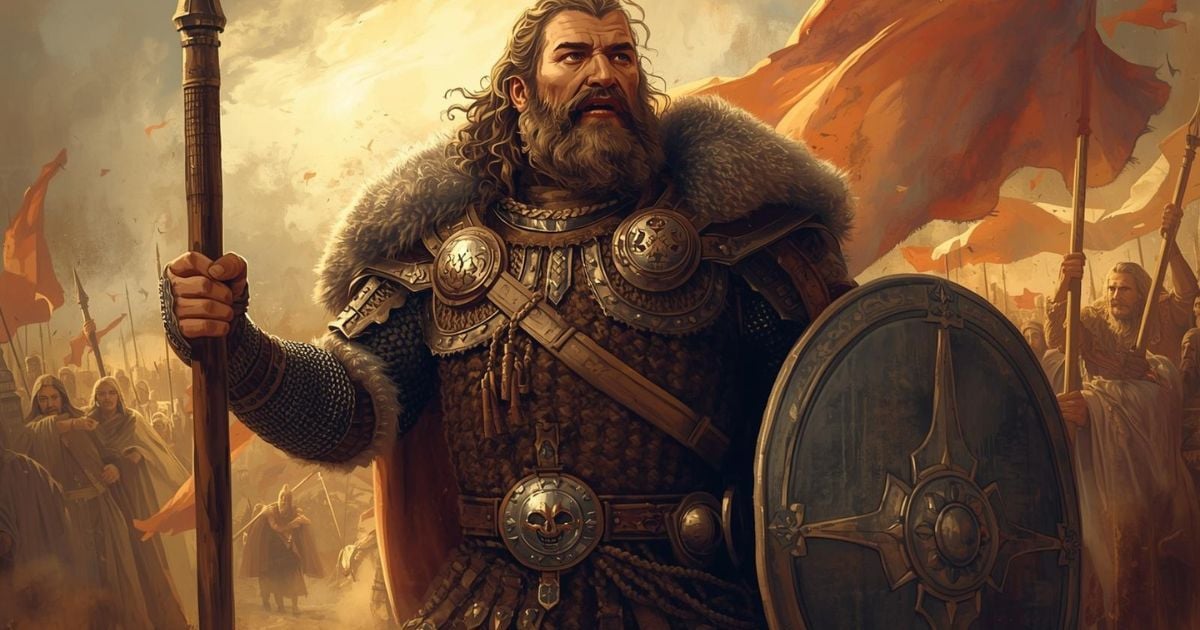
Wiglaf proves his loyalty by fighting alongside Beowulf, striking the dragon lower while Beowulf's sword finds its mark in the beast's middle. Together, they kill the monster, but victory comes at a terrible cost. The dragon's poison courses through Beowulf's veins, and he knows his death is near. Exhausted, he sits against the ancient stone wall while Wiglaf tends to his wounds, removing his helmet and cooling his fevered face.
In these final moments, Beowulf reflects on his fifty-year reign with satisfaction. He has no son to inherit his armor and weapons, but he takes comfort in knowing he ruled justly. He never sought unnecessary conflict, kept his word, and avoided the treachery that destroys so many leaders.
Most importantly, he can face death knowing he never killed his own kinsmen, a source of deep pride in a world where family betrayal is common. As the poison spreads, Beowulf makes one final request: he wants to see the dragon's treasure hoard before he dies. He asks Wiglaf to hurry to the cave and bring back the gold and jewels so his dying eyes can gaze upon the wealth he has won for his people.
This isn't greed, it's a warrior's need to see the tangible proof that his sacrifice has meaning. The chapter captures the bittersweet nature of heroic achievement: great victories often require great sacrifice, and the measure of a leader isn't just in their triumphs, but in how they face their final moments.
Beowulf's final accounting reveals something uncomfortable about human nature: we're terrible at predicting what will matter to us in the end. He doesn't count his victories or treasures, he audits his integrity. Did he keep his word? Avoid unnecessary conflict? Protect rather than betray? This pattern appears across cultures and centuries because it reflects a fundamental truth: power is temporary, but character leaves permanent marks. Modern research confirms this. Studies of elderly people show they regret not the risks they took, but the relationships they damaged and the promises they broke. Hospice workers report that dying people rarely wish they'd worked more hours or accumulated more stuff, they wish they'd been kinder, more present, more trustworthy. Yet we constantly make decisions based on immediate pressures rather than long-term character. We take shortcuts that compromise our integrity for short-term gains. We avoid difficult conversations that could strengthen relationships. We break small promises because the consequences seem minor. Beowulf's legacy audit offers a practical navigation tool: before making decisions, especially under pressure, ask his questions. Will this choice align with who I want to be remembered as? Am I protecting or betraying trust? Can I defend this decision when the accounting comes? This isn't about perfection, it's about intentionality. When you can predict how choices will feel in hindsight, you gain the power to live without regret.
Explore this chapter with AI to uncover deeper meaning and practical takeaways.
AI Discussion