
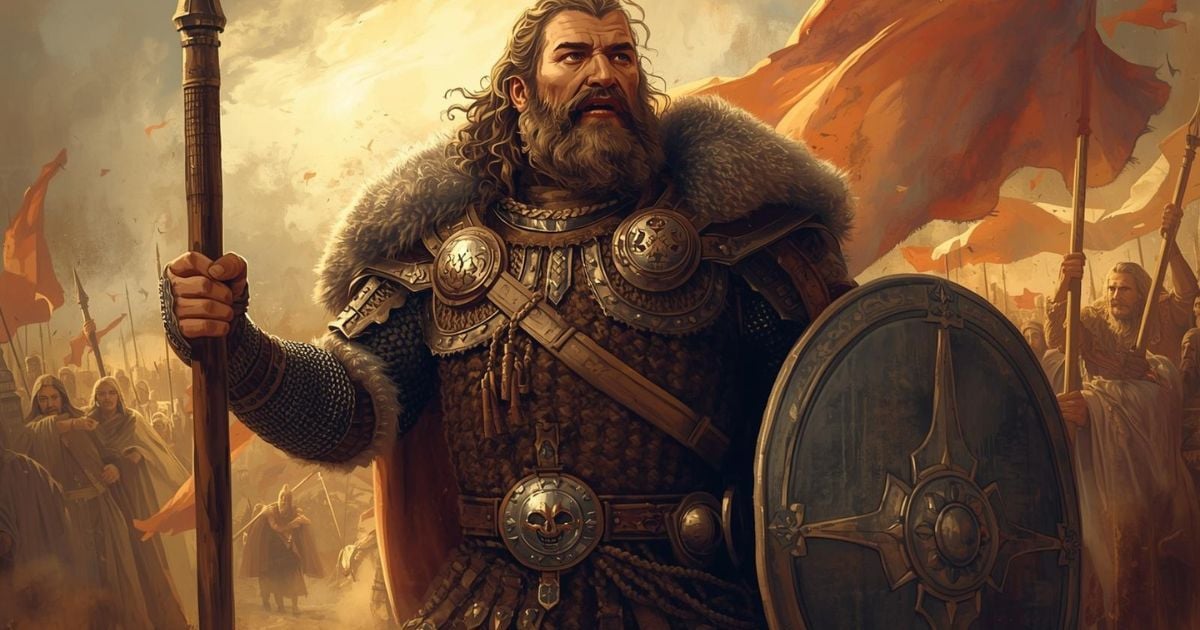
Beowulf continues recounting his family's tragic history, telling how his grandfather King Hrethel died of grief after one son accidentally killed another in a hunting accident. This personal tragedy led to larger conflicts between the Geats and Swedes, cycles of violence that shaped Beowulf's entire life. He recalls his own battles, including killing the Frisian champion Daeghrefn with his bare hands, establishing his reputation as an unstoppable warrior. Now, fifty years later and facing the dragon, Beowulf makes a fateful decision that reveals both his greatest strength and his tragic flaw.
Despite his warriors' presence, he insists on fighting the dragon alone, just as he did with Grendel decades earlier. But this isn't the same young hero - he's an aging king whose people need him alive. When he approaches the dragon's lair, the beast emerges in fury, breathing fire and smoke.
Beowulf strikes with his trusted sword, but for the first time in his life, his weapon fails him. The blade that never let him down grows dull against the dragon's hide. Suddenly surrounded by flames and facing a creature his sword cannot pierce, Beowulf finds himself in mortal danger.
Most devastating of all, his handpicked warriors - except one - flee in terror, abandoning their king in his greatest hour of need. The chapter captures how past trauma shapes present decisions and how even the mightiest heroes face moments when their strength isn't enough.
Beowulf's tragedy isn't that he's weak - it's that he's trapped by his own strength. For fifty years, he's been the guy who handles impossible situations alone. This identity served him well against Grendel, but dragons require different strategies. The same pattern plays out in modern workplaces every day. The nurse who never calls in sick becomes the supervisor everyone dumps on. The reliable friend becomes the unpaid therapist for everyone's problems. The competent employee becomes the person who can't take vacation because 'everything falls apart' without them. These people aren't failing - they're succeeding so consistently that they lose the ability to be human. Their competence becomes a cage. The most dangerous moment isn't when you're struggling - it's when you're so good at something that you can't imagine needing help. Beowulf's warriors flee not just from the dragon, but from watching their invincible king reveal mortality. When your whole value comes from being unbreakable, breaking becomes unthinkable. The real skill isn't being strong enough to handle everything alone - it's being wise enough to know when strength requires collaboration.
Explore this chapter with AI to uncover deeper meaning and practical takeaways.
AI Discussion