
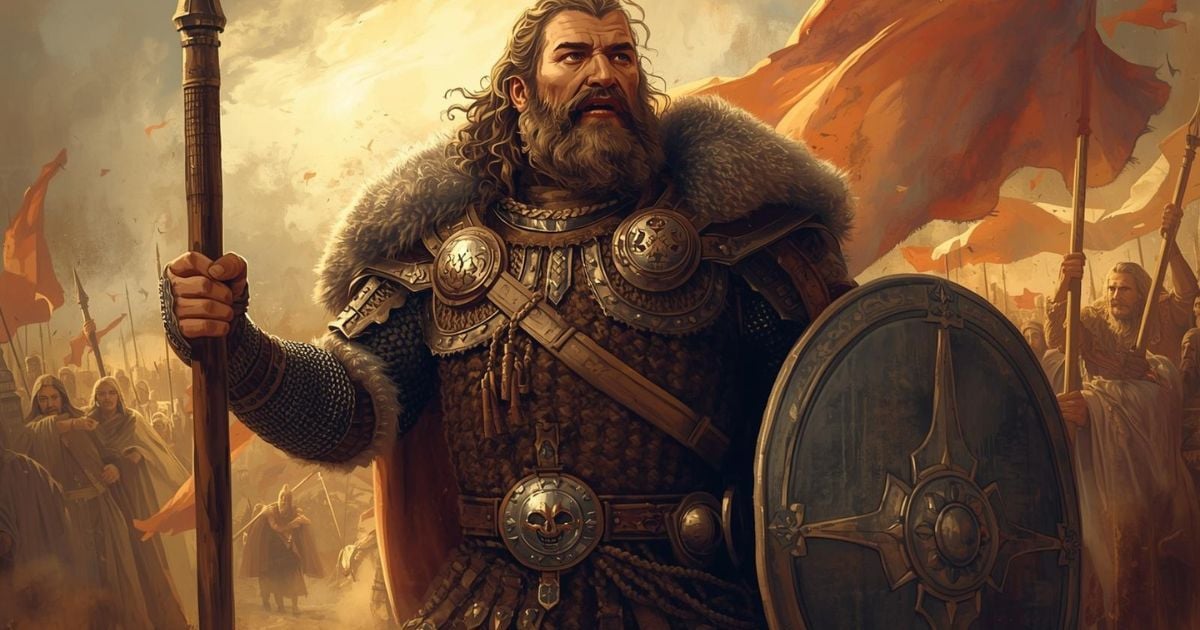
Dawn breaks on a transformed Heorot, and warriors from across the land gather to witness the aftermath of Beowulf's victory. Where once terror ruled the night, now crowds marvel at Grendel's bloody trail leading to the mere where the monster died. The scene buzzes with excitement rather than fear, few mourn the creature's death.
As the crowd grows, something powerful happens: Beowulf's reputation crystallizes. Warriors openly declare him the greatest hero under heaven, worthy to rule kingdoms. Yet they're careful not to diminish Hrothgar, showing political wisdom alongside their praise.
The moment becomes even more significant when a skilled bard begins weaving Beowulf's deed into song, connecting it to legendary heroes like Sigemund, who slew a dragon and claimed treasure. But the storyteller also invokes Heremod, a Danish king who started promisingly but became a burden to his people through poor leadership.
This isn't just entertainment, it's a masterclass in reputation management and cultural memory. The comparison elevates Beowulf while teaching what makes a leader worthy. As the crowd processes the night's events through story and song, they're not just celebrating victory; they're defining what heroism means and establishing Beowulf's place in the hierarchy of great men. The chapter shows how communities make sense of trauma and triumph, transforming raw experience into lasting meaning through the power of collective storytelling.
In Beowulf's time, reputation was literally life and death, without a good name, you had no allies, no protection, no future. The bards who sang your deeds weren't just entertainers; they were reputation architects who could elevate you to legendary status or doom you to obscurity. Today, we face the same dynamic in different clothes. Your boss's casual comment about your work ethic in a leadership meeting. Your neighbour's description of that incident with your fence to other neighbours. Your ex's version of why things ended, told to mutual friends. The parent who speaks up for your kid at school versus the one who doesn't. These modern 'bards' shape your opportunities, relationships, and how others see you before they even meet you. The Anglo-Saxon warriors understood something we've forgotten: reputation is collaborative. It's not enough to be good at your job, be a decent person, or handle your business. You need people who will tell your story well when you're not in the room. But here's the twist, the best way to get good storytellers on your side isn't to lobby for yourself. It's to become someone who tells other people's stories generously and accurately. When you elevate others in your storytelling, you build a network of people invested in your success. The question isn't whether people are telling stories about you. They are. The question is: are you building relationships with people who will tell those stories well?
Explore this chapter with AI to uncover deeper meaning and practical takeaways.
AI Discussion