
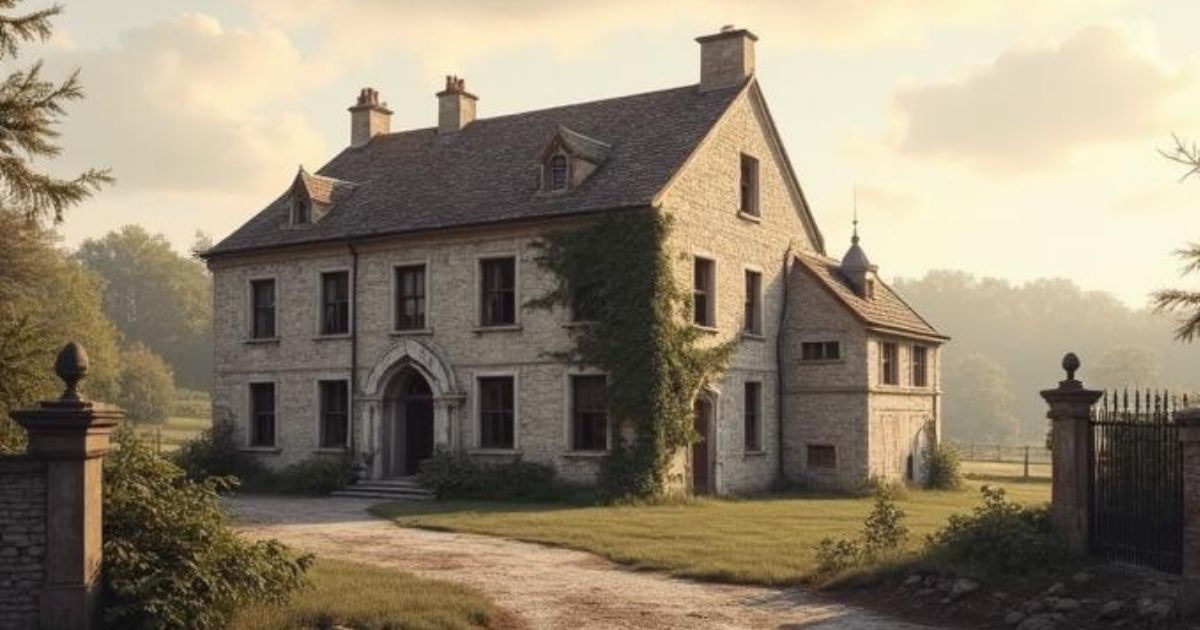
Lucy Snowe likes her twice-yearly visits to Bretton, the quiet house of her godmother, Mrs. Bretton. The widow is still handsome, dark, and even in temper, and her son John Graham has her features and her unbroken health, though his eyes are blue and his long hair turns gold when the sun is on it. Time beside Mrs. Bretton moves like a full river through a plain. Lucy wants that peace. She is glad when her godmother comes to fetch her, because trouble is gathering at the home she leaves, and she would rather not be there to watch it arrive.
A letter startles Mrs. Bretton. The next day Lucy finds a white crib and a tiny rosewood chest added to her own furniture. The new guest will be Polly Home, daughter of a distant relation of the late Dr. Bretton. Polly's mother was pretty and careless. She neglected the child, disappointed her husband, and left him by mutual consent. After a ball she caught a fever and died. Mr. Home, sensitive, half French and half Scottish, and given to experiments in a laboratory, blames his own severity. The doctors send him abroad. Mrs. Bretton will keep the little girl, and she hopes Polly will not grow up a flirt like her mother.
On a wet night the coach comes in. Polly will not be unwrapped until she is inside the drawing-room. She is tiny, neat, and doll-like, with a wax-delicate neck. She slips from Mrs. Bretton's lap, carries a footstool into a dark corner, and weeps into a handkerchief the size of a square inch, almost without sound. She goes upstairs on her own feet, sits propped in the crib, and is still crying under restraint when the light is out. At dawn she climbs a stool, tips an ewer she cannot lift, and dresses herself so she will know how when Harriet leaves. She presses a hand to her heart and calls for papa. At breakfast a mug of milk and a piece of bread sit in front of her, and she does not eat.
Polly Home shows us something profound about survival: sometimes the very strategies that protect us also isolate us. At six years old, she's already learned that depending on people leads to pain. Her mother died, her father sent her away, so she builds a fortress of self-sufficiency. She'll accept help but never ask for it. She'll be grateful but never vulnerable. It's brilliant survival logic, and it's also a trap. This pattern echoes through generations and across cultures. Think about the communities where asking for help feels like admitting failure. The workplaces where showing need gets you labeled as weak. The families where emotional distance becomes the norm because closeness has historically meant disappointment. We see it in the nurse who works double shifts rather than ask colleagues to cover. The single parent who does everything alone rather than risk their kids getting attached to someone who might leave. The teenager aging out of foster care who maintains perfect grades and perfect manners while never letting anyone close enough to truly know them. The protection is real, but so is the cost. When we armor ourselves against abandonment, we also armor ourselves against connection. The very independence that keeps us safe can keep us lonely. Recognizing this pattern isn't about breaking down walls. It's about understanding why they exist and choosing consciously when to maintain them versus when to risk letting someone in.
Explore this chapter with AI to uncover deeper meaning and practical takeaways.
AI Discussion