
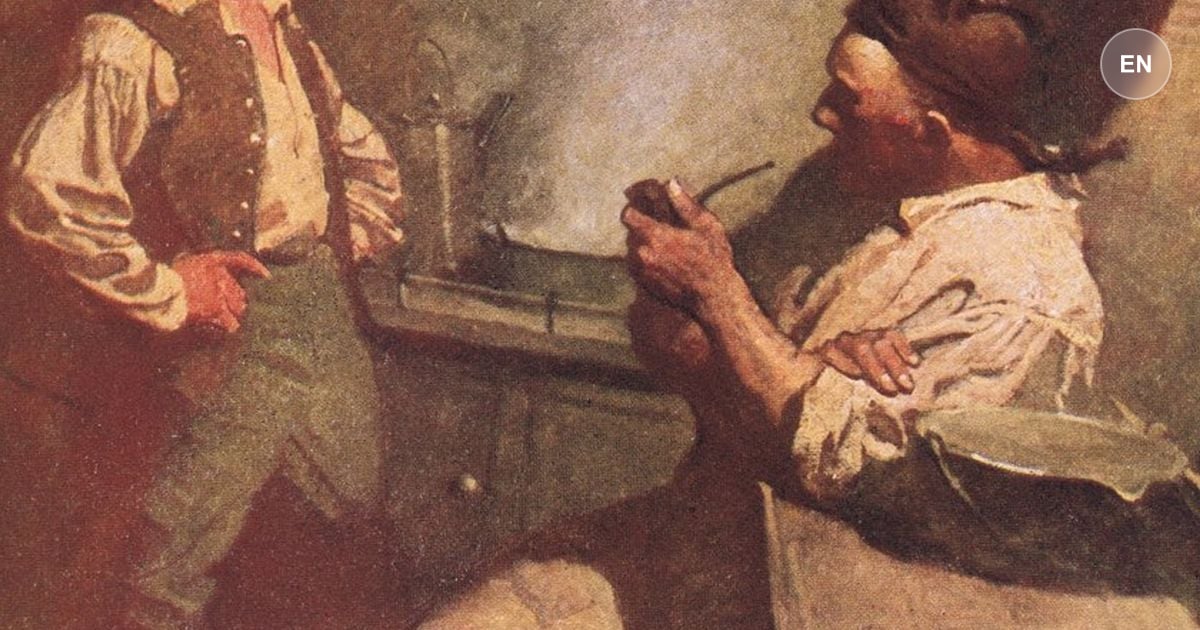
Jim faces the brutal aftermath of his fight with Israel Hands, dealing with both physical wounds and psychological shock as he sees the dead pirate's body underwater. Despite his injuries and terror, he forces himself to tend his wound and clear the ship of O'Brien's corpse, showing remarkable resilience under pressure. With the Hispaniola now his, Jim feels triumphant as he abandons the listing ship and wades ashore, convinced he's accomplished something heroic that will impress Captain Smollett and his friends.
His confidence grows as he navigates through the darkening island toward the stockade, proud of recapturing their ship from the pirates. However, his victory celebration proves premature. When he sneaks into what he believes is his friends' camp, expecting to surprise them with good news, he instead discovers he's walked straight into Silver's trap.
The pirates have taken over the stockade, and Silver's parrot gives away Jim's presence before he can escape. The chapter powerfully illustrates how success can breed overconfidence, and how the line between triumph and disaster can be razor-thin. Jim's journey from wounded victor to captured prisoner happens in moments, reminding us that in dangerous situations, there's rarely time to rest on our accomplishments. o thread the grove that lies before it, I was not so thoughtless but that I slacked my pace and went a trifle warily.
Jim's capture reveals something counterintuitive: our victories often set us up for our worst defeats. When we succeed, our brains flood with confidence chemicals that feel amazing but impair our judgment. We start believing our own heroic narrative and stop seeing threats clearly. This isn't just about pirates and treasure, it's about the nurse who saves a difficult patient then gets sloppy with safety protocols, the worker who lands a big client then shows up late to the next meeting, the parent who handles one crisis well then ignores warning signs in the next situation. The pattern is everywhere because success literally changes our brain chemistry. We become addicted to the feeling of winning and start taking shortcuts to get that high again. Stevenson understood this in 1883, writing during an era when British confidence in their empire was leading to dangerous overreach. Today, we see the same pattern in everything from workplace dynamics to social media behavior. The person who goes viral once then posts increasingly risky content chasing that same rush. The small business owner who has one good month then makes reckless investments. The key insight is that the moment you feel like you've figured everything out is exactly when you need to slow down and think harder. True intelligence means recognizing when your own success is making you stupid.
Explore this chapter with AI to uncover deeper meaning and practical takeaways.
AI Discussion