
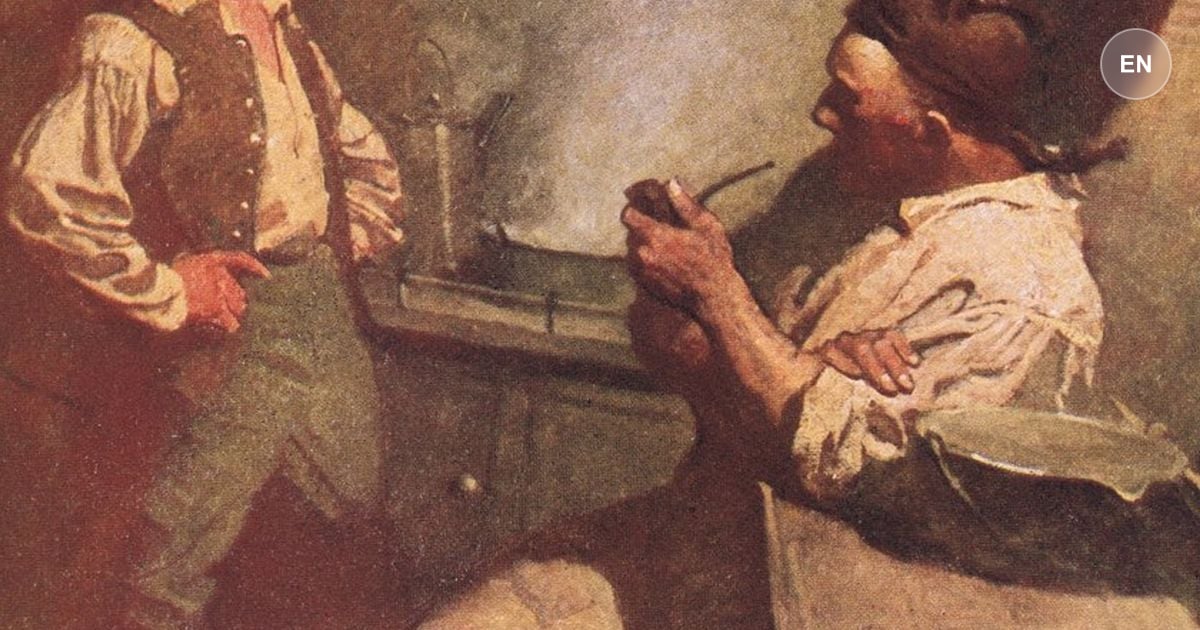
The loyalists make their desperate dash to the stockade as the mutineers close in, and the first real battle erupts. Dr. Livesey shows how quickly people adapt in crisis, weapons get redistributed based on skill, not rank, and everyone finds their role. The fight goes well at first: they drop one enemy and reach safety. But victory turns bitter when Tom Redruth, the quiet gamekeeper, takes a fatal shot. His death scene reveals something profound about loyalty and class.
This working man, who never complained or questioned orders, dies asking forgiveness from his social superior, showing how deeply ingrained hierarchy runs, even at death's door. Captain Smollett responds by raising the British flag, a powerful symbolic act. When the enemy starts firing cannons at it, the squire suggests taking it down for safety. Smollett refuses, and everyone immediately understands why: the flag isn't about patriotism, it's about defiance. It tells the mutineers they're not broken.
The chapter ends with a supply crisis, they're running low on food and the enemy is stealing their stores. Just when things look darkest, Jim Hawkins reappears, climbing over the stockade wall. His return offers hope, but also raises questions about where he's been and what he's learned. The chapter shows how leadership works under pressure: through symbols, through honoring the dead, and through refusing to show weakness even when you're outgunned.
Tom Redruth's death scene reveals something uncomfortable about human nature: even dying, he apologizes to his social superior. This isn't just about 1883 class structure, it's about how hierarchy embeds itself so deeply in our minds that we carry it to our graves. But Smollett's response with the flag shows the flip side: symbols can also liberate us from despair. The flag doesn't represent blind patriotism, it represents refusal to surrender identity. When the squire suggests lowering it for safety, everyone instinctively knows that would be spiritual death. This pattern plays out constantly in modern workplaces, families, and communities. The nurse who keeps her certification pin polished during hospital layoffs. The veteran who flies the flag during neighbourhood decline. The single parent who insists on birthday celebrations despite financial stress. Critics call these gestures empty symbolism, but they miss the point. These symbols aren't about the objects themselves, they're about the message: 'We're still here, we still matter, we haven't given up.' The question isn't whether symbolic leadership is real or fake. The question is: when your world is falling apart, what symbols will you choose to rally around, and what will those symbols say about who you're determined to remain?
Explore this chapter with AI to uncover deeper meaning and practical takeaways.
AI Discussion