
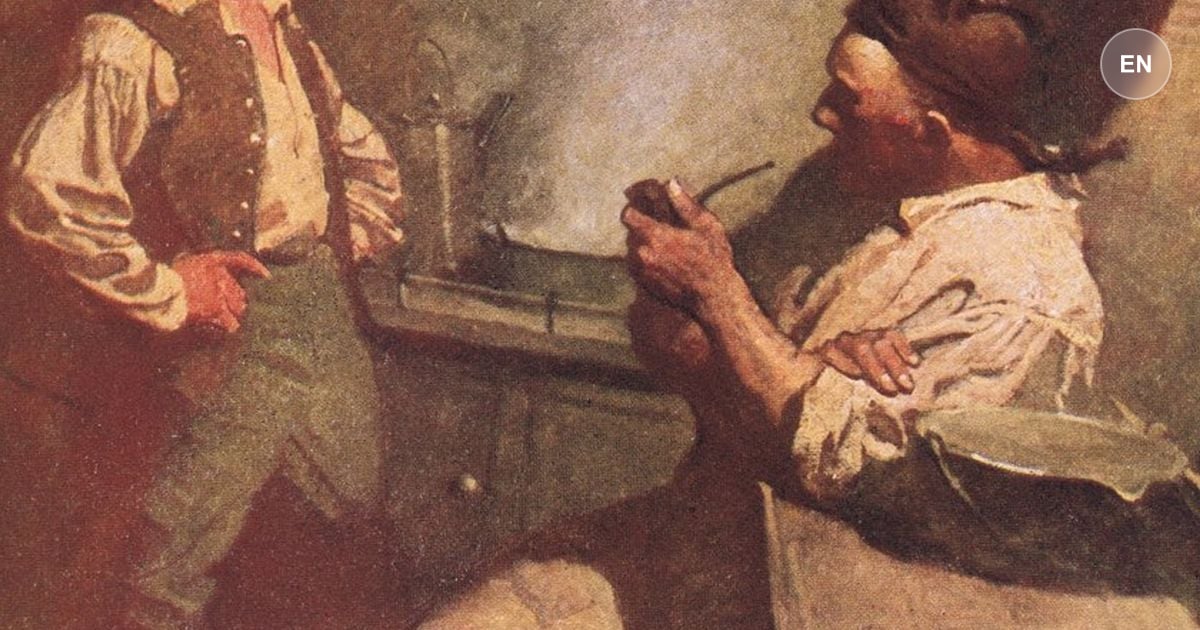
Jim wakes to find Treasure Island looming before them, and it's nothing like the adventure he imagined. The island looks menacing and unwelcoming, with gray woods and strange rock formations that fill him with dread rather than excitement. But the real danger isn't the landscape, it's what the island does to the crew. The moment they see their destination, discipline collapses.
Men who followed orders willingly now grumble and glare. Even honest sailors catch the infection of rebellion. Jim watches mutiny brewing like a storm cloud, and realizes that Long John Silver's overeager helpfulness is the most frightening sign of all, it means Silver knows exactly how close to the edge they are. The captain makes a desperate gamble, allowing most of the crew to go ashore, hoping Silver will keep them in line.
But Jim makes an even more desperate choice: he impulsively hides in one of the boats, abandoning the relative safety of the ship for the unknown dangers of the island. As he races ahead and plunges into the jungle, hearing Silver shout his name behind him, Jim crosses a line he can't uncross. This chapter captures that moment we all face when circumstances force us to choose between the devil we know and the devil we don't, and sometimes the only way forward is to leap into the unknown.
Stevenson understood something about human nature that remains true today: proximity to high stakes makes neutrality impossible. In 1883, it was literal treasure that broke down social order aboard the Hispaniola. Today, it might be a promotion, a layoff announcement, a workplace investigation, or a family inheritance. The mechanism is always the same - when something valuable is at stake, people start choosing sides whether you want them to or not. Jim's situation mirrors what many of us face in toxic workplaces: you arrive expecting one thing and discover you've walked into someone else's power struggle. The most dangerous moment isn't when the conflict explodes - it's the calm before, when authority figures become suspiciously helpful and everyone else starts acting strange. Stevenson shows us that the people who survive these situations best aren't those who pick the 'right' side, but those who recognize the pattern early and trust their instincts about when to make their move. The question isn't whether you'll be forced to choose - it's whether you'll recognize the signs early enough to choose your moment instead of letting the moment choose you.
Explore this chapter with AI to uncover deeper meaning and practical takeaways.
AI Discussion