
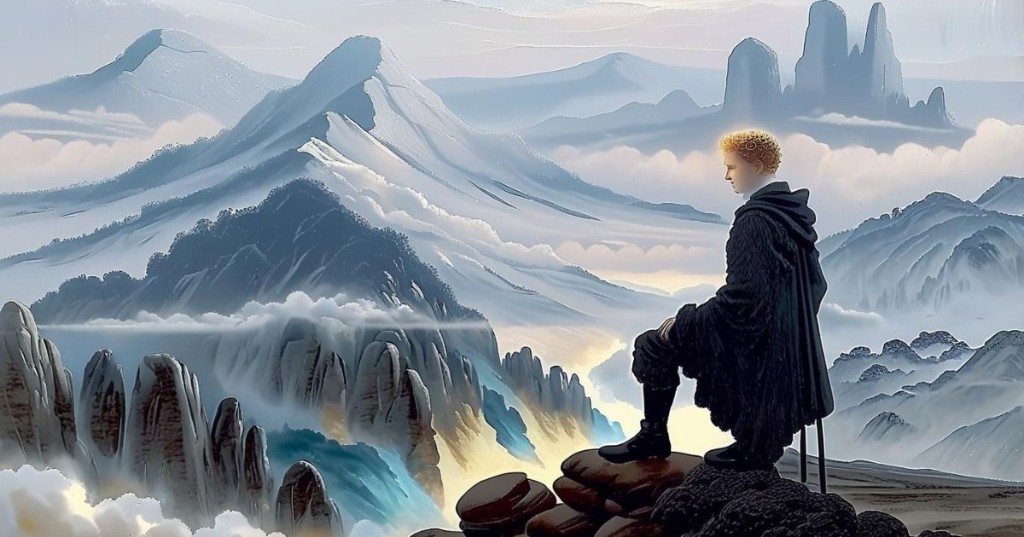
The shadow begs Zarathustra not to leave the cave. Without him, he says, the guests will fall back into gloom. The pope is weeping again, the kings are only acting brave, and the room is full of evening clouds and damp sadness. Stay, the shadow pleads, and keep the air strong. He is afraid that if Zarathustra goes, the little hope they built will collapse at once.
Then he grabs the magician's harp and sings a long desert song about palm trees, lost legs, Oriental maidens, and sweet foreign air. The song starts playful and turns stranger, full of nostalgia for a past that may never have been real. It is charming, silly, and sad all at once. The guests listen as if the music could carry them away from their fears and into a warmer, easier world.
The shadow shows how easy it is to escape into memory and performance instead of facing the present. He wants Zarathustra to be his anchor because he has no home, no goal, and no self of his own left. The desert grows, he sings at the end, and woe to anyone who hides it. His song is beautiful, but it also reveals how lost he feels without someone stronger to hold him in place.
Nietzsche wrote Zarathustra during Germany's rapid industrialization, when people constantly looked backward to simpler times that never quite existed as remembered. Today, we face the same pattern amplified by social media and political rhetoric. The shadow's desert song isn't really about the past—it's about the terror of standing alone in an uncertain present. His memories become increasingly absurd because nostalgia isn't about accuracy; it's about emotional comfort. We see this everywhere: the patient who won't do physical therapy because they 'never had problems before,' the coworker who sabotages new systems because 'the old way worked fine,' the neighbor who votes for politicians promising to restore a golden age that existed mainly in selective memory. The mechanism is always the same—when reality demands growth, effort, or uncomfortable truth, our minds offer us a beautiful lie about how much better things used to be. But here's what Nietzsche understood that we often miss: the past wasn't better, it was just finished. Finished things feel safe because we know how the story ends. The present feels dangerous because we have to write it ourselves. The shadow's real problem isn't that the desert was paradise—it's that he's afraid to create something new. When we catch ourselves or others retreating into 'remember when' stories, we're witnessing the exact moment when growth becomes possible. The question becomes: will we use these beautiful memories as stepping stones to build something better, or as walls to hide behind?
Explore this chapter with AI to uncover deeper meaning and practical takeaways.
AI Discussion