
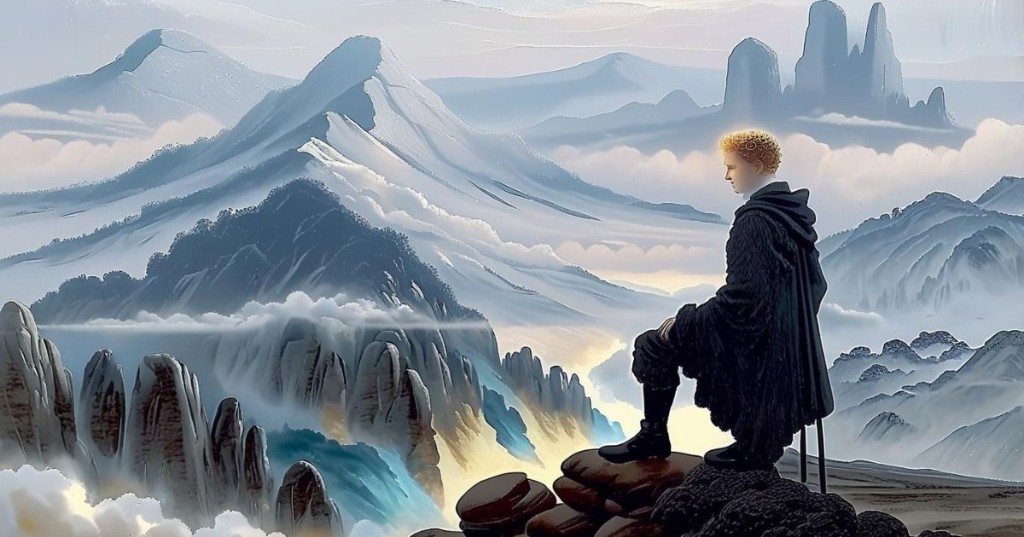
On a ship far from the Happy Isles, Zarathustra stays silent for two days, heavy with sadness. Then he tells the sailors a vision. In a gloomy twilight he climbs a hard mountain path with a dwarf on his shoulders. The dwarf is the spirit of gravity. It whispers that every stone Zarathustra throws up must fall down.
Zarathustra stops at a gate called This Moment. Two roads meet there: one backward into eternity, one forward into eternity. He asks whether everything that can happen has already happened and must return again. The thought frightens him. Then he sees a shepherd choking on a black serpent stuck in his throat. Zarathustra shouts, bite off its head. The shepherd bites, spits, and rises transformed, laughing a laugh that is not human.
The vision haunts him with longing and thirst for that superhuman laughter. The dwarf is the voice that says your effort is doomed. The serpent is the heaviest thought trying to swallow you. Courage means attacking, not negotiating with despair, because even pain respects a fighter who refuses to bow. Bite through what chokes you. What emerges may be more than the old you, and that uncanny laughter will not let him rest.
Nietzsche understood something crucial about human psychology: we often become our own worst enemy not through malice, but through misguided protection. The dwarf on Zarathustra's shoulders represents internalized messages from a world that benefits when working-class people stay small. Every time someone told you 'don't get above yourself' or 'people like us don't do that,' they planted a seed of the dwarf. These messages feel like wisdom because they protect us from immediate rejection or failure. But they become prison walls that keep us from discovering what we're actually capable of. The serpent choking the shepherd is even more insidious, it represents how we can become so consumed by defeating thoughts that we forget they're just thoughts, not truth. The key insight is transformative: when you recognize that your internal critic is often just internalized oppression speaking, you can choose to bite through it rather than be consumed by it. The shepherd's transformation into laughter shows that our greatest breakthroughs often come from facing our worst thoughts head-on. This isn't about positive thinking or denying real obstacles, it's about recognizing when your own mind has become the biggest obstacle of all. How often do we reject ourselves before the world even gets a chance to?
Explore this chapter with AI to uncover deeper meaning and practical takeaways.
AI Discussion