
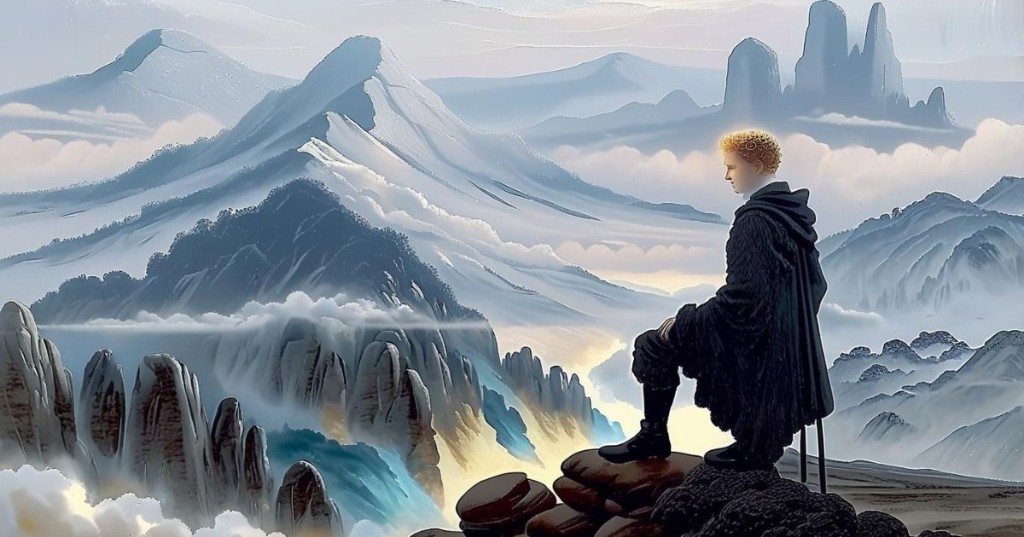
On a bridge, beggars and cripples block Zarathustra's path. A hunchback says the people will believe only if Zarathustra heals them. Fix the blind, the lame, and trim the hump, he jokes. Zarathustra refuses. People teach that removing a hump can steal a person's spirit, and giving sight can flood someone with ugliness they cannot bear.
Worse than missing limbs, he says, are reversed cripples: people who are only a big ear, a big mouth, or a big belly. He once saw a huge ear perched on a tiny man everyone called a genius. Walking among humans feels like walking through scattered body parts on a battlefield. Then he turns to revenge. We choke on the words it was. The will cannot go backward in time, so it gnashes its teeth and calls suffering punishment.
That spirit of revenge, he says, taught humans that life itself is a penalty. Freedom begins when creative will can say, thus I wanted it, and reshape the past into something owned. He stops, laughs nervously, and admits silence is hard for a talker. The hunchback asks why Zarathustra speaks one way to crowds and another to himself. Truth, it turns out, has more than one tone.
Nietzsche identified something crucial about human psychology: we become tormented by the unchangeable past. The phrase 'it was' drives us crazy because we desperately want control over what already happened. This creates what he calls the 'spirit of revenge', when we can't change the past, we try to make someone pay for it in the present. This pattern shows up everywhere in modern life. At work, the manager who makes new hires suffer because 'I had to pay my dues.' In families, parents who repeat harmful patterns while insisting 'it made me strong.' In healthcare, patients who rage at nurses because they can't rage at their disease. On social media, movements that focus more on punishment than progress. The revenge spirit whispers that suffering requires payback, that someone must be blamed for every pain. But this keeps us trapped in old wounds instead of building new solutions. Nietzsche suggests the antidote is creative will, transforming 'it was' into 'thus I willed it.' Instead of staying stuck in victimhood, we author our own story going forward. This doesn't mean forgetting injustice or avoiding accountability. It means refusing to let past pain dictate present choices. The question becomes: are you responding to what's happening now, or settling an old score?
Explore this chapter with AI to uncover deeper meaning and practical takeaways.
AI Discussion