
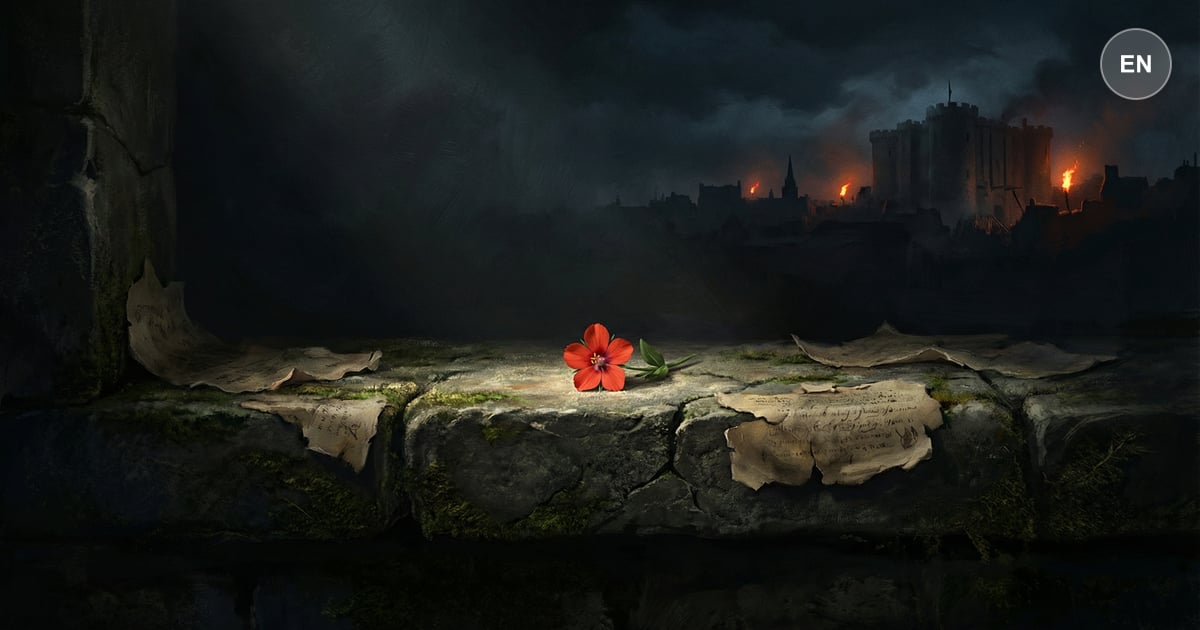
Society already has its verdict on Sir Percy Blakeney before he fills the inn doorway. He is rich, massive, a friend of the Prince of Wales, and apparently the dullest Britisher who ever set a clever woman yawning. A year ago he brought home Marguerite St. Just, the actress whose Paris salon admitted talent and shut out mere birth. Friends still cannot explain the marriage. They know she did not need his money. They know his coats, his inane laugh copied on the Mall, and the story of an insane mother. On this wet afternoon his Incroyable coat still sits perfectly across his shoulders. They do not know what his eyes do when the room stops scoring him.
He lolls in, gold-rimmed glass up, and asks why everyone looks sheepish. Marguerite tells him it is only an insult to his wife. The Vicomte offers the usual reparation between men of honour. Percy wonders, in sleepy wonderment, where the boy learned to speak English, then sits down and calls duels demmed uncomfortable things. Marguerite names the picture: the British turkey and the French bantam. She says he would provoke the saints and keep his temper. He joins the laugh against himself, taps for punch, and bows her out with consummate gallantry when she leaves to bid Armand goodbye before the tide.
Only Sir Andrew, newly gentled by Suzanne, sees the look that follows her: deep, hopeless passion from the inane and flippant husband the room has already dismissed.
Percy Blakeney's strategic foolishness reveals something crucial about survival in hostile environments: sometimes the smartest people pretend to be the dumbest. This pattern shows up constantly where people live on a wage, where appearing too capable can make you a target. The warehouse worker who never volunteers answers during safety meetings but privately documents every violation. The home health aide who acts confused about family dynamics while carefully noting signs of elder abuse. The janitor who seems to understand no English but actually speaks three languages and knows which executives are embezzling funds. These aren't acts of cowardice—they're acts of strategic self-preservation and, often, community protection. In environments where knowledge equals danger, ignorance becomes armor. The wealthy Sir Percy could afford to play the fool because his social position protected him from real consequences. People living on a wage who adopt this strategy face different stakes—they're often protecting not just themselves but their families and communities from retaliation. The key insight is recognising the difference between genuine incompetence and performed incompetence. One stems from limitation, the other from calculation. When you can spot this difference, you understand something profound about power dynamics: the most dangerous people are often those who convince you they're harmless. This raises uncomfortable questions about our own assumptions—who have we dismissed as 'not that smart' who might actually be playing a deeper game than we realise?
Explore this chapter with AI to uncover deeper meaning and practical takeaways.
AI Discussion