
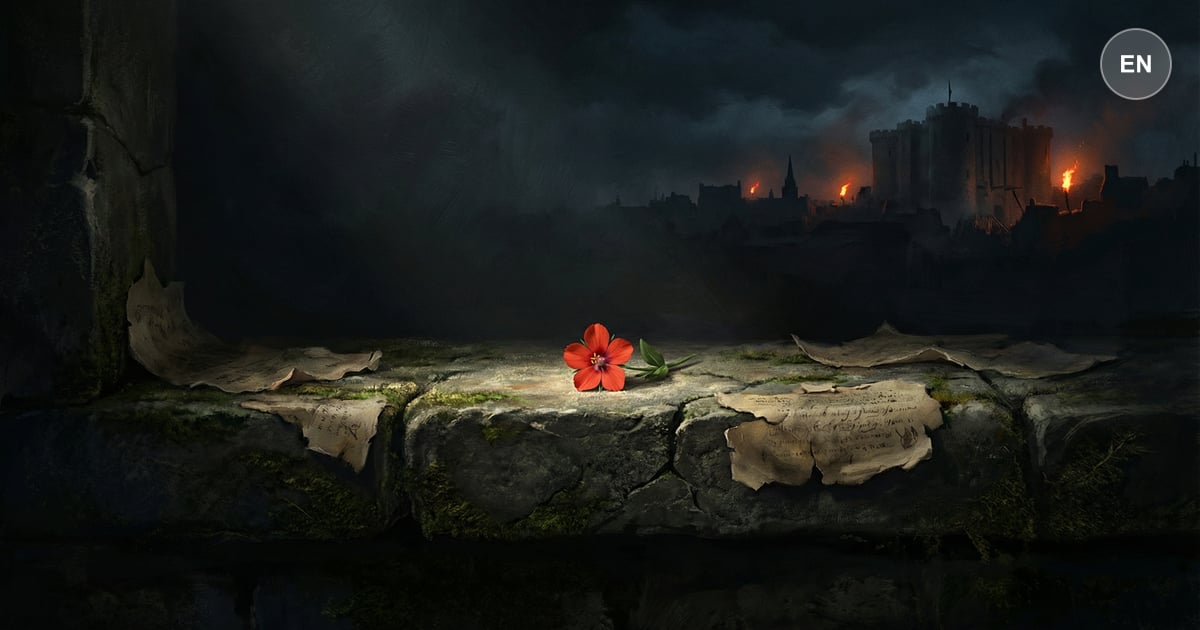
Feeling runs high across England against the French massacres, yet Pitt will not start a costly war, and Fox will not arm the country because one set of Frenchmen murders another. At The Fisherman's Rest, Sally spies a dripping horse in the yard. Lord Antony Dewhurst comes in wet, kisses her, then throws a quick glance at the two strangers still playing dominoes. For a moment anxiety clouds his merry face. Jellyband boasts they are among friends and names a loyal newcomer in business. Antony asks who else is coming. Sir Percy and Lady Blakeney will stop to see her brother off on the Day Dream. Antony repeats the name in astonishment, then covers it with hunger and a demand for the best supper Sally can cook.
Wheels clatter. The Comtesse de Tournay, Suzanne, the Vicomte, and Sir Andrew Ffoulkes enter, and Antony greets them with both hands. The Comtesse stretches aristocratic hands to the blaze and says they have already forgotten what they suffered. Suzanne looks round the hearth, the oak rafters, and the yokels in smocks, and says this is England. Sir Andrew's eyes meet hers, and colour rushes into her face.
The Vicomte ogles Sally until Harry Waite's friends haul him out of the room. The two strangers never look up from their wine. The Comtesse calls Suzanne back to the table. Supper steams in the doorway, and the inn that spent the afternoon arguing politics is now a corridor for people who cannot afford a careless room.
This chapter shows us something profound about human nature: when everything falls apart, people's true priorities emerge. The French refugees could have remained bitter and entitled, but instead they show genuine gratitude. The English rescuers could have demanded recognition, but they work in secret. Even the young people, thrust into adult situations, rise to meet the moment with courage and quick thinking. We see this same pattern today in every major crisis—natural disasters, economic collapse, family emergencies. Some people become their best selves under pressure, while others reveal selfishness or cowardice they'd successfully hidden during normal times. The inn in this chapter becomes a testing ground where everyone's character gets evaluated quickly and accurately. There's no time for pretense when lives are at stake. This creates an interesting paradox: crisis strips away our masks, but it also demands that we perform new roles—protector, refugee, ally, stranger. The people who navigate this best are those who can quickly assess what the situation requires and step up accordingly. They don't waste time on pride or social convention when someone needs help. Today's equivalent might be the nurse who stays late during a staffing crisis, the neighbour who takes in a family after a fire, or the coworker who covers shifts when someone's dealing with addiction or domestic violence. The question becomes: when your moment comes, what will crisis reveal about who you really are?
Explore this chapter with AI to uncover deeper meaning and practical takeaways.
AI Discussion