
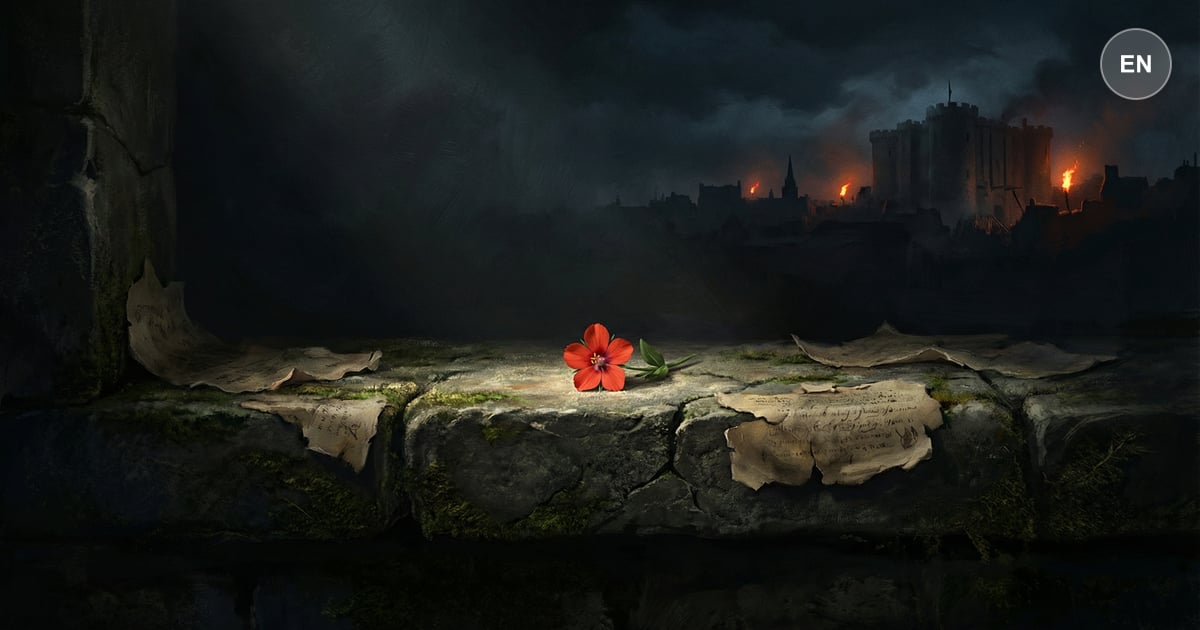
Desgas is still two hundred yards off when Percy slips out. Chauvelin, more helpless than a man felled by a fist, can neither see nor speak. He reaches the door as the soldiers halt and stammers after the tall stranger. They saw nothing in the dark. He dare not tackle Percy alone: Brogard is a fool, and the Englishman has the strength of a bullock. Jutley has sent forty men. They are to shadow a tall stranger, not detain him, and let him walk into Père Blanchard's hut. A tall Englishman spoke with Reuben Goldstein about a horse and cart for eleven o'clock. One soldier goes to ask if that cart has gone.
Marguerite hears every word from the loft and feels the net close with nothing she can cut. Desgas comes back with an elderly Jew in a greasy gaberdine, corkscrew curls, and a shuffling stoop. Reuben cannot be found; this man will sell what he knows. He and Reuben met the tall Englishman on the road. Reuben's lame nag took the fare and a handful of gold. The stranger even paid this man twenty francs to hold his tongue. Chauvelin jingles five gold pieces instead. The Jew knows every stone of the St. Martin Road to the hut. He says they will find Reuben's heap in the road before Miquelon.
After a pause he says, I accept. Chauvelin threatens a beating if he has lied and ten more gold pieces if they find the Englishman. The priest's soutane comes off. Desgas is sent for another dozen men along the same road. Chauvelin wants sport at the lonely hut: a wounded fox to make shrink before the end. He laughs that low laugh and leads his secretary out. In the loft Marguerite has the destination, the guide, and no way yet to use them. The hunter has hired his own cart. The road to the cliffs is already moving.
In Orczy's world, a Jewish trader appears servile and powerless, yet he alone possesses the information that will determine the Scarlet Pimpernel's fate. He understands perfectly that knowledge is currency, and he negotiates accordingly. This pattern reveals something profound about how power actually works - it's not always where the org chart says it is. Today, we see this everywhere. The hospital CNA knows which doctors are competent and which are dangerous, but administrators rarely ask. The customer service rep knows which complaints signal bigger systemic problems, but management dismisses their insights. The janitor overhears boardroom conversations that could predict layoffs months ahead. The night shift worker knows which equipment is about to fail. These people aren't powerless - they're information brokers operating in a system that doesn't recognise their value. The smart ones, like Orczy's trader, understand their position and use it strategically. They watch, listen, and remember because survival depends on reading situations accurately. When you can identify who really holds the cards in your workplace or community - regardless of their official title - you're seeing the actual power structure, not the one on paper. The question becomes: how do you build relationships with these real power holders without exploiting them, and how do you recognise when you're the one holding valuable information that others need?
Explore this chapter with AI to uncover deeper meaning and practical takeaways.
AI Discussion