
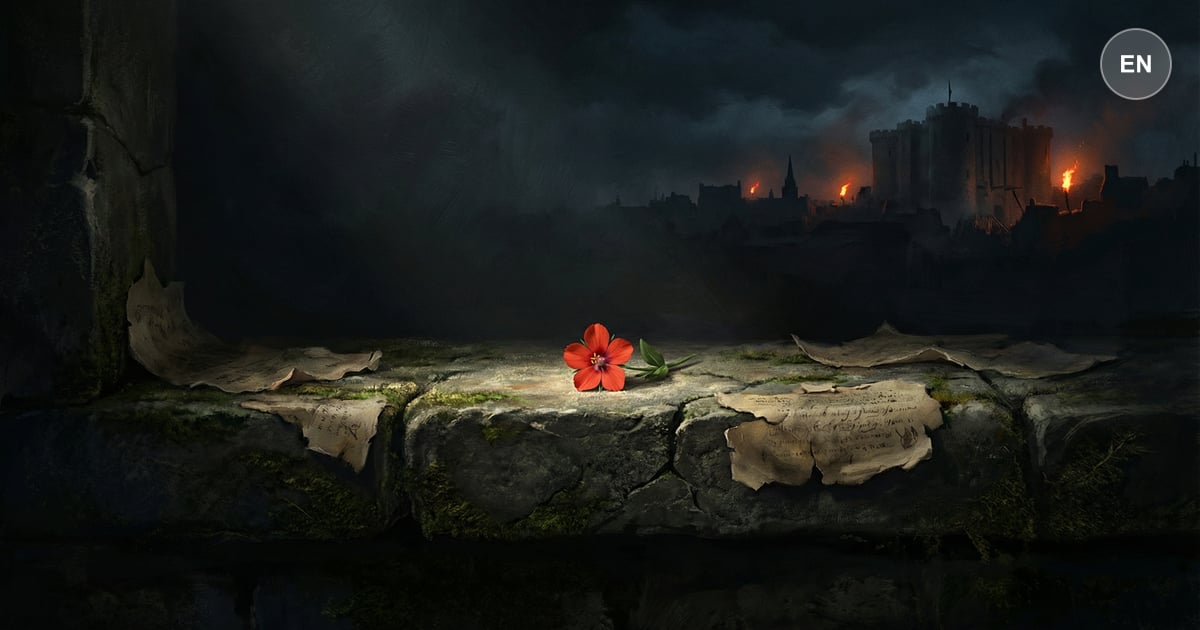
Marguerite wants Brogard back for more news. Andrew stops her. The walls have ears in France, and joy spoken aloud is a signal. He has held something back since Dover: he saw Chauvelin on the beach, disguised as a curé so well that Satan would scarce have known him, bargaining for a swift run to Calais. The Frenchman must have sailed less than an hour after the Foam Crest. The hour's start they thought they owned is already thinning.
She still paints a rose-coloured plan: Percy will walk in, they will be mid-Channel, Chauvelin will clutch empty air. Andrew shakes his head. The factor she is forgetting stands six foot odd high and has the name Percy Blakeney. Stolen papers have already shown Chauvelin the meeting at Père Blanchard's hut. Armand, the Comte de Tournay, and others will keep the appointment because no fresh order reached them. Percy's note at the ball said he would start tomorrow, alone. He will not abandon men who trusted his word. As for breaking that word, Andrew calls the thought preposterous. She had, for a day, forgotten Armand. The tears come back with the brother she sold a secret to save.
She stops pleading for retreat. She will not shame herself by asking Percy to drop his duty. What she can do is make sure he knows the hunter is on his heels. She sends Andrew into the village on reconnaissance and pays Brogard for the loft. From the straw behind tattered curtains she can see and hear while remaining unseen. Andrew begs her not to reveal herself unless she is alone with Percy. She promises. Then she watches him walk out into the night, her face for a moment serene.
Marguerite faces every partner's nightmare: watching someone you love walk toward danger because that's who they are. In 1905, she could have used emotional manipulation to make Percy abandon his rescue missions. Today, we face the same choice constantly. The mother whose son wants to be a firefighter despite her terror. The wife whose husband wants to start his own business even though it means financial risk. The friend whose partner finally decides to leave an abusive relationship, knowing the most dangerous time is right after leaving. Real love means supporting someone's authentic path even when it scares you. It means becoming their safety net, not their anchor. Marguerite chooses to help Percy plan for danger rather than pretend it doesn't exist. She becomes his lookout instead of his obstacle. This pattern reveals itself everywhere: controlling love tries to eliminate risk by controlling choices, while supportive love helps prepare for risks while honouring the person's values. The difference shows up in how we respond to fear. Do we demand someone become smaller to make us feel safer, or do we help them become stronger to handle the dangers they're choosing? When someone you care about wants to take a risk that aligns with their deepest values, your response reveals whether you love who they are or just what they give you.
Explore this chapter with AI to uncover deeper meaning and practical takeaways.
AI Discussion