
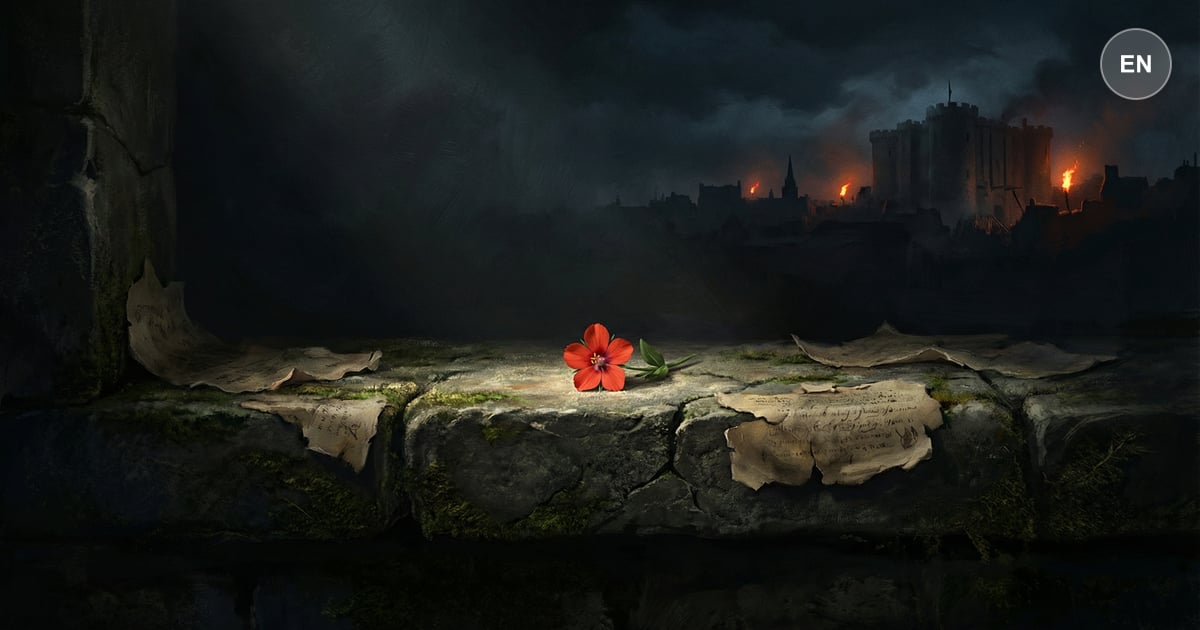
Under the sycamore Marguerite turns the ring and tells herself it is ridiculous. Everyone in town wears the little flower. She wears it in gems herself. What connection could there be between her exquisite dandy and the daring plotter who snatches victims from Paris? Suzanne runs across the lawn, fresh as a rosebud, wanting a day of old convent secrets. Marguerite hides the ring in her kerchief and tries to sound gay. Suzanne speaks of Sir Andrew and of waiting until papa is safe. The Comte de Tournay is one of those Chauvelin would kill if he named the Pimpernel. Then Suzanne, unconscious of the blow, says Lord Hastings came this morning: all is well with papa, and the great Scarlet Pimpernel himself has gone to save him. He was in London this morning. He will be in Calais perhaps tomorrow. The names collapse. Percy. Her husband. The man she betrayed last night. The mask of the inane fop had been a good one. No wonder Chauvelin's spies missed him. Last night the agent found only a sleeping fool on a sofa. In saving Armand, has she sent her husband to the guillotine?
Suzanne, alarmed by her colour, offers to go. A groom brings a sealed letter by runner. It is Armand's compromised note, returned. Chauvelin has kept his word because he is already on the track. The runner says a gentleman at the Rose and Thistle, opposite Charing Cross, was waiting for a special coach posted straight to Dover.
Marguerite sends Suzanne in, orders a travelling dress, and calls for her coach and the four swiftest horses. Alone on the lawn she murmurs, What's to be done? Where to find him? Then she stops rehearsing guilt. Percy has sailed from London Bridge. Chauvelin will post to Dover and reach Calais about the same time. The Comte, the other fugitives, and Armand all wait for a man who does not know he is followed. She cannot find him in Calais alone; Chauvelin stole the itinerary. She will go first to Sir Andrew Ffoulkes. Without haste, but without hesitation, she walks into the house.
Marguerite's discovery forces us to confront an uncomfortable truth: the people closest to us might be wearing masks we never noticed. Percy's foolishness wasn't weakness—it was strategic camouflage that protected his dangerous rescue work. This pattern echoes throughout life on a wage today. The coworker who seems 'lazy' might be conserving energy for a second job. The neighbour who appears 'antisocial' might be protecting their family from scrutiny. The teenager acting 'rebellious' might be fighting battles we can't see. These masks aren't deception—they're survival tools. Society often forces people to hide their struggles, their ambitions, or their activism behind acceptable facades. A single mother might downplay her exhaustion to keep her job. An undocumented worker might act invisible to stay safe. A person with mental illness might perform 'normal' to avoid discrimination. The tragedy isn't that people wear masks, but that we stop looking for the human being underneath. Marguerite's shock reminds us that our assumptions about others often say more about our own limitations than their reality. When we decide someone is 'just' lazy, difficult, or shallow, we stop seeing their full humanity. The question becomes: what masks are the people in your life wearing, and what would happen if you looked close enough to see past them?
Explore this chapter with AI to uncover deeper meaning and practical takeaways.
AI Discussion