
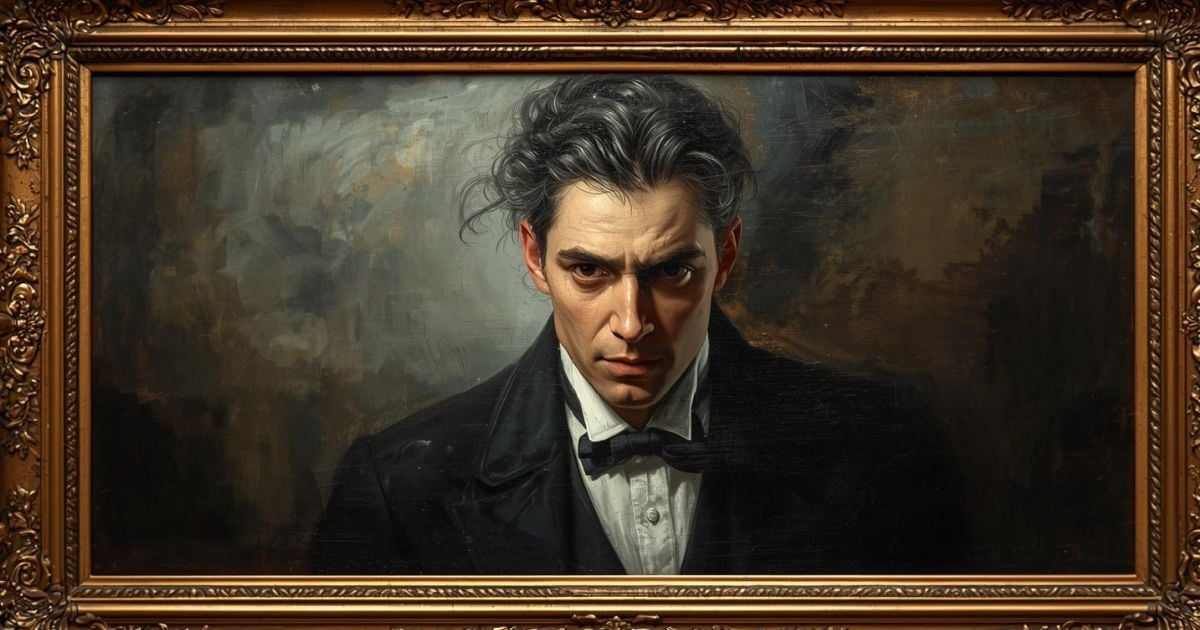
A cold rain falls as Dorian's hansom crawls toward the East End, and he repeats Lord Henry's old motto about curing the soul by means of the senses and the senses by means of the soul. Innocent blood has been spilled, forgiveness seems impossible, but forgetfulness still might be bought in dens where new sins erase old memory. Hunger for opium gnaws at him until the driver leaves him at a shabby house near the quay.
Inside the lamplit den Dorian finds Adrian Singleton, one of the young men ruined by his influence, and learns that friendship has collapsed while the drug remains. A woman sneers that there goes the devil's bargain when Dorian pays her to be silent, then hiccoughs that Prince Charming is what he likes to be called. The phrase will matter before the night ends.
Leaving the den, Dorian is seized by James Vane, Sibyl's brother, who swears revenge for his sister's death and forces him under a lamp. Dorian's unchanged face saves him: the avenger sees a boy of twenty, not the man of nearly forty he hunts. Vane releases him in horror, but a woman by the river confirms the truth: Prince Charming made her what she is eighteen years ago, and he has not aged since.
Chapter 16 looks like descent, but Wilde is really staging a reckoning. Dorian wants oblivion and finds a ledger. Adrian Singleton is what influence looks like when the influencer leaves. James Vane is what grief looks like when it keeps searching. The woman who cries Prince Charming is what time looks like when the face refuses to change. Dorian's supernatural youth saves him for a moment and condemns him in the next breath. The chapter asks whether you can cure a soul by means of the senses when the senses keep leading you back to the people you ruined. Wilde's answer is cruel and clear: forgetfulness is not a place. It is a drug, and the past stands at the door when the drug wears off.
Explore this chapter with AI to uncover deeper meaning and practical takeaways.
AI Discussion