
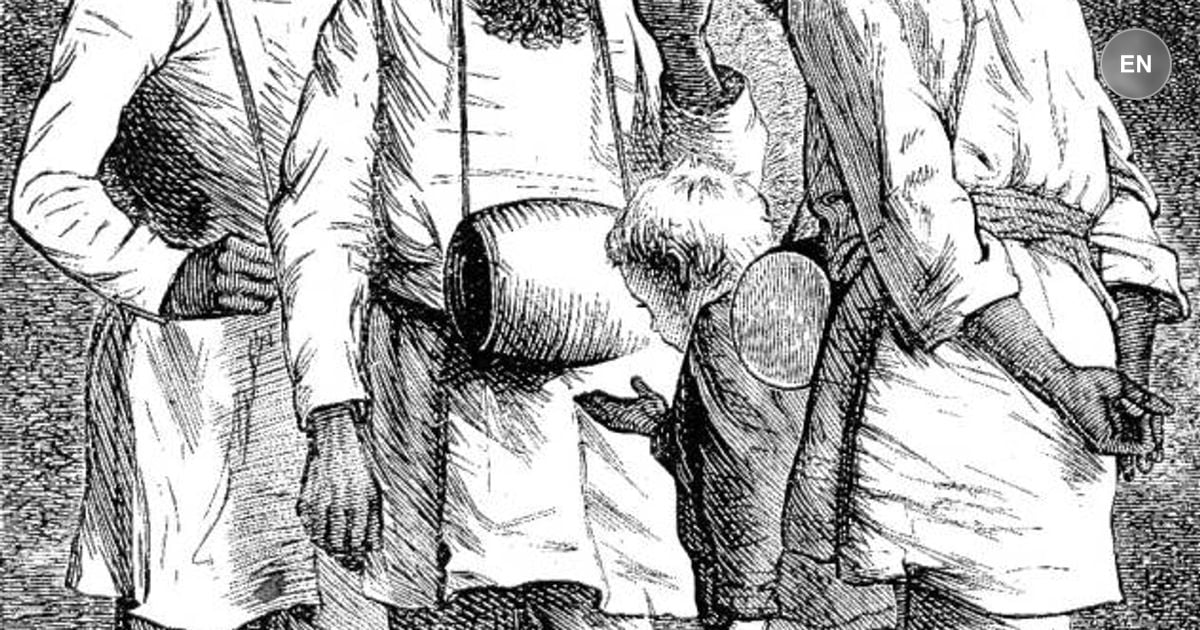
Chapter 21 stages one of the novel's most psychologically charged confrontations, pitting a mother's unshakeable conviction against a detective's twenty years of professional pattern-recognition, with Betteredge caught between them as an increasingly agitated witness. The chapter moves through four distinct turns that together map the collision between institutional logic and personal loyalty. In the opening quarter, Lady Verinder sets the moral tone by apologizing to Cuff for her earlier sharpness, a gesture of aristocratic grace that briefly softens even his hatchet face. Cuff accepts the apology but immediately uses the restored civility as leverage, announcing that he believes Rosanna Spearman's suicide was driven by anxiety connected to the missing diamond rather than any private grief. He then names the one person who could confirm or deny his theory, and when Lady Verinder presses him to be plain, he confirms without hesitation that he means Rachel. The silence that follows is so complete that Betteredge registers the howling wind and driving rain as almost unbearable.
Lady Verinder's trembling hand as she returns the checkbook to its drawer without paying Cuff condenses the entire emotional weight of the moment into a single physical detail. The middle quarter belongs to Lady Verinder's counter-offensive, which is remarkable precisely because it refuses to be an offensive at all. She does not claim secret knowledge or produce exculpatory evidence. Instead she insists that Cuff continue, declaring she owes it to herself and to Rachel to hear every accusation spoken aloud rather than left hovering in implication. Her defense rests entirely on the argument that a mother's lifelong knowledge of her child's character outweighs any arrangement of circumstantial facts.
She acknowledges she is as shut out of Rachel's confidence as anyone in the room, and she still holds firm. Cuff listens, softens visibly for a moment, and then proceeds exactly as before, unmoved by a single inch. The third quarter is Cuff's systematic case-building, and Collins gives it a deliberately relentless quality. Drawing on two decades of handling family scandals involving young women with secret debts, Cuff walks through each piece of evidence: Rachel's prolonged agitation, her contemptuous treatment of every investigator, her refusal to allow the wardrobe search, and her decision to leave the house even after being told it would obstruct recovery of the diamond. Each item is individually explicable; together they form a pattern Cuff finds impossible to read any other way.
Betteredge admits internally that he cannot dispute the truth of any single point, and his solution, announced with cheerful self-awareness, is to cultivate what he calls a constitutional superiority to reason. The closing quarter shifts focus to Cuff's disclosure that he deliberately kept the inquiry informal and family-contained, and that he used Betteredge as a quasi-assistant to avoid public scandal. This revelation provokes Betteredge into a sharp protest, insisting he never knowingly aided any detective work and daring Cuff to contradict him. The chapter ends on this note of wounded dignity, with the investigation's internal tensions now fully visible. Lady Verinder's faith in Rachel remains absolute and unargued; Cuff's suspicion remains equally absolute and fully argued; and the gap between those two positions is exactly where the novel's central mystery continues to live.
Lady Verinder's decision reveals something profound about protective authority. She doesn't dispute Sergeant Cuff's facts or question his professional competence. Instead, she recognizes that some truths require a specific messenger. This pattern appears constantly in working-class families where professional systems often lack the context to understand family dynamics. The school counselor who wants to discuss your teenager's grades doesn't know that kid stayed up all night caring for a sick grandparent. The social worker building a case doesn't understand the cultural reasons behind certain family choices. The doctor delivering a diagnosis doesn't grasp how medical debt will devastate this particular household. In each situation, we face Lady Verinder's choice: let the professional handle it, or step in ourselves. The key insight is that stepping in isn't about denial or protection from consequences, it's about ensuring difficult truths come wrapped in understanding rather than clinical detachment. Sometimes the most loving thing we can do is personally deliver the hardest news, because our presence transforms how that truth lands. The professional might have the expertise, but we have the relationship. And sometimes, relationship matters more than expertise.
Explore this chapter with AI to uncover deeper meaning and practical takeaways.
AI Discussion