
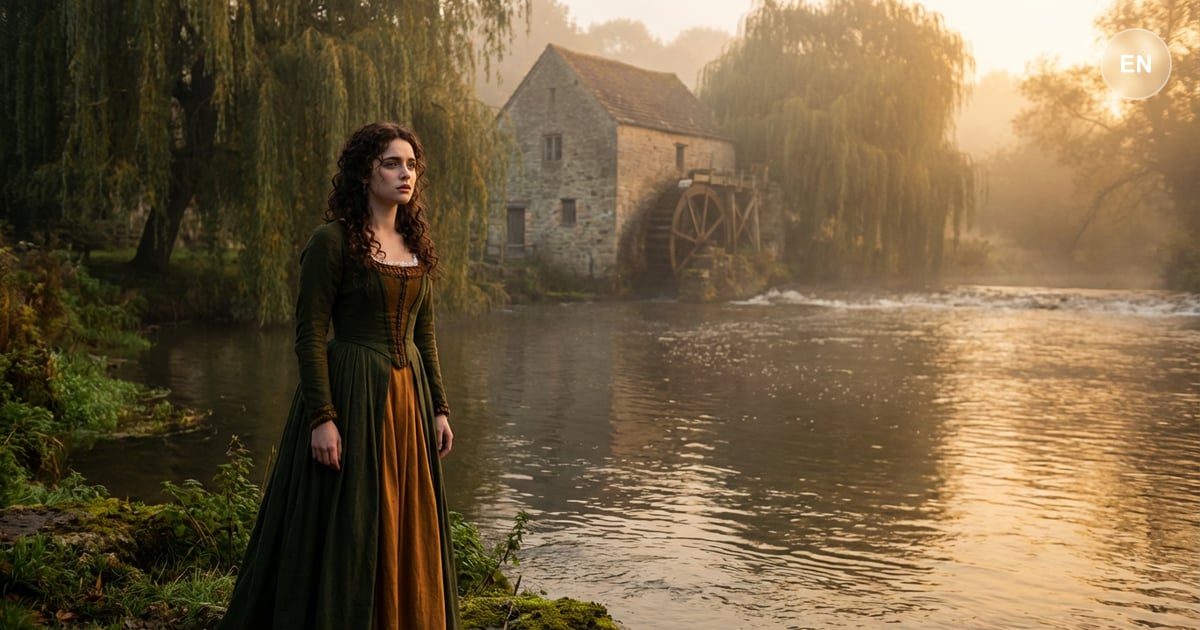
The Dodson sisters arrive for dinner, each representing different approaches to respectability and social climbing. Mrs. Glegg, the most formidable aunt, uses her clothing and behavior as weapons of judgment, deliberately wearing shabby clothes to shame her sister Bessy for being too fashionable. Mrs. Pullet arrives in theatrical grief over a neighbour's death, displaying the performative nature of middle-class mourning rituals. The family gathering becomes a battlefield of subtle insults and social one-upmanship.
Meanwhile, Maggie faces criticism about her wild hair from all the aunts, who see her as too dark, too unruly, too much like her father's side of the family. In a moment of desperate rebellion, she cuts off her own hair with scissors, hoping to end the constant commentary. But the act backfires spectacularly: instead of solving her problem, it makes her the center of even more unwanted attention. Tom laughs at her, calling her an idiot, and Maggie realizes she has made everything worse.
When she finally appears at dinner, the family's shocked reactions confirm her worst fears. Uncle Pullet's clumsy comment cuts deepest, and Aunt Glegg pronounces that girls who cut their own hair should be fed on bread and water. Only her father shows her kindness, defending her choice and pulling her onto his shoulder while the aunts reproach him for spoiling her.
The adults then turn to Tom's future. Mr. Tulliver announces he will send Tom to study with the clergyman Mr. Stelling, a plan that sparks immediate controversy. Mrs. Glegg lectures about rising above one's station and the folly of expensive schooling, while Mr. Tulliver insists Tom must be educated to match lawyers and men of business. The quarrel escalates until Mrs. Glegg storms out, leaving the men to discuss Wellington and trade over wine while the children escape to the garden with their dessert.
Mrs. Tulliver had spent the morning in anxious preparation, polishing silver and worrying that her sisters would find fault with the joint and the pudding. Bessy knows the Dodson code: appearances matter more than comfort, and every family visit is an inspection. Mrs. Glegg arrives first, bristling with moral authority, and immediately surveys the room for evidence of extravagance. Mrs. Pullet follows, still sighing over Mrs. Sutton's dropsy, and turns the parlor into a stage for virtuous sorrow.
Maggie hides upstairs after the haircut, listening to the aunts' voices rise and fall like weather she cannot control. When she comes down at last, the silence that greets her is worse than shouting. Tom's laughter in the passage feels like betrayal from the one ally she trusted. Mr. Tulliver's rough affection is the only warmth in a room full of people who speak about her as if she were a problem to be managed rather than a child to be loved.
The argument over Tom's schooling exposes the fault lines beneath polite conversation. Mr. Tulliver wants his son to hold his own against Wakem and men of business; Mrs. Glegg warns that ambition without capital is vanity and that clergymen charge fees like lawyers. When she declares she will not stay where her advice is despised, the rupture is both comic and serious: family unity, in the Dodson world, is always conditional on deference. After she leaves, the remaining adults retreat into safer topics, and the children slip away to the garden where Luke the manservant saves them pudding and ordinary kindness needs no performance.
Eliot uses the dinner table to show how respectability operates as surveillance. Every joke about Maggie's hair, every lecture about Tom's schooling, every complaint about Mrs. Tulliver's housekeeping is also a claim about who belongs and who must be corrected. Maggie's haircut is shocking not because it is immoral but because it makes private struggle visible in a culture that punishes visibility. Tom's laughter shows how children absorb adult hierarchies early, aligning with the winners in the room even when the winners are cruel. By the end of the chapter, both children have learned a harder lesson than any grammar rule: love in this family is real, but it is never simple, and the price of belonging is constant negotiation with people who believe they own your future.
The chapter closes with small domestic relief after public conflict: wine for the men, pudding for the children, and the sense that life at Dorlcote Mill will continue on its uneasy course. Yet the decisions made at this table will shape Tom's schooling and the family's finances for years. Maggie's shame and Tom's scorn are not passing moods but the first marks of a pattern in which she will reach for drastic solutions and he will reach for rule-bound certainty. Eliot is building the emotional architecture of the tragedy to come, and she does it through scenes that feel as ordinary as Sunday dinner.
This chapter reveals a devastating pattern: when people turn their struggles into performances for social advantage.
The Dodson sisters love each other, but they've turned that love into a competitive sport. Each arrival is choreographed, Mrs. Pullet's theatrical mourning, Mrs. Glegg's weaponized frugality, the collective assault on Maggie's appearance. They're performing care while inflicting cruelty, creating what psychologists now call 'enmeshed family systems' where individual identity gets sacrificed to group drama. This pattern thrives in working-class families where resources are scarce and respectability feels fragile. Every choice becomes public property, Maggie's hair, her mother's groceries, her father's ambitions for Tom. The performance serves a function: it bonds the group through shared judgment while maintaining social hierarchies. But the cost is devastating. Children like Maggie learn that authenticity invites attack, that standing out brings punishment, that family love comes with impossible conditions. Modern families still operate this way, Sunday dinners where everyone performs their version of success, social media posts that turn family gatherings into competitions, holiday celebrations that become battlegrounds for old resentments. The question becomes: how do you love your family without losing yourself to their performance demands?
Explore this chapter with AI to uncover deeper meaning and practical takeaways.
AI Discussion