
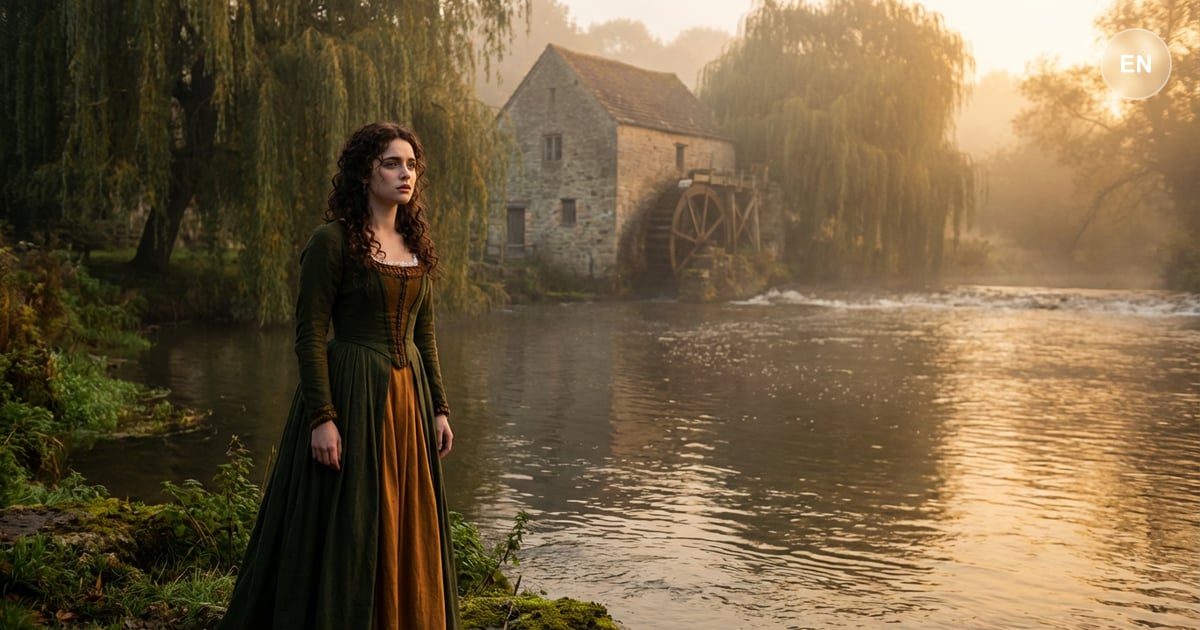
Maggie sits alone in her room during a fierce storm, wrestling with Stephen's passionate letter begging her to return to him. He's back from Holland, tormented by their separation, offering her escape from the lonely future that awaits her. Dr. Kenn has advised her to leave St. Ogg's due to ongoing gossip, making her exile complete. For hours, Maggie wavers between Stephen's promise of love and her moral convictions. She nearly writes 'Come!' but pulls back, remembering Lucy and Philip, and the principles that guided her away from him before.
She burns his letter and resolves to write a final goodbye. As she prays for strength to bear her burden, flood waters suddenly surge into her room. Without hesitation, Maggie springs into action, waking Bob Jakin and helping secure boats as the great flood engulfs St. Ogg's. Swept away by the current, she finds herself alone on the dark waters, thinking of her family at the Mill. Fighting exhaustion and danger, she navigates toward home, driven by love and the possibility of reconciliation with Tom.
She finds him trapped at the flooded Mill and rescues him. For the first time in years, brother and sister are truly united, their quarrels forgotten in the face of shared peril. As they row toward safety, massive debris crashes toward them. Tom sees death approaching and clasps Maggie.
They die together in an embrace, their childhood love restored in their final moment. The flood becomes both destroyer and redeemer, washing away years of conflict and returning them to their essential bond.
Crisis has a strange power: it strips away everything nonessential and reveals what truly matters.
Maggie spends hours torn between Stephen's passionate letter and her moral convictions, paralyzed by competing loyalties.
The crisis doesn't create new values; it reveals which ones were always strongest.
The flood forces her to choose not between right and wrong, but between her surface desires and her fundamental nature.
Crisis becomes a truth detector, showing us who we really are beneath our daily compromises.
The nurse who's burned out and considering quitting suddenly springs into action during a code blue, remembering why she became a nurse.
Maggie spends hours paralyzed between Stephen's letter and her conscience, but when flood waters hit, she acts instantly, no hesitation, no debate. The crisis doesn't create new values; it strips away everything nonessential and reveals what was always strongest. This pattern appears everywhere in working-class life. The burned-out nurse who springs into action during a code blue, remembering why she chose healthcare. The couple arguing about bills who unite when their child gets hurt. The employee who's been coasting who steps up when the company faces real trouble. Crisis becomes a truth detector, cutting through daily compromises to show authentic priorities. When Maggie fights through flood waters to save Tom, she's not making a moral choice, she's following her deepest programming. Their years of bitter conflict vanish because crisis reveals what literature has always known: family bonds often run deeper than romantic passion, duty deeper than desire. The flood destroys St. Ogg's but redeems the Tulliver siblings, washing away surface grievances to restore essential connection. Modern readers can use this pattern as navigation: pay attention to your instincts during crisis moments, however small. They show you who you really are beneath your daily masks.
Explore this chapter with AI to uncover deeper meaning and practical takeaways.
AI Discussion