
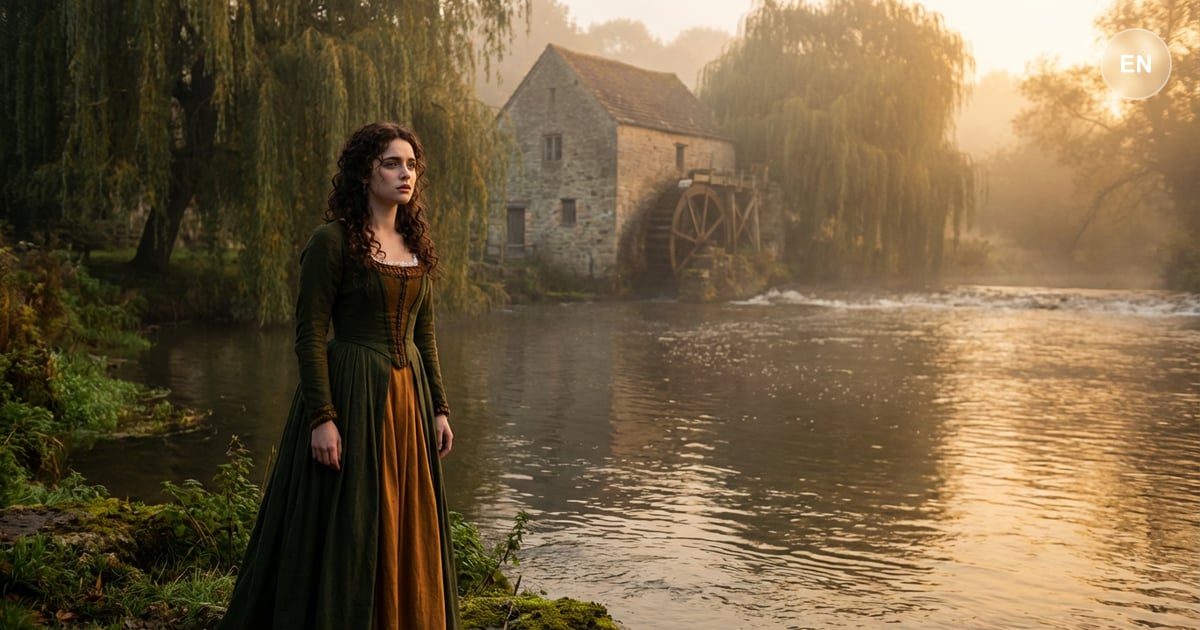
Stephen walks the Dutch deck far into midnight with a cigar, seeing neither water nor stars, only a future. He sleeps at last in tarpaulin near Maggie's feet. She has been asleep since before nine. Toward daybreak she dreams they are on wide water. A star becomes the Virgin in St Ogg's boat, then Lucy, then the boatman is Tom, who rows past without looking. She rises to call him. Their boat turns over. She seems to wake as a child in the parlour with Tom no longer angry. Then the real waking: water against the vessel, a footstep, starlit sky. Stephen is not beside her. The wrong that cannot be taken back is already done in the lives knit to hers by trust.
Sunrise starts a day of resistance. They drink coffee. The captain says Mudport by five. Stephen talks of a chaise as if the land were already theirs. Maggie's passiveness is gone. In sight of Mudport she says they shall not be together; they shall have parted. He says he will die first. At the inn he orders the chaise. She will not sit. She says she is not going; they must part here. He pleads that the whole thing is done. She says too much is done, and she will go no farther. He puts his back to the door, then sits and takes her hand. She tells him faithfulness is not what is easiest. Lucy believed her. Philip was given to her to make his lot less hard. She has never consented with her whole mind.
Stephen says a woman's love is a miserable thing to a man's, that he could commit crimes for her, that she does not love him. He argues that yesterday changed the position, that in a few hours she will be legally his and the world will submit. Maggie starts up pale and says she cannot do it. He tells her to go, then shrinks from her hand as from burning iron. She walks out as if finishing a forgotten intention. Stairs, flagstones, a coach filling with passengers. She gets in.
Home is the haven in her mind: her mother, Tom, Philip, Lucy. The coach is going to York. She learns that at midnight in the old city. She has a bank-note and a sovereign in her pocket from an errand two days ago. In the inn dark, Stephen's face comes back, and the floating joy of the river, and then a voice that says gone, forever gone.
Stephen's argument echoes through every workplace, every relationship, every family conflict: 'But we love each other, so it must be right.' He genuinely cannot understand how Maggie can choose duty over desire. This reveals something crucial about how we navigate modern life. We live in a culture that elevates feelings above everything else. 'Follow your heart,' we're told. 'If it feels right, it is right.' But Eliot shows us the dangerous flaw in this logic. Without moral boundaries, as Maggie recognizes, there would be 'no law but the inclination of the moment.' Think about the nurse who feels exhausted and wants to skip the safety protocol. The parent who feels frustrated and wants to lash out. The employee who feels undervalued and wants to take shortcuts. The friend who feels hurt and wants to gossip. In each case, the feeling is real and understandable. But feeling something doesn't make acting on it right. Maggie's insight cuts to the heart of adult responsibility: sometimes the most loving thing we can do is refuse to follow our hearts. Sometimes faithfulness means disappointing the person we love most. This isn't about suppressing emotion or becoming cold. It's about recognizing that mature love includes the wisdom to know when our desires would cause harm. How do we balance honouring our feelings while maintaining our moral boundaries?
Explore this chapter with AI to uncover deeper meaning and practical takeaways.
AI Discussion