
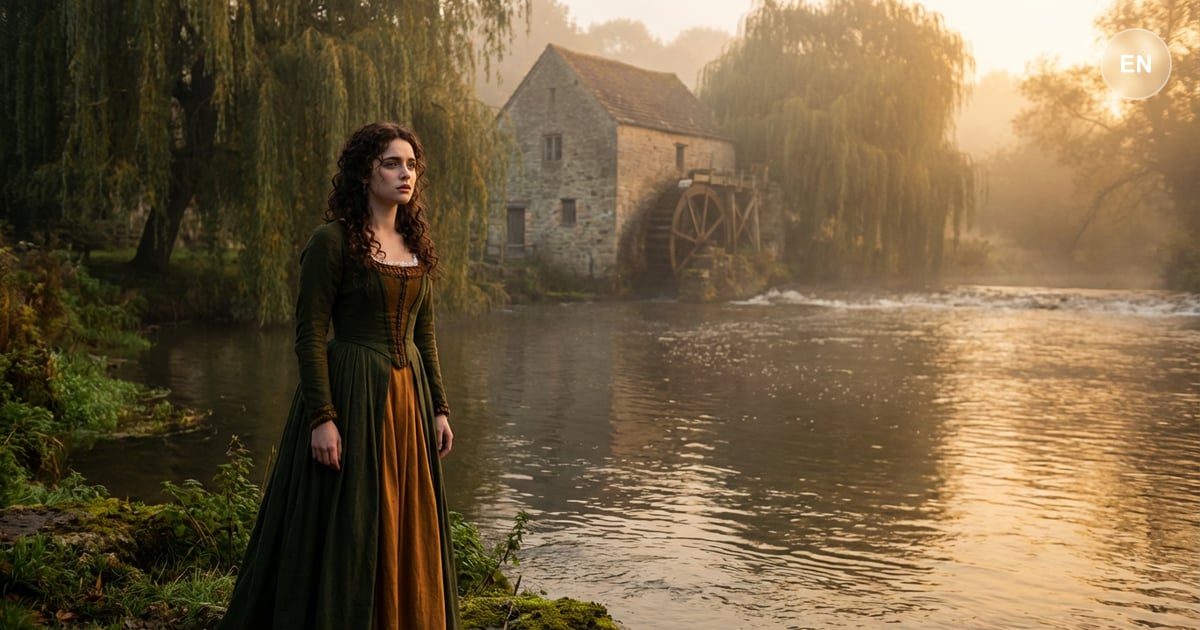
Philip Wakem returns to St. Ogg's and reunites with Maggie at Lucy's house on a rainy morning. Their meeting is emotionally charged, Philip maintains careful composure while Maggie tears up with relief at seeing him again. She reveals that Tom has released her from her promise to avoid Philip, allowing them to be friends openly. Philip becomes a refuge for Maggie, representing safety from her growing attraction to Stephen Guest.
When Stephen arrives, the tension is palpable. Maggie treats him with cold politeness while he oscillates between studied indifference and desperate attention-seeking. During a musical session, Philip plays a plaintive love song that subtly expresses his continued devotion, while Stephen counters with defiant, energetic pieces that shake Maggie's resolve.
A small moment, Stephen helping Maggie with a footstool, creates an intimate exchange that Philip observes with growing anxiety. Meanwhile, Lucy's father Mr. Deane reveals business interest in Dorlcote Mill, the Tulliver family's former property now owned by Philip's father. Lucy, sensing an opportunity to help her cousins reclaim their heritage, convinces her father to let her approach Philip about facilitating the sale.
The chapter weaves together romantic tensions with family loyalties and business machinations, showing how personal relationships become entangled with larger questions of justice, redemption, and social mobility. Philip emerges as both Maggie's potential salvation and a key player in the Tulliver family's possible restoration.
Eliot understood something crucial about human psychology: we often mistake emotional avoidance for moral wisdom.
Maggie retreats to Philip not because he's the right choice, but because he feels safe compared to the dangerous intensity of her attraction to Stephen.
This pattern transcends Victorian drawing rooms, it's the nurse who stays with the emotionally distant partner because confrontation feels impossible, the factory worker who won't pursue management training because failure feels worse than stagnation, the parent who enables rather than confronts because conflict terrifies them.
The refuge trap works by offering immediate emotional relief while preventing the growth that comes from facing difficult truths.
What makes this particularly insidious is how virtuous it feels, Maggie can tell herself she's being loyal to Philip, responsible about Stephen, dutiful to family expectations.
Eliot understood something crucial about human psychology: we often mistake emotional avoidance for moral wisdom. Maggie retreats to Philip not because he's the right choice, but because he feels safe compared to the dangerous intensity of her attraction to Stephen. This pattern transcends Victorian drawing rooms, it's the nurse who stays with the emotionally distant partner because confrontation feels impossible, the factory worker who won't pursue management training because failure feels worse than stagnation, the parent who enables rather than confronts because conflict terrifies them. The refuge trap works by offering immediate emotional relief while preventing the growth that comes from facing difficult truths. What makes this particularly insidious is how virtuous it feels, Maggie can tell herself she's being loyal to Philip, responsible about Stephen, dutiful to family expectations. But virtue chosen from fear isn't virtue at all; it's sophisticated self-deception. The real question isn't whether Philip or Stephen is the 'right' choice, it's whether Maggie is capable of choosing from authenticity rather than anxiety. Today's version might be staying in the job that slowly kills your spirit because health insurance feels more important than happiness, or maintaining relationships that drain you because loneliness seems worse than exhaustion. The refuge trap promises safety but delivers stagnation. Recognition is the first step toward freedom.
Explore this chapter with AI to uncover deeper meaning and practical takeaways.
AI Discussion