
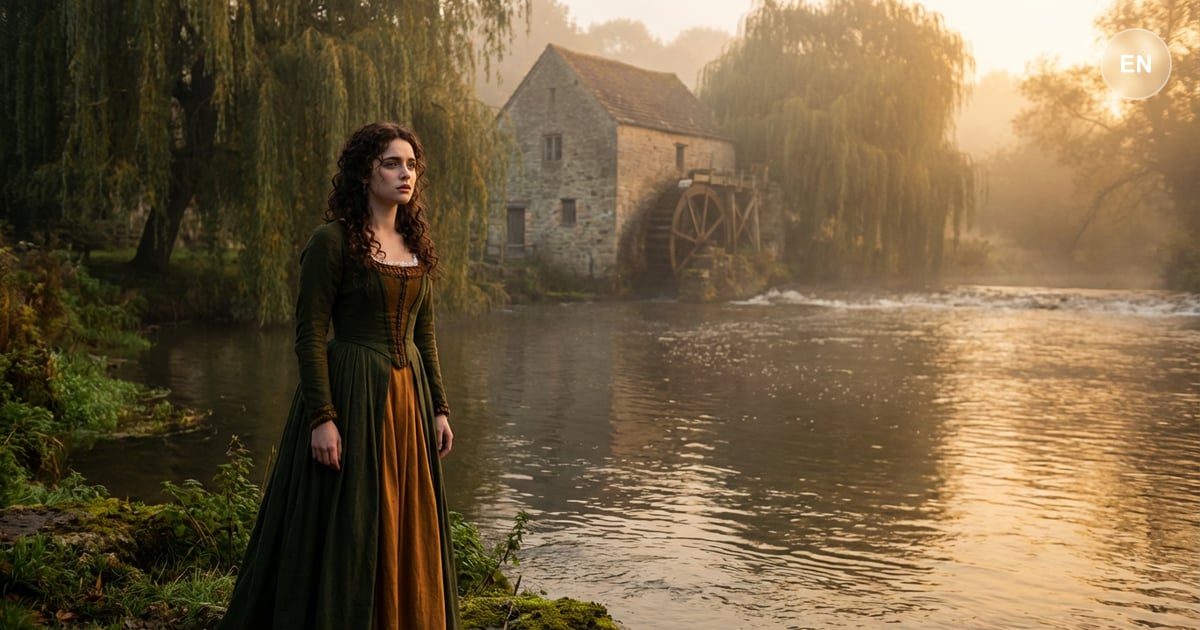
Eliot steps back from the story to examine the world that shaped Tom and Maggie Tulliver. She compares two types of ruins: the romantic castles along the Rhine, which seem poetic and noble even in decay, versus the humble villages destroyed by floods, which feel merely sordid and depressing. This leads her to acknowledge that the Tulliver and Dodson families might seem equally unromantic, middle-class people without grand passions, noble causes, or refined education. The Dodsons embody respectability above all: they value proper funerals, honest dealing, family loyalty, and maintaining appearances.
Their religion is more about social custom than spiritual depth, they go to church because it's expected, not from deep faith. The Tullivers share these values but with more warmth and impulsiveness, making them prone to both generosity and poor judgment. Eliot argues that we must understand this 'oppressive narrowness' because it profoundly shapes young people like Tom and Maggie, who have minds capable of rising above their circumstances but hearts still tied to their families.
She insists that these small-town struggles matter as much as any grand historical drama, that every generation produces young people who suffer from being mentally ahead of their time while emotionally bound to it. The chapter reveals how social expectations and family traditions can both nurture and constrain human potential.
George Eliot understood something that still haunts working-class families today: love can be a cage. The Dodsons weren't villains, they were people trying to protect their children by teaching them to fit in, stay safe, and not reach for things that might lead to disappointment. But their protection became limitation. This pattern repeats endlessly in modern America. Families discourage college because 'student loans are dangerous.' Parents worry when children move to cities because 'that's not who we are.' Communities pressure young people to stay local because departure feels like judgment. The tragedy isn't that families don't want success for their children, it's that they define success so narrowly that genuine growth feels like betrayal. Eliot shows us that every generation produces young people who think beyond their circumstances while remaining emotionally tied to them. The question isn't whether to choose family or self, it's how to honor both. The families who say 'don't get above yourself' often mean 'don't leave us behind.' Understanding this changes everything. Instead of rebellion or submission, we can build bridges. We can expand our worlds while staying connected to our roots. We can become more than our families imagined without becoming less than they raised.
Explore this chapter with AI to uncover deeper meaning and practical takeaways.
AI Discussion