
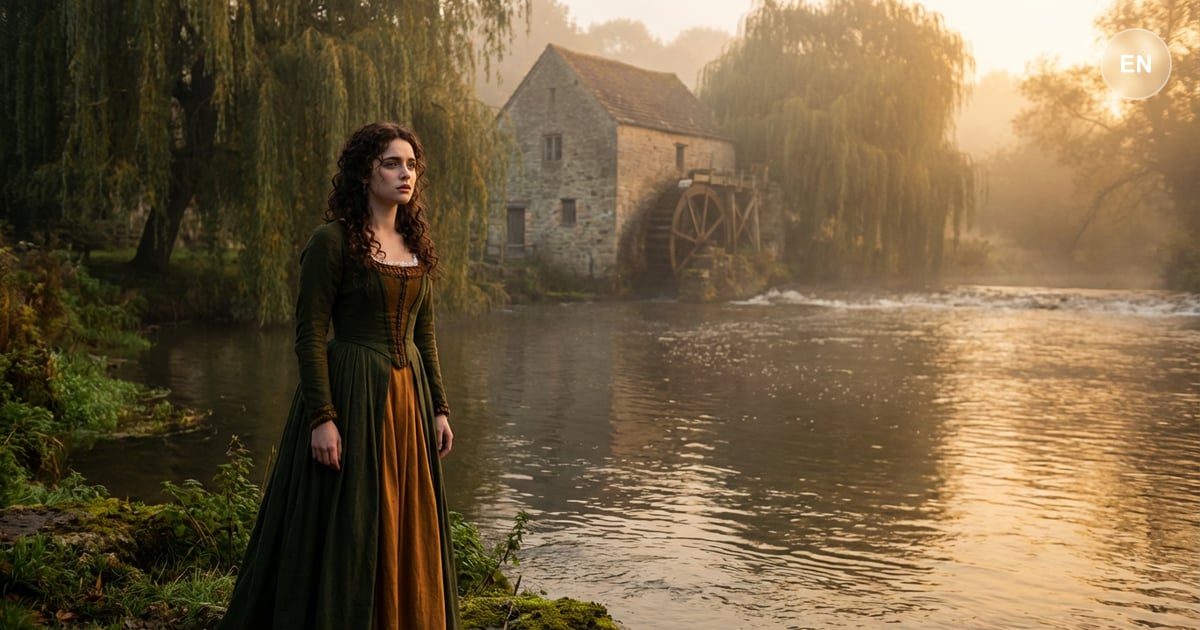
Tom ventures into St. Ogg's on a cold, misty morning to ask his successful Uncle Deane for help finding employment. The family's financial ruin weighs heavily on the sixteen-year-old, who dreams of rising in business like his uncle did. However, the meeting doesn't go as Tom hoped.
Uncle Deane, a practical businessman who worked his way up from humble beginnings, bluntly tells Tom that his expensive classical education, Latin, Greek, rhetoric, has prepared him for nothing useful in commerce. Tom knows no bookkeeping, no accounting, no practical business skills. Deane suggests Tom might need to start at the bottom, perhaps on a wharf learning 'the smell of things,' which deflates Tom's grand ambitions.
The encounter forces Tom to confront an uncomfortable truth: despite years of schooling, he's actually quite ignorant about the working world. Meanwhile, back home, Tom takes out his frustration and wounded pride on Maggie, criticizing her for speaking up to their relatives and asserting his authority as the man of the family.
Maggie retreats upstairs in tears, feeling that everyone in her real world is harsh and unkind, unlike the tender characters in her beloved books. This chapter reveals how financial crisis strips away illusions and forces both siblings to grapple with harsh realities, Tom with his lack of practical preparation for adult life, and Maggie with the gap between her imaginative inner world and the cold demands of their circumstances.
Tom Tulliver's expensive classical education left him utterly unprepared for business, just as many modern educational paths create similar disconnects.
We're living through a massive skills mismatch, college graduates drowning in debt while employers can't find workers with practical abilities.
Trade schools often produce more employable graduates than universities, yet we still treat four-year degrees as the gold standard.
This isn't about intelligence or worth; it's about systems that prioritize credentials over capability.
Tom's uncle rose through hands-on experience, learning 'the smell of things', the kind of practical knowledge that can't be taught in classrooms.
Today's equivalent might be the self-taught programmer outperforming computer science majors, or the apprentice electrician earning more than the philosophy graduate.
Tom Tulliver's expensive classical education left him utterly unprepared for business, just as many modern educational paths create similar disconnects. We're living through a massive skills mismatch, college graduates drowning in debt while employers can't find workers with practical abilities. Trade schools often produce more employable graduates than universities, yet we still treat four-year degrees as the gold standard. This isn't about intelligence or worth; it's about systems that prioritize credentials over capability. Tom's uncle rose through hands-on experience, learning 'the smell of things', the kind of practical knowledge that can't be taught in classrooms. Today's equivalent might be the self-taught programmer outperforming computer science majors, or the apprentice electrician earning more than the philosophy graduate. The tragedy isn't that classical education or liberal arts lack value, they develop critical thinking and cultural literacy. The problem is when we mistake these valuable but abstract skills for job readiness. Tom's humiliation forces him to confront this gap, but many people spend decades avoiding the same reckoning. The most successful people often combine formal education with practical experience, or they're honest about what their training actually prepared them to do versus what they dreamed it would accomplish.
Explore this chapter with AI to uncover deeper meaning and practical takeaways.
AI Discussion