LIVE
OCD← Home
The Mill on the Floss cover
1860
The Mill on the Floss
George Eliot · A Dreamer's Eye View
Chapter 1
Reading
Ch. 1
Ch. 2
Loading audio...
0:000:00

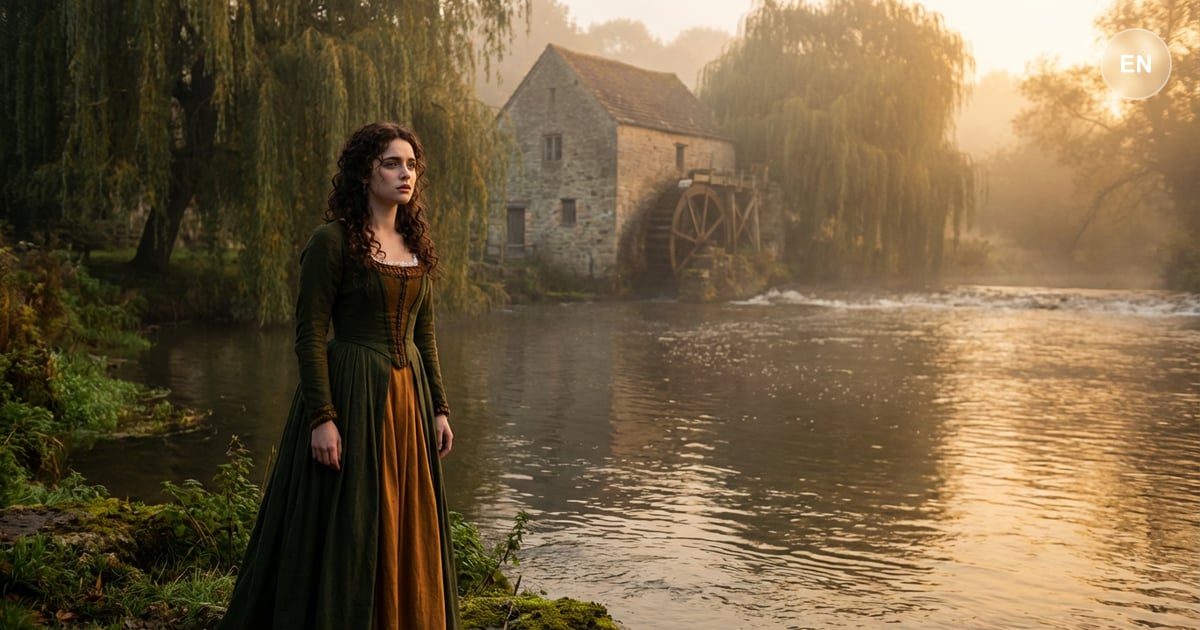
George Eliot opens her story not with action or dialogue, but with a dreamy, almost hypnotic tour of the English countryside around Dorlcote Mill. The narrator describes the scene like a painter with words, the river Floss rushing toward the sea, ships carrying cargo, the mill wheel turning endlessly, workers heading home after a long day. We see everything through the eyes of someone who clearly loves this place: the way light hits the water, how horses strain up the hill toward home, a little girl watching the mill wheel while her dog barks at it.

But here's the twist, the narrator has been daydreaming while sitting in a chair, remembering this scene from 'many years ago.' This isn't just description; it's memory made vivid. Eliot is showing us how the past lives inside us, how places we've known become part of who we are. The chapter works like a camera slowly zooming in, from the wide river valley to the specific mill, then to the little girl by the water, and finally to the warm parlor where our real story will begin.

It's a masterful setup that makes us feel we're not just reading about these people, we're remembering them alongside the narrator. The technique teaches us that sometimes the most powerful way to tell a story is to first make your audience fall in love with the world where it happens.

Amplified Discussion
How Places Hold Our Stories

Eliot opens with a technique that reveals something profound about human psychology: we don't just remember places, we inhabit them emotionally long after we've left. The narrator's dreamy reconstruction of Dorlcote Mill isn't just nostalgia, it's how memory actually works. Our brains create detailed emotional maps of significant locations, encoding not just what happened but how it felt to be there. This matters because these invisible maps guide our daily navigation. Consider how you feel walking into a hospital versus a library, or how certain neighborhoods make you tense while others feel like home. These aren't random preferences, they're your memory maps in action. In working-class communities, this pattern carries extra weight. When economic necessity forces people to leave familiar places for work, or when gentrification transforms childhood neighborhoods beyond recognition, the loss isn't just practical, it's psychological. People lose their emotional compass. But understanding how memory mapping works gives you power. You can recognize when past experiences are limiting present choices, when you're avoiding opportunities because they remind you of previous failures, or when you're drawn to situations that recreate familiar patterns even when they're not serving you. The key is learning to distinguish between useful wisdom from your past and outdated programming that no longer fits your current reality.

Explore this chapter with AI to uncover deeper meaning and practical takeaways.

AI Discussion
Why it matters

Recognizing Memory Triggers

People often discover how narrow social rules can be only when passion, intelligence, or family duty pull them in directions the town has already condemned. The narrator describes the scene like a painter with words, the river Floss rushing toward the sea, ships carrying cargo, the mill wheel turning endlessly, workers heading home after a long day. This week, notice when loyalty to family or reputation makes you silence a truth you still need to speak.

Lessons

PracticeThis week, notice when you have a strong emotional reaction to a place or situation, ask yourself what it's reminding you of from your past.

Psych reading

Memory Mapping

We unconsciously navigate present situations by comparing them to emotional maps created from past experiences in similar settings or relationships.

In the mind

This opening chapter reveals a fundamental pattern: we navigate our present by mapping it against our past. The narrator doesn't just describe a place, they reconstruct it through memory, showing how our minds create detailed emotional maps of significant locations and relationships. This isn't nostalgia; it's how human consciousness actually works. The mechanism operates through what psychologists call 'place attachment.' When we experience meaningful moments in specific settings, our brains encode not just the facts but the emotional texture, the light on water, the sound of machinery, the feeling of belonging or displacement. These memory maps become our internal GPS for understanding new situations. We unconsciously ask: 'What does this remind me of? How did that turn out?' This pattern dominates modern life everywhere. At work, you size up a new boss by comparing them to previous managers, predicting their behavior based on familiar patterns. In healthcare, patients often resist treatment because a sterile hospital reminds them of when their grandmother died there. Parents struggle with their teenagers because certain attitudes trigger their own adolescent memories of feeling misunderstood. Even choosing where to live involves unconscious mapping, this neighborhood feels safe because it reminds you of childhood, or threatening because it doesn't. When you recognize your memory mapping in action, you gain navigation power. First, notice when you're having a strong reaction to a place or person, ask yourself what it's reminding you of. Second, separate past from present: 'This boss isn't my father.' Third, use your maps strategically: if a setting makes you feel confident, schedule important conversations there. If certain environments trigger anxiety, prepare coping strategies in advance. Most importantly, help others by understanding their maps, when someone seems irrationally resistant, they're probably navigating by a painful memory you can't see. When you can name the pattern, predict where it leads, and navigate it without surrendering your judgment or the people you love, you keep agency instead of letting convention write the next chapter for you.

Find the right chapter

Each mood maps to a life skill. Each skill connects to the patterns in classic literature.

😔How do you feel😊

Personalize your match

Optional—life stage, what you need today, and what you're navigating help us pick chapters that fit—not generic lists. You may also freeform using the feeling search below.

Sign in to save your profile

Choices stay on this device until you sign in.

Browse the Full Library
4,582Chapters
118+Books
86Authors