
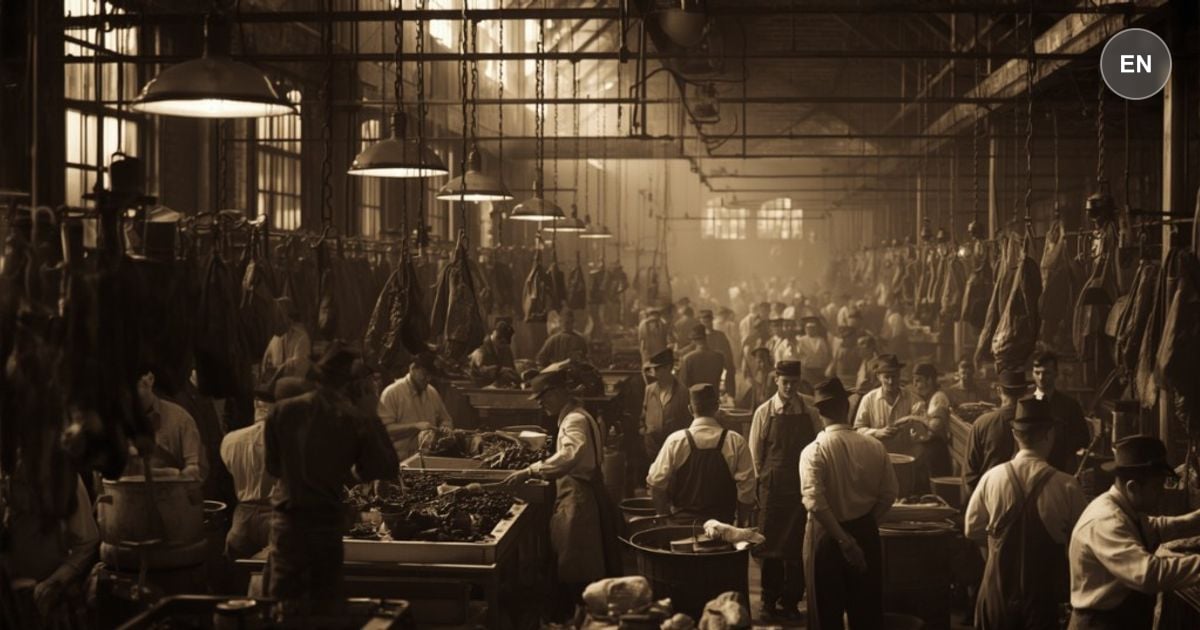
Jurgis begins learning English because the union is the first place he has seen democracy work: every voice counts, and decisions touch everyone in the room. The meetings teach him that power can be shared, but the lesson does not stop at the hall door.
Naturalization arrives as a transaction. He is rushed through citizenship papers and paid to vote before he understands the words he signs, discovering that his ballot was bought like meat at the yards. Union men map the district for him: boss Mike Scully controls garbage dumps, ice ponds, building permits, and the unpaved street where children drown, all through a web of favours that looks like law.
Meanwhile Jurgis learns what inspectors actually do. Government men certify diseased cattle for interstate sale while local inspection has been abolished; workers trade stories of canned chicken without chicken and lard that sometimes holds human remains. Each department breeds its own hell, from pickle acids that eat fingers to fertilizer vats that swallow men whole.
On a Sunday evening Jonas brings home a Durham canning-room man, and Jurgis, pipe in hand by the kitchen stove, hears how mushroom catsup is made by men who have never seen a mushroom, how potted chicken and de-vyled ham come out of one hopper of tripe, suet, gullets, and dyed waste. A visitor might doubt those recipes. He could not doubt the pickle-room hands, steeped until they cannot wipe their own faces, the same rooms that gave Antanas his death.
Sinclair shows us something chilling: how genuine democratic impulses get hijacked and redirected. Jurgis experiences real power in the union, his voice matters, decisions affect everyone equally. But that same democratic energy gets channeled into a political system designed to neutralize it. His vote is bought, his citizenship commodified, his participation turned into performance. The genius of this control system is that it feels like freedom. You're voting, attending meetings, filling out surveys. You feel heard. Meanwhile, the real decisions happen elsewhere, by people you never get to challenge directly. This pattern dominates modern life. Your workplace holds 'all-hands meetings' where leadership 'takes questions', but notice which topics never get addressed, how concerns get deflected into 'we'll look into that.' Your city council takes public comment, but the budget was decided months ago in private sessions. Your health insurance company has an appeals process that exists primarily to exhaust you into giving up. The system works because it mimics real democracy just enough to make you feel like you're participating. Recognition is power. When you can see the theater, you can stop performing in it and start building real alternatives.
Explore this chapter with AI to uncover deeper meaning and practical takeaways.
AI Discussion