
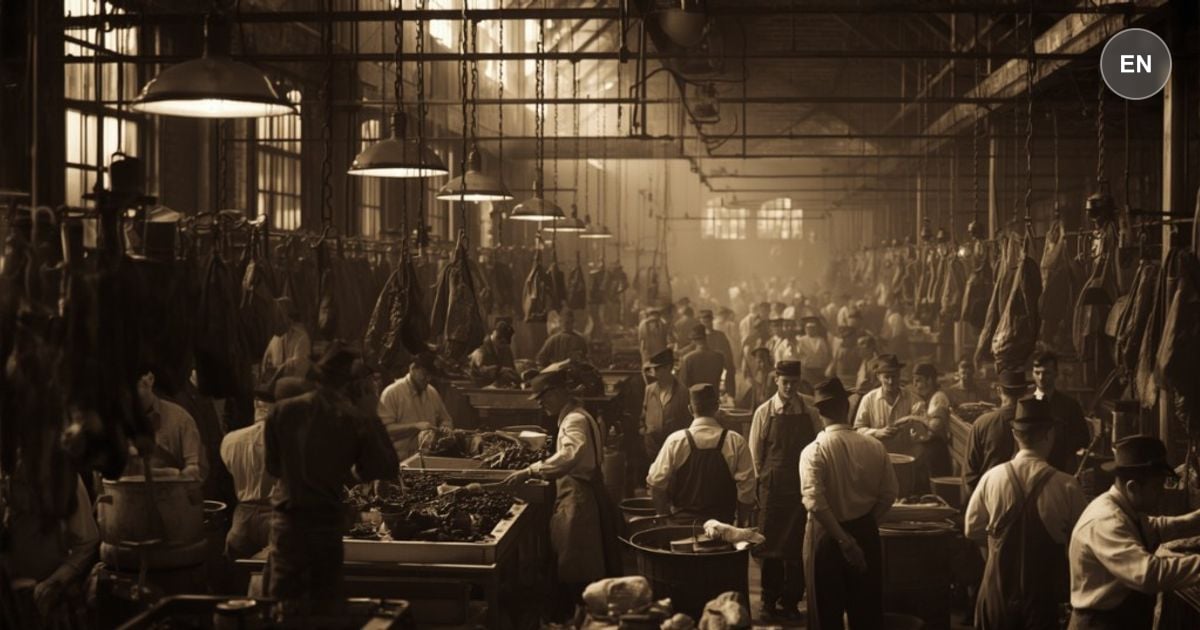
Winter drives Jurgis back to Chicago with fifteen dollars and hard-won street sense. He lands work digging telephone tunnels, not knowing the job is a secret freight subway built to break the teamsters' union. Decent wages buy warmth only in saloons; nowhere else welcomes a dirty, vermin-scented man from underground. He digs a freight subway built to break teamsters without knowing it.
A cave-in crushes his arm. The hospital stay feels almost humane until discharge comes while he is still disabled, winter outside, under three dollars in his pocket. The company owes nothing; the landlady will not keep him. Injury converts a worker into litter with no legal recourse and no next shift to claim. A cave-in crushes his arm; discharge brings three dollars and winter.
Begging fails because poverty is a profession with specialists. Con artists fake wounds; amateurs like Jurgis earn contempt instead of coins. He watches evangelists preach to men who need meals, rage sharpening as well-fed voices promise salvation without rent money or coal for the room. Con artists and evangelists split the trade of begging and preaching.
Jurgis learns the disposable labor trap from inside it, another cycle of useful, ruined, and cast out before spring can offer even false hope to a man with one good arm. Bribed officials price broken bodies at zero and cast them out.
Sinclair's tunnel workers didn't know they were union-busters, just as today's gig workers often don't realize they're undermining traditional employment protections. The pattern is identical: companies use legal structures to separate profit-takers from consequence-bearers. DoorDash drivers pay for gas, car maintenance, and insurance while the company captures data and market share. Uber calls drivers 'partners' while they bear all vehicle costs and accident liability. Amazon Flex drivers compete against each other for routes, driving down their own wages. The language has evolved, 'disruption,' 'the sharing economy,' 'be your own boss', but the mathematics remain brutal. Workers absorb costs and risks while companies externalize them. This isn't accidental; it's engineered. The same wealthy investors funding these platforms would never accept such terms for themselves. They've simply found sophisticated ways to recreate the disposable labor model that Sinclair exposed over a century ago. The tunnel accident that crushed Jurgis's arm mirrors the car accidents, workplace injuries, and financial disasters that gig workers face alone, without the safety nets that traditional employment provided. Recognizing this pattern isn't about opposing progress, it's about understanding the true cost of 'flexibility' and making informed choices about where you sell your labor and life.
Explore this chapter with AI to uncover deeper meaning and practical takeaways.
AI Discussion