
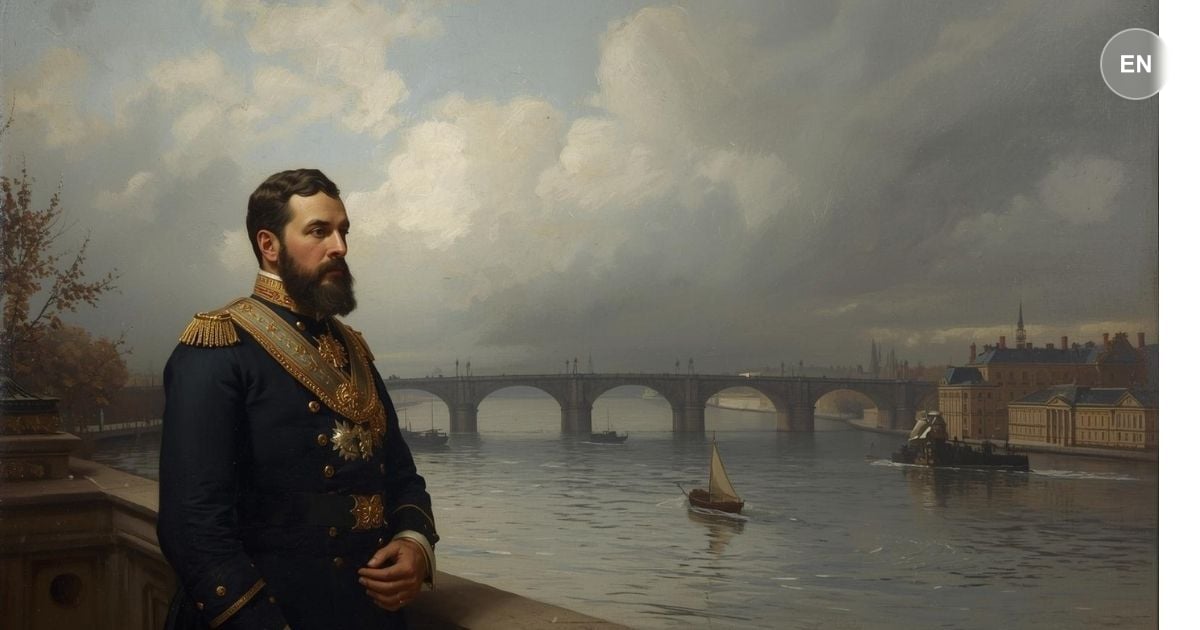
The prince seizes Evgenie's hand. Be assured I esteem you as a generous and honourable man, in spite of everything. Evgenie falls back a step. You did not mean to say that. You meant to address someone else. The prince agrees it is extremely likely. He is ashamed. Twenty-four years an invalid. No sense of proportion. Society is better without him. Aglaya flashes. Why do you say all this here. Not one of them is worth your little finger. They have been bullying her for three days about a marriage. She will never marry him. Never, and under no circumstances. He has never asked her. Mrs Epanchin cannot believe her ears. Aglaya takes the handkerchief from her face and laughs, merry and unrestrained. Adelaida kisses his forehead. Thank God, the prince says. They walk to the Vauxhall. Aglaya tells him to look to the right. A green bench by three big trees. Sometimes at seven, when the rest are still asleep, she sits there alone. Now give me your arm, and do not speak.
He looks at her as if she were a couple of miles off, or a portrait. A handsome officer tries for her attention. Evgenie introduces him. The prince mutters something no one can use. She whispers idiot, not at him. He longs for a Swiss ledge, a waterfall like a silver thread, a thousand years to think of one thing. In the crowd a pale familiar face, curly black hair, a bright green tie. Aglaya has been glancing about too, as if she expected someone.
Then a knot of people at the side entrance. Nastasia walks past as if she had not seen them, and stops. Evgenie's uncle shot himself this morning. Three hundred and fifty thousand of government money missing. You knew it yesterday. Mrs Epanchin leaves almost at a run. An officer says she ought to be whipped. She seizes a stranger's cane and brings it across his face. The prince springs and holds the officer's arms from behind. He is pushed into a chair. Keller names himself, ex-lieutenant, English boxing. Rogozhin takes her hand, pale as a corpse, and grins at the blood on the cheek. The prince holds out both hands. She is mad. He did not look left. Aglaya is twenty yards away. She had stayed in spite of the cries to come away. In the park her voice is calm again. I wanted to see how the farce would end.
Dostoevsky understood something about human nature that feels painfully relevant today: we perform ourselves in normal times, but crisis reveals who we really are. The Pure Soul's story mirrors what happens in every workplace, family, and community when pressure hits. Social scripts break down. The polite facades crack. Suddenly you see which coworkers will cover your shift when you're sick versus which ones will throw you under the bus. You discover which family members show up with help and which ones show up with judgment. The mechanism is always the same - stress strips away performance to reveal core character. This isn't about judging people harshly for their crisis moments, but about recognising patterns. The colleague who consistently steps up during emergencies? That's their real character. The friend who disappears every time you need support? Also real character. For yourself, crisis becomes an opportunity to demonstrate your values. When The Pure Soul instinctively protects Valencia despite her fear, she's not being heroic - she's being herself. The question this raises: if your life hit a crisis tomorrow, what would your automatic responses reveal about who you really are underneath all the daily performance?
Explore this chapter with AI to uncover deeper meaning and practical takeaways.
AI Discussion