
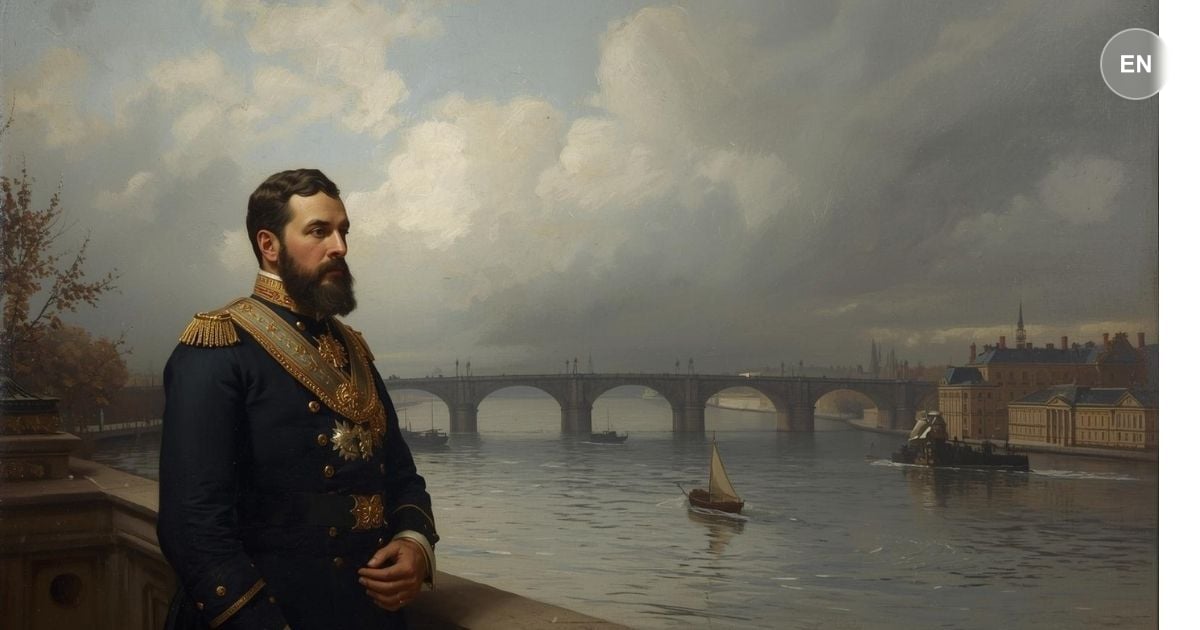
That is the house, he is sure of it. Dirty green, few windows, gratings, a money-changer on the ground floor. House of Rogozhin, hereditary and honourable citizen. His heart has no idea it can beat so painfully. He skips the Epanchins to come here first. The study is lofty and dark. A red morocco sofa for a bed. Smoke-blackened pictures. A sly yellow face in a German riding-coat: the father. Parfen opens the door himself and goes deadly white, as if the visit were a miracle. Perhaps I can go away again. No. Come in.
Did you know I was coming? I supposed you were. Two eyes glared from the crowd this morning, just as yours did. Hallucination. He has them now, as before the fits. The prince came to send her abroad for her health, not to take her himself. If the match is made, he will not set eyes on her again. When you are not with me I hate you. I could have poisoned you. A quarter of an hour and the malice melts. I trust your voice. I love her with pity. I have no pity. She hates me. She thinks no more of marrying me than of changing a shoe. He took her a shawl and she gave it to Katia. He beat her till she was bruised. He knelt and would not eat. She read him the Emperor before the Pope, vowing vengeance on his knees. I will marry you, she said, because it is all the same to me how I ruin myself. A week later she ran again.
Your pity is greater than my love, Rogozhin says. When your love passes there will be the greater misery. Water or the knife? That is exactly why she is going to marry me. She knows the knife awaits her. She loves another. You. Since her birthday. She will not ruin you. It does not matter about me. She is marrying me out of spite. She looked at the father's portrait and said he would have died of hunger on his money-bags. Leave the house as it is. I shall live with your mother. She was kind to the old woman. For once he felt he could breathe before her like a living creature. Never, never, he cries, when the prince hopes God may yet bring them near. How can she marry him after this? The idea is already in the room, whether the prince brought it or not.
The prince picks up a knife from beside Solovieff's History. Rogozhin snatches it. He picks it up again. Rogozhin throws it into the book and slings the book to another table. A garden knife, quite new. Can't one cut pages with a garden knife? This way. Come along. I will show you.
Dostoevsky understood something psychology wouldn't formally recognise for another century: people often choose partners who confirm their worst beliefs about themselves. In 1869 Russia, Nastasya's self-hatred drove her toward Rogojin's destructive passion rather than Myshkin's healing love. Today, this pattern plays out in staff kitchens and sitting rooms worldwide. The single mother who keeps dating men who disappear. The factory worker who stays with someone who puts him down daily. The nurse who pushes away the coworker who actually listens to her problems. We tell ourselves these people are 'unlucky in love,' but Dostoevsky reveals the deeper truth: they're choosing familiar pain over unfamiliar hope. This isn't weakness or stupidity - it's self-protection gone wrong. When you've been hurt repeatedly, chaos feels safer than peace because at least you know what's coming. The unknown kindness feels more dangerous than known cruelty. Dostoevsky shows us that breaking this cycle requires more than willpower - it requires fundamentally changing what we believe we deserve. The question becomes: how do we help someone see they're worth more than their worst day, especially when they've built their entire identity around being damaged goods?
Explore this chapter with AI to uncover deeper meaning and practical takeaways.
AI Discussion