
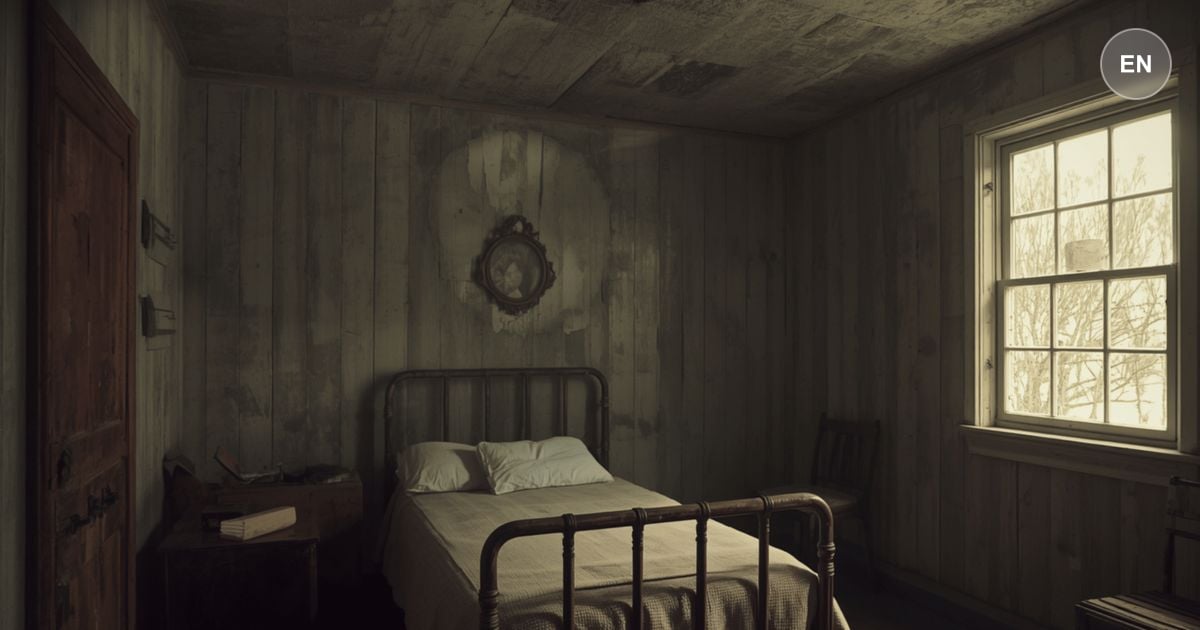
Offred sits in the waiting room, still and obedient on the outside, while her mind tears open the night everything ended. She, Luke, and their daughter had fake papers and a plan. They drove toward the border with the particular terror of people who know they have one chance. Then came the checkpoint lights, the soldiers, hands pulling her from the car, her daughter screaming in a coat she can still picture the colour of. Luke's voice cut off. After that: gaps. She may have been drugged. She does not know if he was shot, captured, or made it into the woods, and that not-knowing is its own kind of wound she carries daily.
The memory doesn't arrive in one clean piece. It breaks apart and reassembles with earlier fragments: Luke joking in bed on an ordinary morning, small arguments, the slow decision to stay together as the world began its quiet collapse. These ordinary moments feel almost unbearable now, not because they were extraordinary, but because they weren't. They were just life, and life got taken.
Offred's mother moves through these memories too. She was a feminist activist, a woman who marched and burned pornography and argued loudly for rights her daughter sometimes found embarrassing. Offred once rolled her eyes at her mother's urgency. Now she understands it completely, and there is no one left to tell. That grief sits underneath everything else in this chapter: the conversations we never finished with the people who were trying to warn us.
Back in the waiting room, Offred glances at glossy magazines meant for Wives, images of domestic perfection she is forbidden to read. She thinks about Serena Joy paging through those same pictures and feels something unexpected: a bitter, unwanted kinship. Serena has power Offred lacks, but she is also locked inside a role the regime designed for her. Both women are prisoners. The bars just look different.
What anchors Offred through all of this is her daughter. She is not surviving only for herself. She is hoarding the possibility of reunion like a candle kept lit in a storm. That hope is the most human thing left in her, which also makes it the most dangerous thing about her. A regime that knows what you love knows exactly where to press.
There is a specific grief that Atwood puts her finger on in this chapter, and it is one that most people recognize the moment they encounter it. It is the grief of the unfinished warning. Offred's mother was a feminist activist who marched and argued and made herself inconvenient in public because she believed the ground was shifting under everyone's feet. Her daughter found her embarrassing. Not cruel, not wrong exactly, just too loud, too much, too urgent for ordinary Tuesday mornings. And then the ordinary Tuesday mornings ended. And the mother was gone. And Offred was left inside the exact future her mother had been screaming about, with no way to say: I understand now. I'm sorry I wasn't listening. That silence has weight. It does not dissolve.
This is not a story about being right or wrong. Offred's mother was not warning her daughter because she wanted to win an argument. She was warning her because she loved her and she could see something her daughter could not yet see. That is almost always how it works. The people who try to warn us are not doing it to be difficult. They are doing it because they have a vantage point we lack, whether that is age, experience, distance, or simply the fact that they are not as close to the situation as we are.
The hard question this chapter asks is not whether the warnings were right. It is why we resist them. And the honest answer is usually the same: hearing the warning means we would have to act on it, and acting on it costs something we are not ready to pay. So we protect our comfort by deciding the messenger is the problem.
Think about the warnings in your own life that came too early or from the wrong person or in the wrong tone. Think about who delivered them. Think about what you did with them. The question worth sitting with is not whether you listened. It is whether the door is still open.
Explore this chapter with AI to uncover deeper meaning and practical takeaways.
AI Discussion