
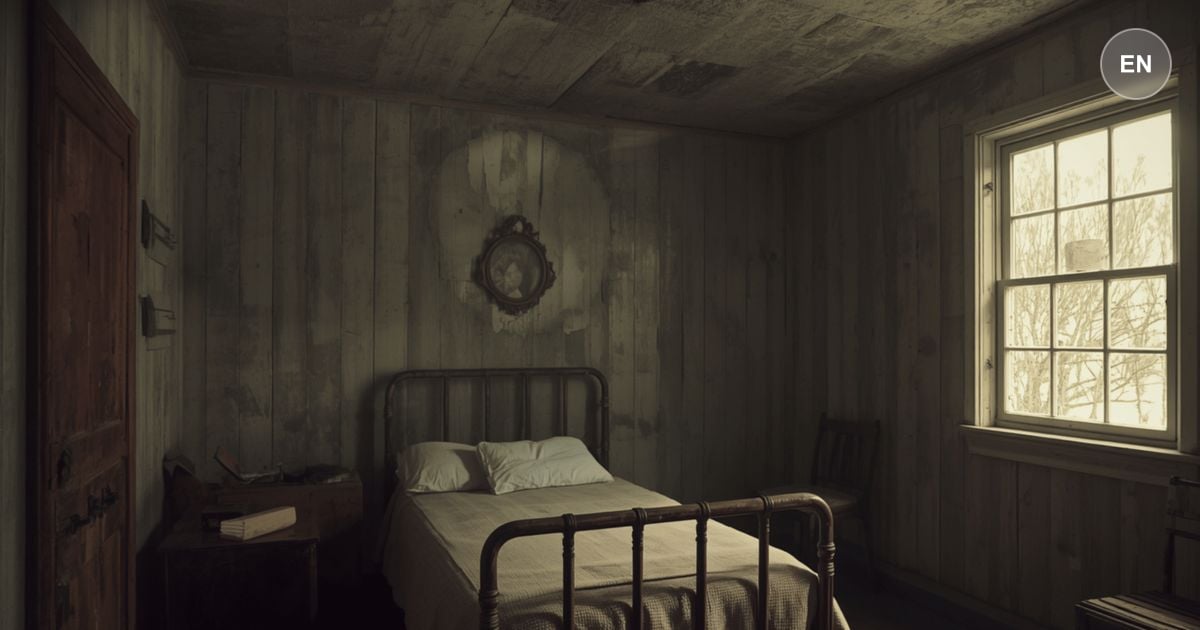
Sleep will not come. Offred lies awake replaying Moira's face, the new hardness around her mouth, the cynicism that has settled in where defiance used to live. This is the chapter where that image does its real damage. If Moira, who was always the brave one, could be ground down to this, what does that mean for Offred? The question does not have a comfortable answer, and Atwood does not offer one.
Offred's mind moves the way minds do at 3am: from Moira to Nick to Ofglen's whispered Mayday to Serena's garden to the Scrabble board in the Commander's study. Each thread connects to the others. Fred believes she owes him something for those small illegal kindnesses. Serena is about to use her desperation as leverage. Ofglen has planted a word, Mayday, that could mean rescue or could mean a faster death. Offred holds all of these at once, unable to act on any of them.
She runs the escape routes in her head, not because she plans to run but because thinking through the distances and checkpoints is something to do with the fear. Without a network, without Mayday, running is just a slower way to die. She is not inside the resistance yet. She is standing at its edge, listening.
College memories surface: she and Moira laughing in a dorm room, planning futures that did not require husbands as a condition of existing. Moira was always a step ahead in courage. That gap feels like a debt now, one Offred is not sure she can ever repay.
The chapter ends with a quiet, devastating inventory. Offred mentally lists every crime she could be hanged for: the Scrabble games, the reading, the costume she will wear tomorrow night, Nick's bed, Ofglen's name, her hatred of Serena, her pity for Serena, her need to find her daughter, her desire to kill Fred, her simple animal desire to stay alive. The list is long enough to hang her twice over.
Through the wall, Serena cries. Down the hall, Fred snores. The house holds three separate prisons, nested inside each other. Offred whispers Moira's name into the dark and waits for whatever dawn brings.
There is a specific kind of exhaustion that comes not from doing too much but from holding too many possible disasters at once. Offred's sleepless inventory in this chapter is not paranoia. It is the rational response of someone who has learned, through experience, that the rules around her are designed to make her guilty no matter what she does. The Scrabble games are illegal. The reading is illegal. The costume is illegal. Her hatred of Serena is illegal. Her desire to find her daughter is illegal. None of these are bold acts of rebellion. They are ordinary human feelings and small human comforts. The system has simply decided that her humanity is the offense.
This is not unique to Gilead. It is a mechanism that shows up wherever power is concentrated and accountability flows only in one direction. Consider the home health aide who knows her agency is overbilling Medicare but also knows that reporting it means losing the only job she can get to without a car. Consider the warehouse worker who takes an extra ninety seconds in the bathroom and knows the camera caught it. Consider the tenant whose landlord fixes the heat in January and mentions it every time rent is due. In each case, the person with less power finds herself holding a list of things that could be used against her, most of which are simply evidence that she is alive and trying.
Atwood's insight is that the list grows longest not when people are resisting but when they are simply surviving. And the cruelest part of that design is that it turns the mind against itself. The 3am inventory feels like weakness. It is actually the mind doing the only work available to it: mapping the terrain before someone else maps it for you.
The question worth sitting with is this: what is on your list right now, and how much of it is actually yours to answer for?
Explore this chapter with AI to uncover deeper meaning and practical takeaways.
AI Discussion