
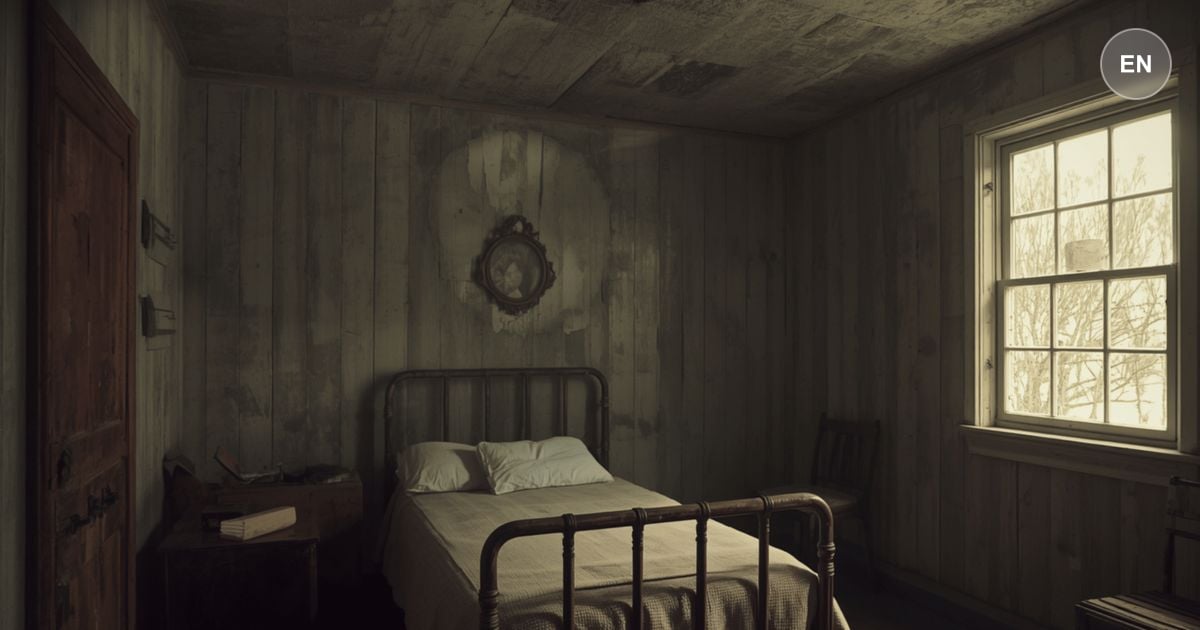
Offred lies awake in the dark, and the day replays itself whether she wants it to or not. Janine's screams. The baby's first cry. And then, sitting in Fred's study, the quiet click of Scrabble tiles. The contrast does not just unsettle her; it turns her stomach. The state threw a celebration around a birth while the woman who survived it will be stripped of the child she carried. Offred lets herself sit with the question she cannot avoid: could she do it? Could she nurse a baby, feel that bond form, and then hand the child over? The question is not hypothetical. It may be her future.
She turns to Moira the way someone turns on a light in a dark room. Moira escaped the Red Center, and Offred does not know what happened after that. Capture, the Colonies, or actual freedom, any of those endings is possible. But the not-knowing is almost beside the point. What matters is that Moira tried. The legend of that attempt is the thing Offred keeps returning to, like a film she watches again for courage when her own supply runs low.
Luke and her daughter surface next, their faces a little blurrier each time. Memory is doing what memory does under prolonged stress: softening the edges. Offred holds on anyway. Remembering them is not comfort exactly; it is more like breathing. It costs something, and she does it anyway.
The chapter also turns a corner on something important about how this whole story works. Offred admits, directly to her imagined listener, that she may be shaping events into a narrative rather than simply reporting them. Trauma does not produce transcripts. It produces fragments, and the mind arranges those fragments into something it can carry. Atwood is not undermining Offred's account; she is being honest about what testimony under tyranny actually looks like.
Dawn comes gray at the window. Offred puts on the red dress. She will walk with Ofglen, possibly pass Janine on the street looking radiant and hollowed out at once. She may be summoned to Fred's study again. The performance of holiness continues, and she steps into it.
There is a moment in this chapter where Offred admits something quietly radical: she does not know what happened to Moira after the escape. Captured, free, dead. The ending is unknown. And yet the story still functions as fuel. That is worth sitting with, because it tells us something important about how power actually works and how ordinary people survive it. Authoritarian systems, and controlling workplaces, and abusive relationships all share one tactic: they work to make you believe that no one has ever successfully pushed back. They do this through silence, through making examples of people who tried, through sheer repetition of the message that the rules are total and permanent. The goal is not just compliance. The goal is to colonize your imagination, to make resistance literally unthinkable, something you cannot picture yourself doing because you cannot picture anyone doing it. This is why a single counter-example is so dangerous to that kind of power. It does not matter if the counter-example succeeded. It matters that it happened. Moira's escape broke something in the logic of the Red Center, and Atwood understood that this is how real resistance spreads: not through grand organized revolt, but through stories that travel person to person and quietly reopen the category of the possible. We see this in labor history. The first worker who refused overtime, the first nurse who filed a formal complaint, the first tenant who organized a floor meeting. None of them necessarily won. But the story of what they did circulated, and it loosened something in everyone who heard it. The question worth sitting with is this: whose story are you carrying right now? And whose story might you become for someone else, without ever knowing it?
Explore this chapter with AI to uncover deeper meaning and practical takeaways.
AI Discussion