
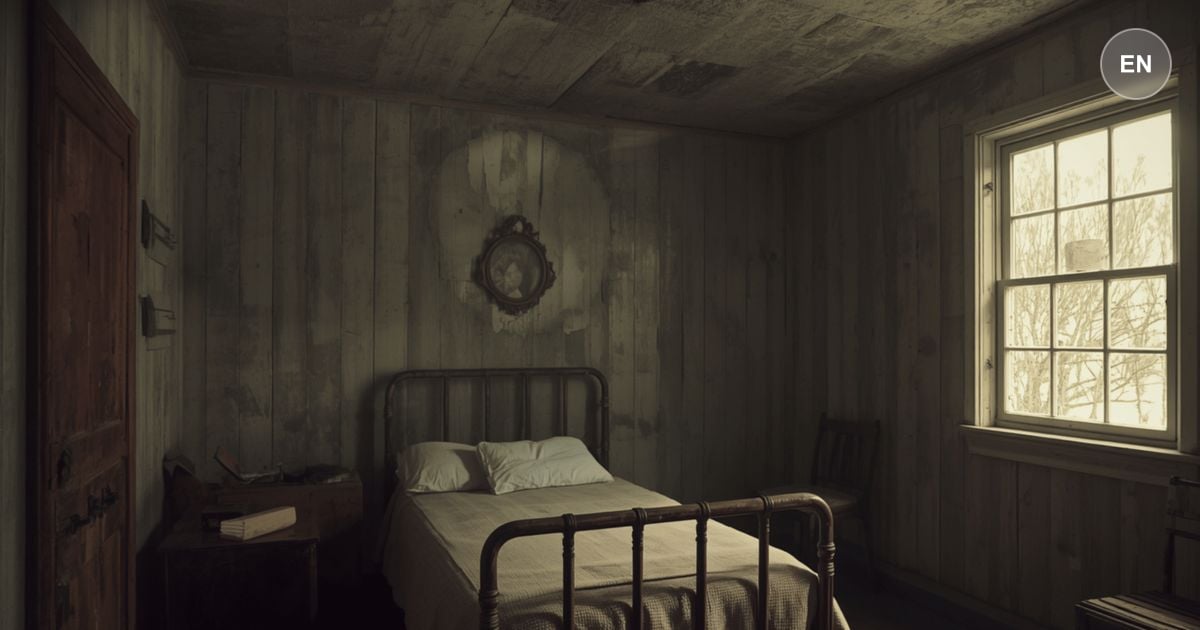
Janine's body does the real work while a performance plays out upstairs. The Wife lies attended by Marthas with cold cloths, moaning on cue, while downstairs Janine pushes through actual labor, veins standing, face flushed dark. The room holds its breath when the baby crowns. Aunt Lydia checks the infant for defects in a silence so heavy it feels like a verdict. The child is a girl, healthy. The relief that floods the room feels almost like a drug.
The baby is named Angela. She is placed in the Wife's arms during a transfer ritual that Gilead calls sacred. Janine smiles through it. Offred watches that smile and feels sick, because it looks like the face of someone who has learned to call loss a gift. The state has taken a child as efficiently as a harvest, and everyone in the room is expected to call it a blessing.
What follows the birth is almost worse than the birth itself. Janine will receive privileges now: praise, temporary safety, a brief window to nurse before separation. But the rewards come with an expiration date. If she fails next time, none of this will protect her. Handmaids are useful until they are not, and the system never lets them forget it. Offred both envies and pities her in the same breath, which is its own kind of exhaustion.
Walking home with Ofglen, Offred does the math she has been avoiding. The Commander's visits to the study have not produced a child. They will not. She cannot say this out loud, but her body knows it, and Gilead does not accept biology as an excuse. The failure will land on her. Something else will have to happen, a doctor, Nick, some other path she has not yet named, or she will be discarded as used goods.
The other Handmaids file out into daylight with voices too bright and cheeks too flushed, performing relief because relief is what the moment requires. Ofglen says almost nothing. The district will call this a victory. Offred calls it what it is: a theft of a child, dressed up in prayer, carried out in plain sight. She keeps walking because there is nothing else to do.
There is a moment in this chapter that is easy to miss because it happens so quietly. Janine smiles. Not because she feels joy, and not because she has made peace with anything. She smiles because the room requires it, and she has learned to give the room what it requires. Atwood is showing us something precise: the most effective control systems do not need to threaten you every day. They just need to teach you to perform the right emotions on cue, until the performance becomes automatic.
This is not a feature of dystopian fiction alone. It is a recognizable feature of many real workplaces, families, and institutions. Hospitals praise nurses for their calling while scheduling them into double shifts. Warehouses post employee of the month photos while cutting benefits. Families designate one child as the peacekeeper and reward that child with approval for never making trouble. In each case, the reward is real enough to want. But the reward is also conditional, temporary, and tied to continued compliance. The moment you stop performing, the reward disappears. That is not compensation. That is a leash with a bow on it.
What makes this pattern so hard to see from inside it is the public dimension. Janine does not just receive her privileges quietly. She receives them in a room full of people who are all watching and being watched. The performance has witnesses, which means stepping outside the performance feels like a public act of ingratitude rather than a private act of honesty. The witnesses are not there to celebrate Janine. They are there to make the performance feel real by reflecting it back.
Atwood wrote this in 1985, but she was describing a mechanism that predates Gilead by centuries. The question worth sitting with is not whether this pattern exists in your own life. It almost certainly does in some form. The question is: when you smile because the room requires it, do you know that is what you are doing?
Explore this chapter with AI to uncover deeper meaning and practical takeaways.
AI Discussion